You can buy a 10-ton pile of rope for $1.3mn at a London exhibition. Interested?

&imwidth=600&imheight=450&format=webp&quality=medium "You can buy a 10-ton pile of rope for $1.3mn at a London exhibition. Interested?")
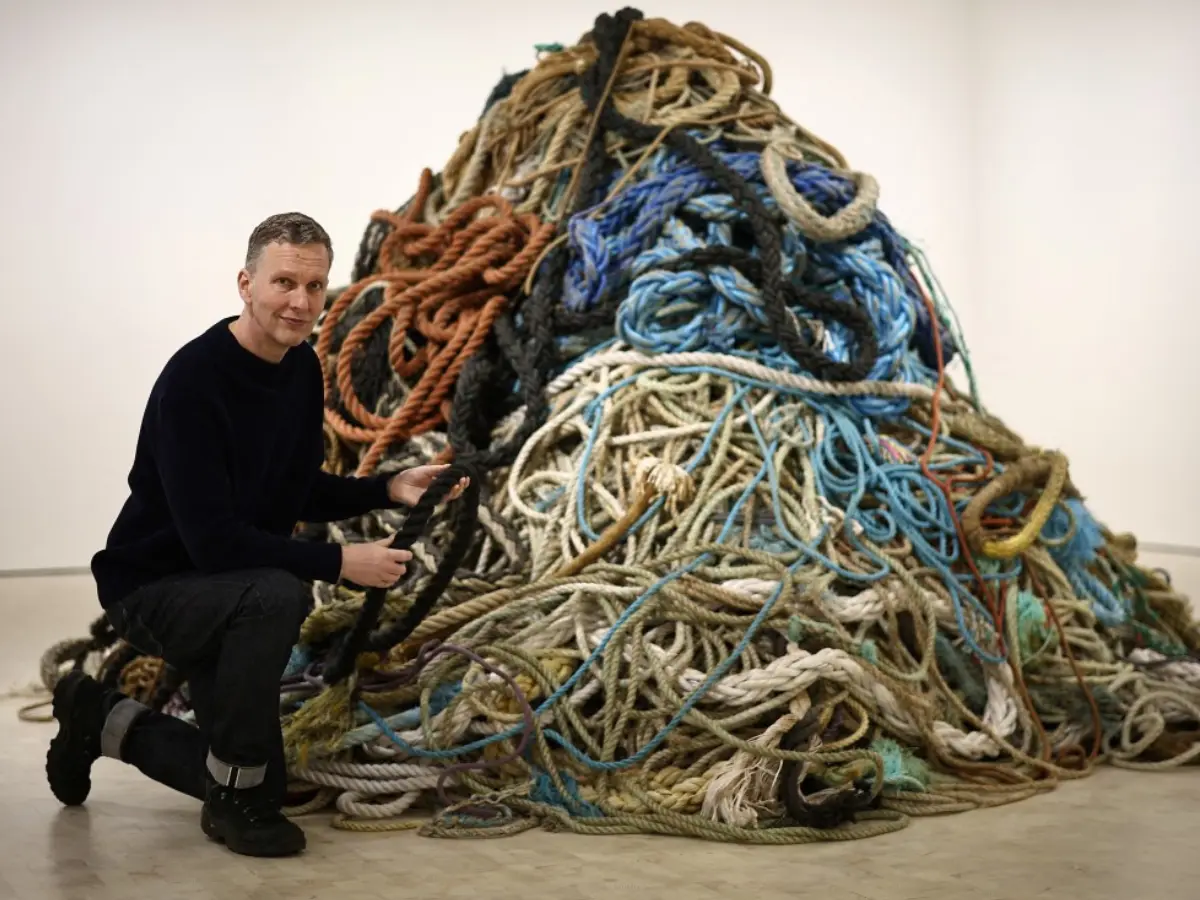
David Shrigley with his rope pile at a London exhibition. Photograph: (AFP)
Artist David Shrigley has placed a huge pile of rope at the Stephen Friedman Gallery in London and put up a price tag of £1 million. He has gathered all kinds of ropes from across Britain and says it has a fair price. He says an idiom on ropes inspired him.
An artist has gathered ropes of all sorts and sizes from across Britain, put them all together in a pile weighing more than an African bush elephant and placed it as the lone exhibit at an art exhibition. So yeah, it is art. It took David Shrigley months to collect and clean the ropes after he gained inspiration from the idiom “money for old rope”. He has now launched a public exhibition where the rope is the only piece of work. “This exhibition started with an idiom. Old rope has no use. It's also hard to recycle, so there's a lot of it lying around. I thought, what if I turn that into a literal exhibition of old rope? And then say, yes, this is art, and yes, you can buy it for £1 million,” he said. Titled Exhibition of Old Rope, it will be open to the public at the Stephen Friedman Gallery in London from November 13 to December 20.
The ropes in this pile, weighing one ton, come from all kinds of places. The shorter ropes were collected by Shrigley himself from UK shorelines. Then there are longer and thicker ropes. You’ll find slim cords used for crab and lobster pots, cruise liner mooring lines, from climbing schools, tree surgeons, offshore wind farms, scaffolders and window cleaning firms. If placed end to end, the art piece will stretch for over 32 kilometres. He cleaned all the ropes at his studio before installing them.
£1 million for a pile of rope? It's a fair price, Shrigley says
“The work exists because I'm interested in the value people place on art, and the idiom gave me an excuse to explore that,” Shrigley said. Talking about the asking price, he said, £1 million ($1.3 million) is a “fair price”. Shrigley is known for quirky works of art, such as the “Mayfair Tennis Ball Exchange”, in which he invited people to replace tennis balls on the shelves with old balls. Slowly, there would be “misshapen and discoloured” balls on the shelves, “that represent the joy of trade.”

