Another asteroid racing towards Earth today will be even closer than the Moon

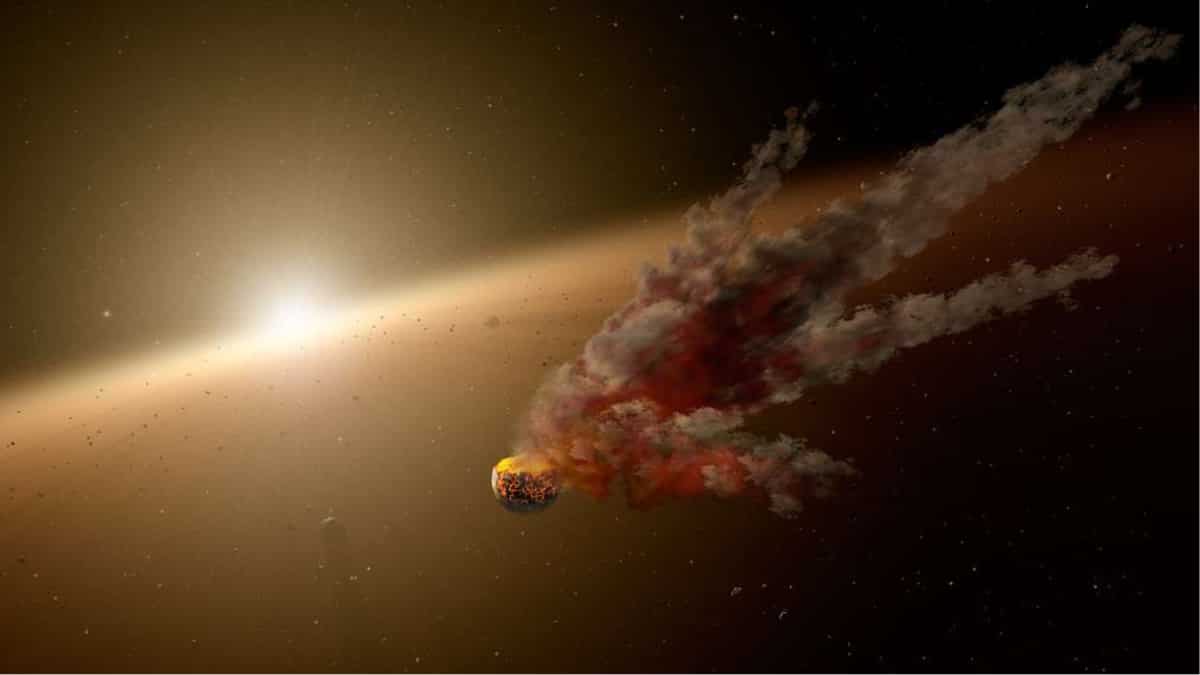
Representative image of an asteroid
A week full of asteroid visits to the Earth is concluding with another one zooming past Earth at a close distance on the night of Dec 6. The space rock measured five feet in diameter and has been named 2024 XS2. It will be at its closest point to our planet for the next 10 years tonight at 9:47 pm EST.
It would be only 196,000 kilometres away from Earth, almost half the distance the Moon is from us. The average distance of the Moon from Earth is 384,500 km. This would make it easier for amateur telescopes to pick it up. However, the asteroid won't be easily viewable in the northern hemisphere. In the southern sky, it would zoom between two constellations, the Dolphinfish and Reticulum.
Asteroid 2024 XS2 was discovered in March this year. Its orbit means it approaches the sun closer than Earth does. This is the case with the Apollo class of asteroids. Much of the Nearth-Earth objects (NEOs) that zoom past Earth belong to this group.
Asteroid in Siberia
The latest approach comes just days after an asteroid impacted Earth over Siberia. It was discovered only hours before it hit the atmosphere, making it the fourth imminent impactor of 2024. It was only 28 inches wide and entered the atmosphere at around 1:15 am local time on December 4. It exploded into a fireball and was caught on camera by several people.
It was initially named C0WEPC5 and was officially designated 2024 XA1. Fragments of the space rock are believed to have littered the city of Oleminsk. The European Space Agency noticed the asteroid at 4:27 am ET the previous day and issued an alert, stating "the impact will be harmless."
Just the next day, a huge asteroid, made its closest approach to Earth. The "potentially hazardous" 1,200ft asteroid 2020 XR zipped past Earth at 12:27 am ET on December 4 (10:57 am IST). Travelling at a speed of 44,300 kilometres per hour, it reached a minimum distance of 2.2 million kilometres from Earth.
It had visited us in 1977 as well, although at that time it hadn't been discovered. When it was spotted flying in space, astronomers thought that it would hit Earth in 2028. However, later calculations brushed off the scare.
Apophis in 2029
Apophis is the other asteroid scientists are keeping awatch on. It will fly by Earth in 2029 and was seen as a danger for the longest time. But as its trajectory was studied, astronomers found that it would miss hitting the planet. However, it is still of interest and multiple space agencies are planning on studying the asteroid upon its close visit.
NASA has prepared the OSIRIS-APEX mission that will fly by Apophis in April and study its composition and surface in June when it begins its 18-month stay on the asteroid.
ESA's Ramses mission will rendezvous with Apophis in February 2029 and will stay with it as it approaches Earth. Besides studying the usual elements of the asteroid, the mission will also look at how the planet's gravity affects it.

