3I/ATLAS will be thrown off-course by Jupiter as it exits the solar system

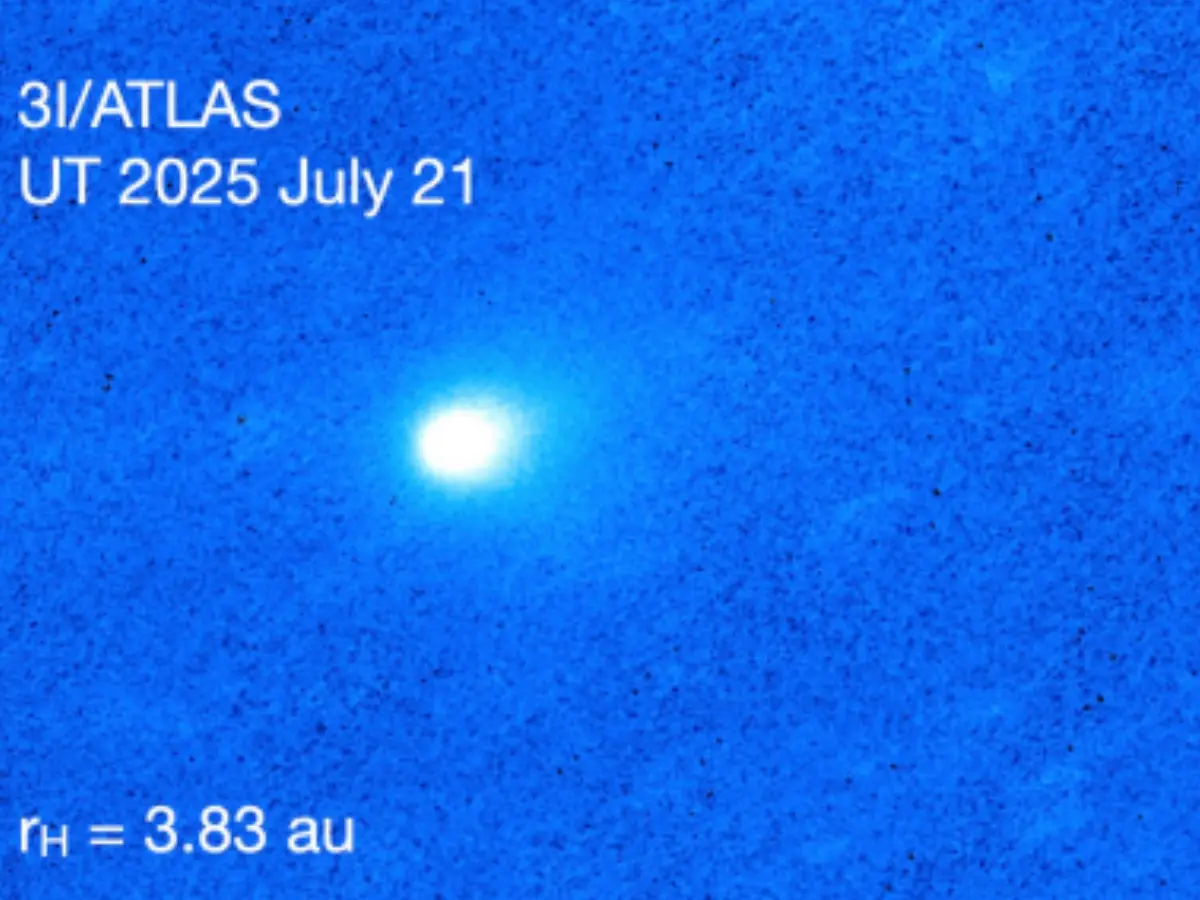&imwidth=600&imheight=450&format=webp&quality=medium "3I/ATLAS will be thrown off-course by Jupiter as it exits the solar system")
3I/ATLAS will be thrown off its path when it goes near Jupiter. Photograph: (NASA/ ESA)
Latest on 3I/ATLAS: A new study states that as the interstellar comet makes its way out of the solar system, its encounter with Jupiter will leave it with a huge impact. It will likely be thrown off its path because of the gravitational force of the gas giant.
Jupiter's strong gravitational force will exert such a push on 3I/ATLAS that it will be moved out of its trajectory as it makes its way out of our solar system. This one last striking encounter will happen around March 16, 2026. A new pre-print paper tried to understand the path the interstellar comet will take while leaving, where its header and the possible path that brought it here. The researchers studied the "long-term orbital integration of 500 statistical clones of comet 3I for a hundred years in the past and future" and found that it is probably coming from the Sagittarius constellation and going towards the Gemini constellation. "The possible location of the comet 3I is found to be in the transition zone from the thin to the thick disk. [But] it is uncertain to confirm the region of origin using kinematic information," the study authors wrote.
Jupiter will have a big impact on 3I/ATLAS
As it moves towards its next destination, 3I/ATLAS will have one last meeting with Jupiter, which is expected to be a turbulent one. The comet will pass very close to the Hill radius of Jupiter, which will alter its course. "The distance of the comet 3I from Jupiter is very close to the Hill radius (0.355 au) of Jupiter. Therefore, there could be a stronger perturbation from Jupiter compared to Mars," they wrote. Notably, Mars also had a slight effect on the trajectory of 3I/ATLAS, but not as significantly.
However, the non-gravitational acceleration of the object can still change things at the last moment. This is the movement caused by forces other than gravitation, such as outgassing and radiation pressure from the Sun. The team further stated that its time near Jupiter will be the best one for observations. According to the study, this window runs from March 9 to 22, 2026. The Juno spacecraft will be well placed to study 3I/ATLAS at this time and reveal more details about this mysterious visitor.

