17 centuries ago, a saint was beheaded. His dried blood 'miraculously' changed form at an Italian ritual

&imwidth=600&imheight=450&format=webp&quality=medium "17 centuries ago, a saint was beheaded. His dried blood 'miraculously' changed form at an Italian ritual")
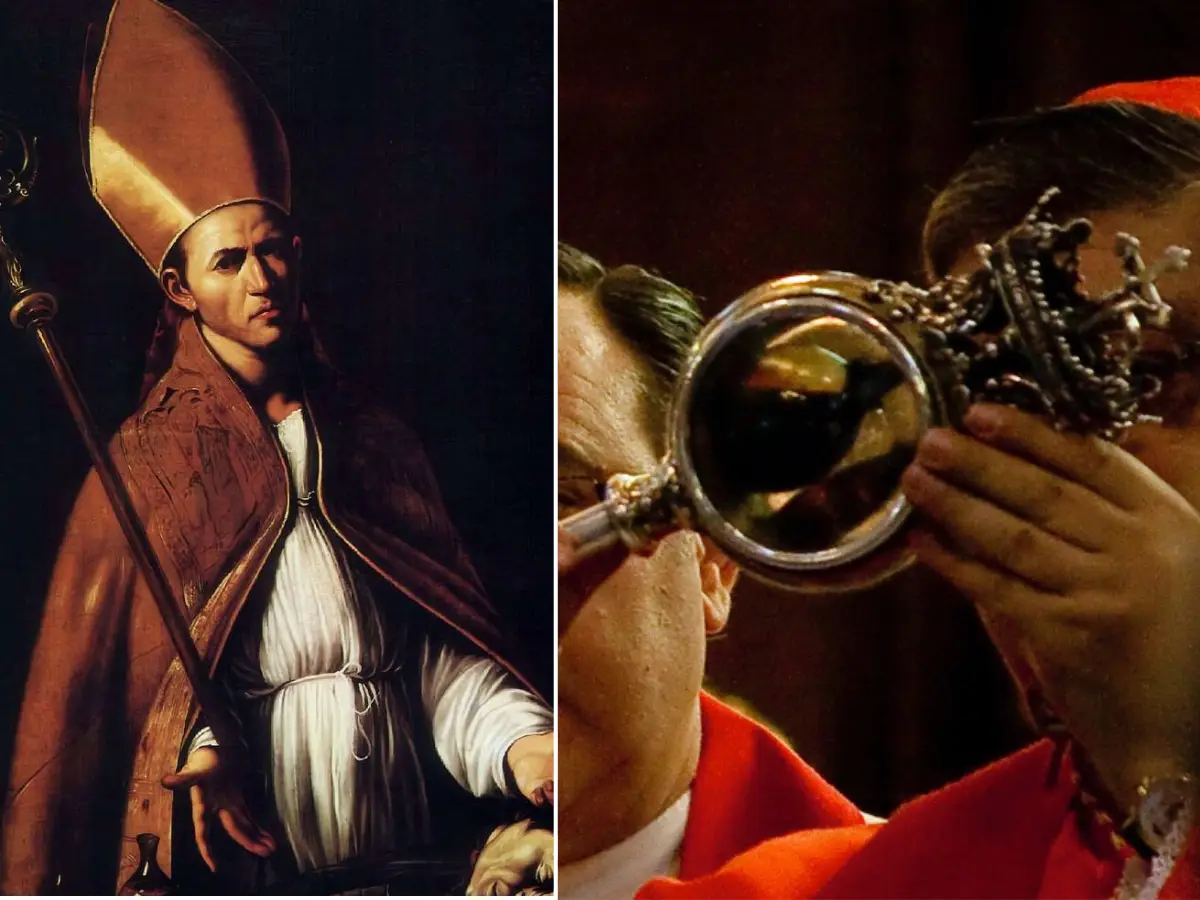
First records of St Januarius blood ritual date back to 1383. Photograph: (Wikimedia Commons)
Dried blood of a saint who died in 305 AD turned into liquid at a church in Naples, Italy, signalling a miracle. This age-old ritual has been happening since 1383, and devotees believe it to be real. However, sceptics have questioned
In a church in Naples, Italy, the dried blood of a saint killed in 305 AD turned into a liquid, signalling a "miracle" for the devotees. The blood ritual of St Januarius has been carried on for hundreds of years. The saint's blood is kept in two sealed glass vials at the Duomo di Santa Maria Assunta and is brought out by a bishop or Catholic priest on special occasions. If the blood liquefies, it is considered a sign of good things to come. However, if it fails to change state, it is believed to bring disasters. The Archbishop Domenico Battaglia of Naples said, "At 9:13 am local time, the blood already appeared semi-liquid," and by 10:05 am, the church announced that it had completely liquefied, The Daily Mail reported.
The blood can take from hours to days to change into liquid. The mass contained in two vials turns deep red and begins to bubble. The priest holds the reliquary, inside which the vials are placed, and tilts it slightly. This gives devotees a good view of the blood. It is then placed outside for eight days for people to see. Later, it is put back in a secure vault inside the Chapel of the Treasury.
Blood or chemical concoction?
The first time this ritual was held was in 1383, although some think it could have started much earlier. St Januarius is considered the protector of Naples. "Every drop of this blood speaks to us of the love of God. This blood is a sign of the blood of Christ, of his passion," Archbishop Battaglia said in his homily. However, scientists have dismissed this as a miracle, saying the blood likely contains a material that turns it into liquid. A few analyses have been carried out in the past, but there has never been any clarity over whether it was blood or a man-made concoction. But the devotees have embraced this as a miracle. Archbishop Battaglia also warned that it should not be seen as mere superstition.
According to legend, St Januarius was thrown into a bear enclosure along with some of his companions. But the animals did not attack them. They were beheaded, and their blood was brought to Naples. Since then, locals accorded him the status of their protector. According to reports, the blood failed to liquefy when World War II broke out in 1939, the Nazi occupation in 1943, and the Irpinia earthquake of 1980. It also maintained its form in 2016 and then in 2020, the year of COVID-19.

