116 drones, 1,640 feet of water, 34 minutes: China registers major underwater feat

&imwidth=600&imheight=450&format=webp&quality=medium "116 drones, 1,640 feet of water, 34 minutes: China registers major underwater feat")
A team of researchers in China got 116 drones to coordinate and move around 1,640 feet of water in a swarm without any human intervention. The achievement has been entered in the Guinness World Records as the TH-618s travelled for 34 minutes.
A Chinese research team set a new record for simultaneous autonomous underwater vehicles, deploying 116 micro-autonomous small drones that successfully navigated across a swimming pool without human intervention. They were down there for 34 minutes and went around a preset route across 1,640 feet of water.
The vehicles came from Northwestern Polytechnical University and Xian Tianhe Maritime Technologies, and the feat entered the Guinness World Records on August 29, the day of the demonstration, with officials present to monitor the navigation.
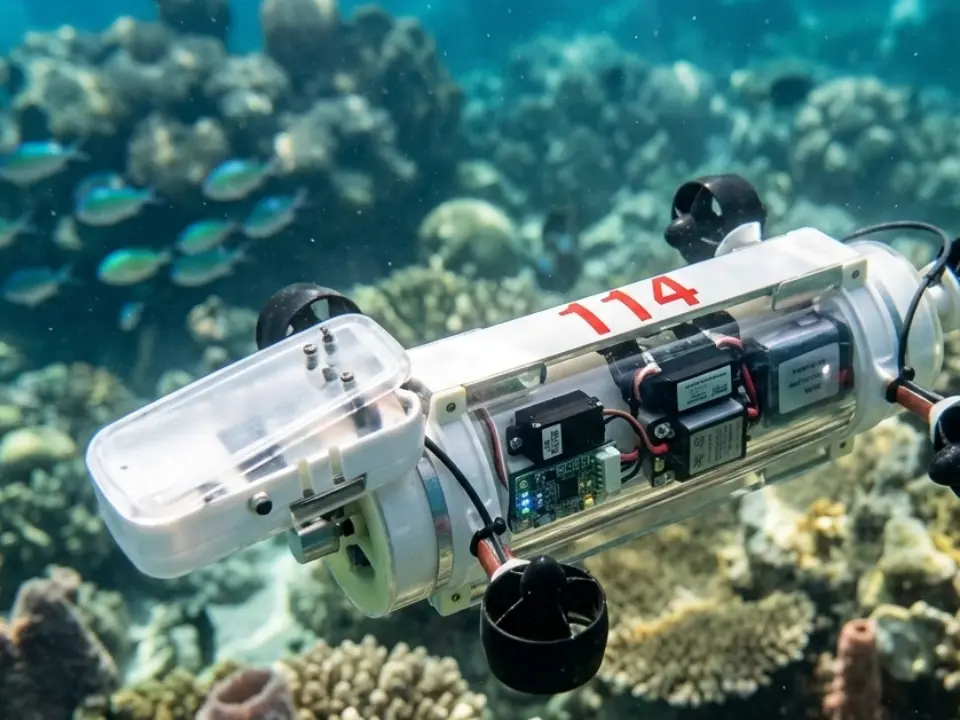
The drones used were TH-618s, which were deployed by the operators, after which the onboard autonomous systems took over. Inside the water, the 116 drones moved in a coordinated manner as a swarm. Each drone used real-time data to stay on the correct route. If any of them moved away from the planned course, the system had a function which helped them to return to the right path.
While having each drone move on a planned route isn't the difficult part, the highlight here was having them all coordinate underwater. Communication in water isn't easy, as radio signals can behave erratically. But the drones managed to do just that, and without any help from humans.
Northwestern Polytechnical University called it a major step towards larger autonomous underwater systems. The university has been working on underwater sensing, acoustic communication and visual perception for more than two decades.
The TH-618 drones are small enough for such coordinated operations. Measuring about 24 inches long and 7.8 inches wide, each of them weighs roughly 5 kg. The drone has a range of 30 kilometres and can operate for more than eight hours at a time. A camera helps them navigate through water, allowing them to analyse their surroundings and adjust accordingly.
Disturbances from currents and other factors are common underwater, which can move them away from their intended path. The drones have a system which allows them to act accordingly if this happens. Experts say such drones can lead the way in seabed surveys and inspections of oil and gas pipelines.

