
&imwidth=800&imheight=600&format=webp&quality=medium "Google sends four AI chips into orbit as it eyes solar-powered data centres in space")
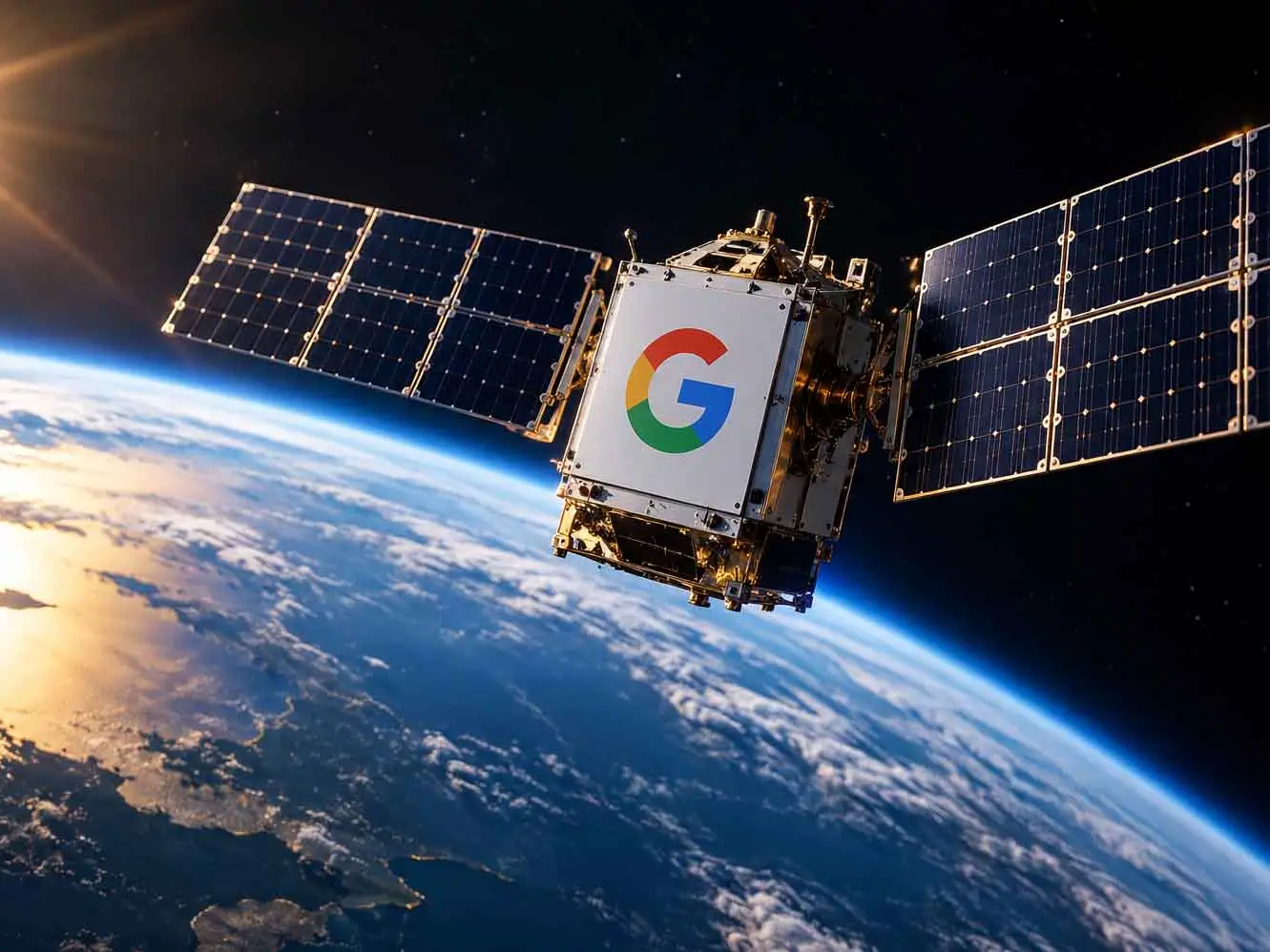
Google has taken its AI ambitions beyond Earth. The company has successfully placed a prototype satellite carrying its Tensor Processing Units (TPUs) into orbit as part of Project Suncatcher, an experimental plan to explore AI data centres in space.
The refrigerator-sized satellite, built with Planet, launched aboard SpaceX's Transporter-18 rideshare mission from California on October 1. Google has confirmed contact with the spacecraft and says it is operating as expected. This is not yet a space data centre. It is a crucial test to answer a much simpler question: can Google's AI hardware actually work reliably in orbit?
Four AI chips face the ultimate test

The prototype carries four Google TPUs. They will be exposed to the radiation, vibration and thermal conditions of space while Google gathers data on their performance. Cooling is one of the biggest challenges. On Earth, data centres rely heavily on air and liquid cooling. In the vacuum of space, there is no air to carry heat away. Google therefore has to move heat from the chips to radiators that can release it into space. For the initial experiment, the TPUs will operate only in short bursts of around 15 minutes, allowing the thermal system time to manage the heat. Radiation is another concern. Google's testing indicates its TPUs can withstand radiation levels greater than those expected during a five-year space mission, although errors can still occur.
Google has a much bigger plan
The satellite is only the beginning. Google's longer-term vision involves interconnected satellites carrying AI chips and communicating using high-speed laser links. The company believes near-constant sunlight in orbit could provide significantly more solar energy than comparable systems on Earth. The next major step is planned for 2027, when Google and Planet intend to test two more purpose-built satellites and their ability to communicate with each other. Google's broader research has explored an eventual constellation of 81 satellites working together as an orbital computing system.
Trending Stories
The biggest obstacle may be getting there cheaply
The technology is only one part of the challenge. Launching enough hardware into orbit could be enormously expensive. Google's research examines whether falling launch costs could eventually make orbital computing economically viable. The company's analysis points to dramatically higher launch activity being required, including thousands of Starship-class missions over time. That is a major assumption because the required launch cadence does not exist today. For now, Suncatcher remains a research project rather than a commercial product. But Google's first TPU satellite is now in orbit, turning what was once a theoretical idea into a real-world engineering experiment.
