German court rules Tesla's assistance feature including 'Autopilot' as false advertising

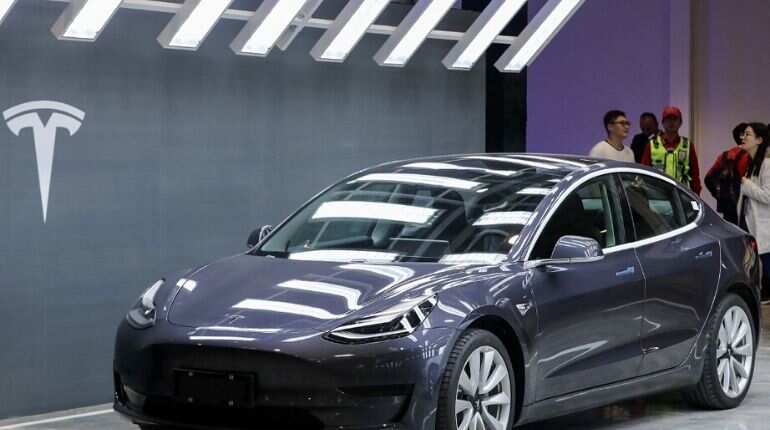
A Tesla Model 3 car is displayed during the Tesla China-made Model 3 Delivery Ceremony in Shanghai
A German court on Tuesday has ruled that specific terms used by electric car company Tesla for its assistance feature including the 'Autopilot' are false advertisement.
The judges at the higher state court in Munich said that Tesla's offer on 'Autopilot' as an option to buy a Model 3 vehicle with "full potential for autonomous driving" were "misleading business acts".
In a statement, the court said: "Use of the relevant terms creates an expectation... that does not correspond to the actual facts."
According to the judge's findings, Tesla's "Autopilot" does not enable a trip without any human intervention at all such a technology be legal under present German law.
The case was brought up by an NGO called the Centre for Combatting Unfair Competition that said Tesla's autonomous driving technology at best reaches level two on a five-point scale in which five corresponds to completely driverless travel.
"Since auto-piloted, autonomous driving is neither legally permitted nor technically possible for the vehicle in question, Tesla has to play by the rules and cannot make false advertising promises," the centre's lawyer Andreas Ottofuelling said in a statement.
However, the court's ruling is not final and it can be appealed.
(Inputs from AFP)