European Space Agency has the perfect fix for space junk - a claw!

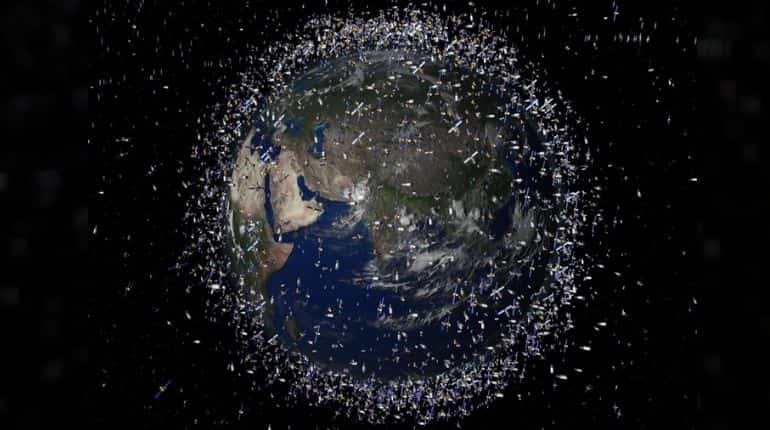
This computer-generated image released by the European Space Agency (ESA) on April 15, 2008 shows trackable objects in Low Earth Orbit (LOE) around Earth
The claw that will clean space - no kidding!
Space clutter is now a hindrance in effective space exploration, and scientists are working on a quick fix. Over the last decade, new countries have entered the “Space war”, deploying satellites and technology of their own over time. However, this has clogged space, and filled it with debris.
According to DailyMail, there are around 160 million pieces of space debris around planet Earth. These have been captured by our gravity, and circling around the planet at speeds of 18,000 miles per hour.
Additionally, out of these 160 million pieces, at least one million may be larger than 1 cm, posing risks of collision with satellites. Scientists worry that such debris is capable of setting a chain reaction of destruction, whereby a single damage to a single satellite could escalate into large scale global satellite technology damage.
What does this mean, you wonder? For starters, good bye GPS! In case our satellite connections are seriously severed, we will lose access to the map technology which has made navigating around the world easier. Additionally, mobile communication would be heavily disrupted, and weather forecasting interrupted.
2,800 satellites are currently orbiting earth. 3,000 dead satellites also orbit the Earth. Scientists and engineers have come up with a plan: A claw in space which will get hold of defunct satellites and push them back into the earth’s atmosphere. Once they enter the earth’s atmosphere, they will burn out.
The European Space Agency came up with the plan in 2019, but now the agency is signing a contract with ClearSpace SA to kick start the mission called ClearSpace-1. The claw will first target VESPA (Vega Secondary Payload Adapter) which has been orbiting Earth since 2013.
The ESA is expected to contribute €86 million to the mission cost, with the rest of the money expected to be raised by ClearSpace, which intends to venture into the business of junk removal. ClearSpace SA hopes to launch its first mission in 2025.