Exclusive: 'Can see India finishing on podium in Tokyo Olympics' - Siegfried Aikman discusses hockey post-lockdown, postponement of 2020 Games and more

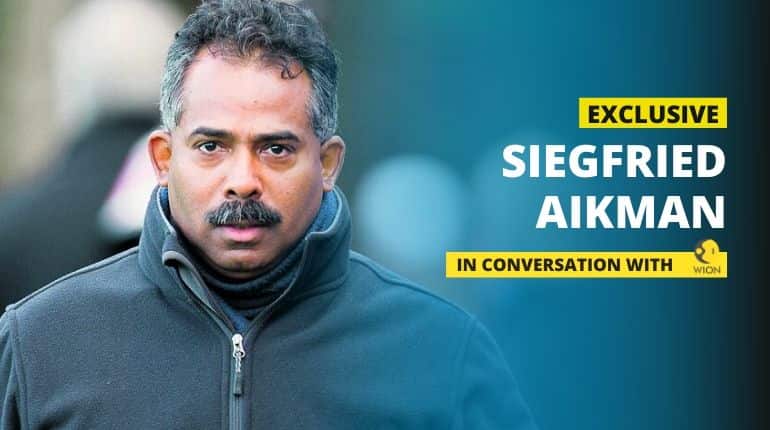
Exclusive | Japanese national men hockey team's head coach Siegfried Aikman in conversation with WION
With the COVID-19 pandemic restricting athletes and coaches to work indoors, professional sportspersons and support staff have taken this opportunity to reflect on their tactics and other various aspects of their respective sports. While hockey remains to be one of the most demanding sports, the prolonged lockdown phase can create a major impact as to how a team plays and fitness levels of players.
The head coach of Japanese men's national hockey team, Siegfried Aikman, in an exclusive interview with WION's Sports Editor, Digvijay Singh Deo, opened up on various aspects of hockey, the postponement of Tokyo Olympics, life under lockdown in Japan, Team India's chances in the forthcoming Games and much more...
Digvijay Singh Deo:Thank you for your time, Siegfried, how has it been over there in Japan during the lockdown?
Siegfried Aikman: There is a soft lockdown here in Japan, which means that people are allowed to go outside. The government cannot force you to stay inside but the Japanese are very disciplined and obedient, so most of the country is staying indoors. The number of coronavirus cases in Japan is rising, but we don't know the exact number because not many people are being tested. But in Japan the virus has not spread as rapidly as it has in the countries, there are a couple of hotspots, Tokyo and Osaka, but apart from those cities, none of the areas has a high number of cases.
DSD: As a foreign national in Japan, what are the precautions you are taking?
Siegfried Aikman: Not much different than others. I try to keep track of the latest information, I wear my face mask when I go outside and try to stay home as much as possible. I am following the government's coronavirus and social distancing guidelines.
DSD: What about your players, I did read most of them have been released to return to their daily lives, that must be disconcerting for you?
Siegfried Aikman: Yes that is a cause for concern, some of my players are in the danger zones of Tokyo and Osaka. The players are supposed to report for duty at the various organisations that they are part of, which increases their chances of contracting the virus as they would be travelling a lot and coming in contact with a lot of people. Even for organising a national camp, we have to negotiate with the companies for player availability. We had a camp organised for our team, but because of the Olympic postponement, the camp was also cancelled. Fortunately, we are monitoring the body temperatures of all our players and are keeping track of their health conditions on a daily basis. If we notice anything untoward, then the information will be conveyed to the player and he will be taken to the hospital. When we were in camp, we isolated a few players who had mild fevers, but fortunately, all of them recovered quickly and none of them had contracted coronavirus.
DSD: How has Japan reacted to the postponement of the Olympics?
Siegfried Aikman:Itwas a very brave decision for japan to postpone the Olympics. The country had been planning the event for a long period of time and a lot was riding on it financially. The Olympic village was also set to become public property after the games. But the health of all the athletes and the people of Japan was given priority and the postponement decision was taken keeping that in mind. The IOC was probably forced into making an early decision because of the boycott threats from Australia and Canada. But earlier we have seen the Olympics take place despite certain countries boycotting them. But overall, I think the right decision was made by the IOC and many athletes and felt a sense of relief. The people of Japan wanted to put on a magnificent show for the world and they didn't want a secondary version of the event taking place. The people of Japan were obviously a bit disappointed with the postponement, but they realised that it was necessary. The decision would have never been taken if it was not the only option available to the IOC. The Olympics is obviously not more important than the health of the people.
DSD: Already we see a tug of war over who is going to foot the bill for the postponement and it is definitely not going to be a small amount, ultimately it will be the Japanese taxpayer?
Siegfried Aikman: Yes that discussion is going on in the country, but it is more of a political matter. It is not so much a concern for the people of Japan. The Japanese people pay a national tax and a local tax, so the national government gets a lot of income. The cost of the postponement will be a multi-billion dollar amount, but I think the organisers and the Japanese government will be able to bear the cost with the support of the sponsors. Ultimately when the Olympics are held, the event will do a lot of good for the people of Japan.
DSD: There are voices coming out of japan that if there is no vaccine then the games are as good as over. Is there a determination that comes what may the Olympics have to be held?
Siegfried Aikman: Yes, I think the games have to be held in 2021 because further postponement would be impossible. Japanese people are certainly determined to hold the games, but not at all costs. If holding the games is still a health hazard in 2021, then the Olympics will simply not be held. The postponement decision was made quite early, 4 months before the Olympics. Usually, the Japanese wait till the last moment to cancel any event and only do so when it is virtually impossible. At the time the postponement decision was made in March, many countries were still unaffected by the coronavirus, but the fact that a decision was made shows that the IOC and the Japanese organising committee are concerned about the health of the athletes and all those involved.
It is likely that the event will be held in 2021. On the other hand, we might just have to learn to live with COVID-19, because a virus like this just doesn't disappear immediately. We might have to find another way of dealing with the virus rather than waiting for it to go away. At the moment we are flattening the curve here in japan, which doesn't mean that the virus will disappear, but it means that the medical workers will be better prepared to treat those patients who are infected. Until we get a vaccine, we just have to hope that the number of cases will decrease and the medical workers are protected enough to treat those patients. Usually coming up with a vaccine takes a few years, but since all the top minds in the world are working towards creating a cure, I am optimistic that we will have one soon.
DSD: Getting back to hockey now, how will this break shake-up plans for the Olympics for teams? Surely it will have a massive effect on your approach...
Siegfried Aikman: Yes, it totally changes our plans for the Olympics. We were completely ready to perform at the Games in July. We were actually at the final stages of our preparation for the 2020 Olympics. The moment the postponement decision was made, we went back to square one and now we have to start from scratch. This also brings up a number of other problems for us, some of our players wanted to retire after the Olympics. There are also question marks over whether these players will be able to perform at the highest level one year later. The entire tactics or preparation of a team might change for the 2021 Games because an extra year gives teams the opportunity to work on various aspects of the game. This can especially be an advantage for European teams to work on their strategy. The club season in Europe does not give the opportunity to national teams to train that often, but since there is no domestic season on, national teams have the chance to construct a detailed plan.
I think all hockey coaches are studying the game at the moment and they will be influenced by certain ideas which are bound to be implemented in the national team's program. But in a way, the postponement can be an advantage for our Japanese team as well because it allows us time to work on our physical fitness, which is crucial at a showpiece event like the Olympics. But, overall the postponement will have mixed consequences for all teams.
DSD: At the start of the year you sort of knew that some teams had momentum, now with little to no action expected to take place over the next few months, the 2021 Games could be a journey into the unknown...
Siegfried Aikman: I disagree. I think there will be certain competitions which could possibly begin by September or October. The European club leagues will take place, the FIH Pro League will hopefully be up and running in the next few months. While the Asian Champions Trophy is also scheduled for this year. So I feel there are enough competitions for teams to practice and prepare before the scheduled games next year. I think the pro league will take place, but in a scenario when it is cancelled, we will still have other international tournaments like the Sultan Azlan Shah Cup take place later this year.
Many teams will also organise some test matches to have the opportunity to get back into the groove of things. While we cannot go out and practice on the field, we can still work on ideas and team tactics. These can still be discussed with the players. We can work on strategy and the decision-making skills of our players through video conference team meetings. Many national associations have also provided their athletes with fitness equipment, so the players will be in good shape. In terms of mental preparedness as well, the athletes can use this time to become more tactically aware. Very often it gets difficult to work on our tactics in an in-depth manner because of the lack of time. This might be an interesting outcome of the lockdown, I am looking forward to seeing how the game will change once we're back on the pitch. Hockey coaches can also use this time studying other sports and incorporate ideas that will help their system of play. I am using my time studying different sports.
DSD: Do teams like India then have an advantage, the camp didn’t break up, they are still in a quarantine camp of sort. Mostly across Europe, the players assemble only ahead of major events for camps...
Siegfried Aikman: It is definitely an advantage to be together with your team in a camp. As long as the guidelines are being followed, then it is an ideal situation because constant communication can take place between team members and coaching staff. Another thing that people are not talking about at the moment, is that athletes can use this period to recover physically and mentally. It is an opportunity to develop a fresh mindset or learn a new skill which could eventually help their performance on the pitch. A rest period is also important for an athlete after a hectic period. Many times you see in individual sports, that players return after a long injury lay-off and win major championships. This happens because athletes get time to re-energise and re-calibrate. Many national teams have very intense programs and camps, this might be a welcome break for them and give them the opportunity to take a step back and reflect.
DSD: How impressed have you been by India in recent times, do you see them now as proper claimants for an Olympics medal?
Siegfried Aikman: Yes, I can see India finishing on the podium in Tokyo. The Indian team that you see now is a result of the plan put in place by former Hockey India chief Narinder Batra after the 2010 Hockey World Cup in Delhi. Foreign coaches with a winning mentality were employed. The European style of play was also incorporated, but without compromising on the Indian flair. Each coach that India has had over the last few years has influenced the team in a positive manner and contributed to their growth. Now we see a wonderful team which is a threat to all the top nations in the world, but this is the result of a ten-year process. In those ten years, the team has taken gradual steps and climbed the ladder to become a top-five team. The success that India has had has been well-deserved and if you notice that each time a coach has been changed, there has been steady progress. India put in an impressive display at the 2018 world cup as well, they were unlucky to lose in the quarter-finals to the Netherlands. They were not outplayed by the Dutch, who is one of the best teams in the world.
With a bit of luck, the 2-1 scoreline could have been reversed. In the recent FIH Pro League as well, the team continues to develop and showed that it can compete against the very best, the likes of Belgium, Australia and Germany. So, India is a very promising team and they can draw confidence from their recent results. At the 2018 Asian games, we were expecting to play India in the final, but unfortunately, Malaysia stunned the blues in the semis. luckily we were able to beat Malaysia in the final and I was delighted as a coach. But despite that disappointment at the Asian games, India grew as a team. India has a talented bunch of players with tough competition for places, just like Belgium. In Belgium's case some players who were part of the squad that won the world cup back in 2018, might not make the Olympic squad. I think the priority for India under Graham Reid will be to reach the quarter-finals at the Olympics. Once a team reaches the knockouts, then anything is possible and India can beat any team on their day.