Beijing marks 100 days to Winter Olympics amid COVID-19, rights concerns

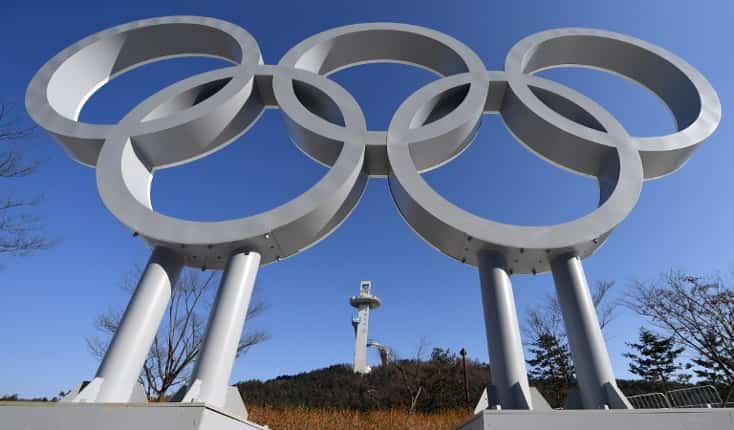
Winter Olympics
With100daysuntil the start of theWinterOlympics,Beijingis promising a "simple and safe" 2022 Games - although preparations are anything but simple as China readies to host thousands of athletes and personnel as it battles flare-ups ofCOVID-19.
Beijingwill be the first city to stage both the Summer andWinterGames, but the 2022 event is shadowed by the coronavirus pandemic and calls from humanrightsgroups for a boycott over China's treatment of Tibet, Uyghur Muslims and Hong Kong.
The Games will run Feb. 4 to 20, with all participants subject to dailyCOVID-19tests and no international spectators. Unlike this year's Tokyo Summer Games local spectators will be allowed at events in and around the Chinese capital.
Athletes and other Games-related personnel will be enveloped in a "closed loop" including three clusters of venues - one in downtownBeijing, one in the outskirts near the Great Wall, and one to the northwest of the city, in Hebei province.
"Keeping the virus under control is the biggest challenge for us as hosts of theWinterOlympics," Zhang Jiandong,Beijing's vice mayor, told a Wednesday briefing.
"If we cannot beCOVID-19secure, then we will not have hosted theOlympicssuccessfully," he said.
Unlike the Tokyo Games, which were delayed by a year and stalked by speculation they would be cancelled, there has been little doubt theBeijingWinterOlympicswill take place - no matter what - as an increasingly assertive China seizes the opportunity to demonstrate soft power.
Still, the countdown comes as China, with some of the world's most stringentCOVID-19controls, manages small Delta variant outbreaks. TheBeijingand Wuhan marathons were recently postponed, with curbs on travel into the capital announced due to dozens of daily new cases.
Such restrictions have contributed to a lack of the anticipatory buzz that marked theBeijing2008 SummerOlympics- an extravaganza widely seen as China's global coming-out party.
On Wednesday, China reported 50 new locally-transmitted cases for the previous day - the most since Sept 16 but still tiny by global standards.
BOYCOTT CALLS
Since then, China has risen to superpower status, locked in antagonistic competition with the United States and under the increasingly authoritarian leadership of President Xi Jinping, with tightened censorship and suppression of dissent.
During the torch-lighting ceremony in Athens earlier this month,rightsactivists unfurled a banner reading "No Genocide Games" and waved a Tibetan flag, although the ceremony itself was not interrupted, as had been the case for the 2008BeijingSummer Games.
Rightsgroups and some U.S. lawmakers have called on the International Olympic Committee to postpone theWinterGames and relocate the event unless China ends what the United States deems ongoing genocide against Uyghurs and other Muslim minority groups.
Activists and U.N.rightsexperts have said that at least 1 million Muslimsweredetained in camps in Xinjiang since 2017.Beijingdenies all allegations of abuse of Uyghurs and describes the camps as vocational training facilities to combat religious extremism.
After Boston Celtics centre Enes Kanter posted videos denouncing China's humanrightsrecord last week, his name appeared to be blocked on Chinese social media platform Weibo, and his team's highlights were dropped from a domestic sports platform.
While no country has said its athletes will boycott the Games, European, British and American lawmakers have all voted for their diplomats to do so.
STAR POWER
Some facilities built for 2008 will be re-used, including the Bird's Nest Stadium, which will again be the site of the opening and closing ceremonies. Others have been newly built near the city of Zhangjiakou in Hebei province, connected toBeijingby high speed rail, with the region's cold but drywinters requiring the help of artificial snow to cover slopes.
The Games are also set to feature players from North America's National Hockey League after they skipped the 2018 edition in Pyeongchang, South Korea, with superstars like Canada's Sidney Crosby and Russia's Alexander Ovechkin poised to add star power.
And while Xi has positioned the Games as an opportunity to accelerate development ofwintersports, China is not expected to be among the biggest medals winners.
China topped the gold medals table at the 2008 Summer Games and came second at Tokyo, but won just one in theWinterGames in Pyeongchang and finished 14th overall.