Turning 70, will India and Pakistan have the maturity to forgive each other?

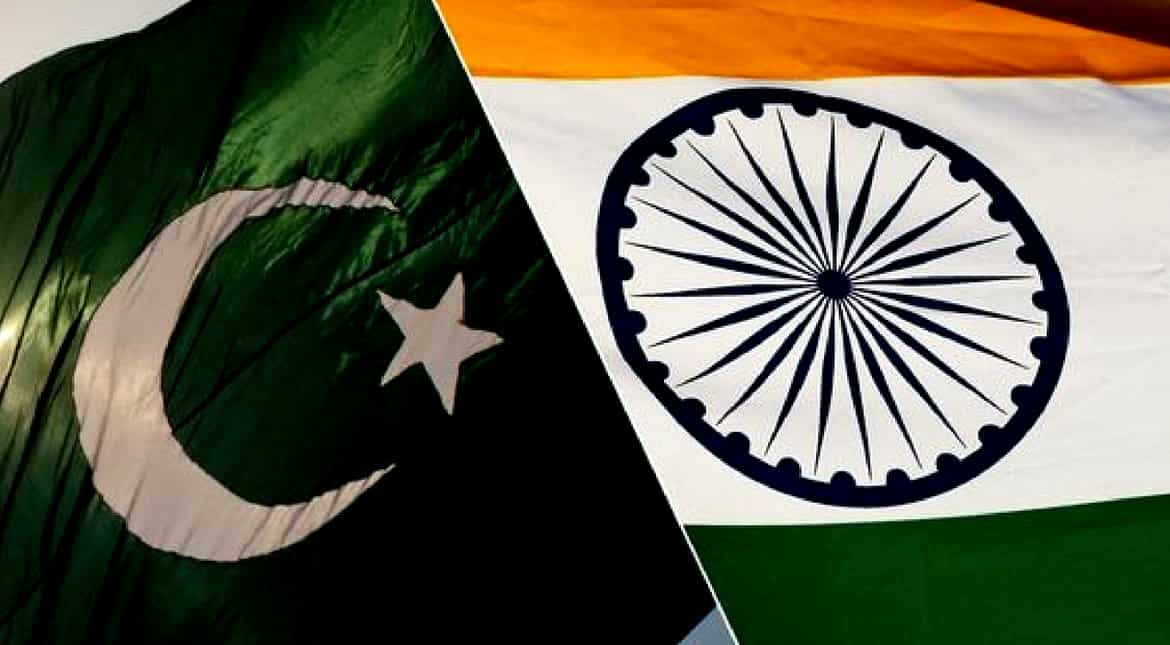
On India-Pakistan
Civil societies of India and Pakistan fervently desire a peaceful, self-respecting and mutually interdependent South Asia.
In their post-1947 incarnations, both India and Pakistan have just completed their 70th year, which, like an individual, is viewed a time in one’s life where maturity, sobriety and forgiveness overrule frivolities, jealousies and vendetta. However, in our case on the subcontinent, despite a massive goodwill and even a grievous sense of “what went wrong”, our respective states and their powerful establishments have refused to outgrow their adversarial relationship.
Hate along with anchoring policies and structures have only boded discomfort and misplaced priorities for millions of South Asians.
Without trivialising their challenges, it is a tortuous fact that the countries are stuck in a self-justifying orbit of mutual contempt. Hate along with anchoring policies and structures have only boded discomfort and misplaced priorities for millions of South Asians.
Certainly, independence came to our part of the world through a noble struggle claiming stupendous sacrifices, and there are undeniable reasons to celebrate historic mid-August midnight of 1947. However, our journey since, despite all the significant strides in socio-cultural areas, also sadly reflects our misplaced priorities. Mutual derision of multiple forms has disallowed a cherished coexistence.
Our civil societies, including those who suffered the pangs of forced migrations and harrowing personal tragedies, fervently desire a peaceful, self-respecting and mutually interdependent South Asia. It is not merely a sublime ideal; it is also an urgent prerogative where we break the long-held shackles of animosities and move towards sharing a compassionate cosmopolitanism.
As long as India and Pakistan remain hostages to their own nebulous security-centred whims and projects, virtual independence will remain a chimera.
As long as India and Pakistan remain hostages to their own nebulous security-centred whims and projects, virtual independence will remain a chimera. Our next phase in decolonisation demands an overdue inter-state cordiality, inter-communal harmony and a judicious sharing of our human and natural resources in the larger benefit of our people. Otherwise, simply hoisting our respective flags from the Red Fort, or across the Constitution Avenue amidst the portraits of Gandhi, Nehru, Iqbal and Jinnah, and our parades resounding with powerful national anthems and shining weapons may plainly betray a partial expediency.
In their rush for creating nationalist ethos over and above their ethno-religious pluralism, these post-colonial states have faithfully banked on centrist policies often betraying hegemonic ideologies. Reflecting serious suspicions of pluralism, such trajectories have aimed at supplicating and even suffusing so-called majoritarianism, which continues squeezing out space for minorities. For any keen observer of South Asia, the Middle East, Central Asia and Sub-Saharan Africa, these are sadly the insidious realities of post-colonial polities. This is where a major reassessment needs to be undertaken.
Seventy years since independence, memorialising Partition through archives and allowing people-to-people exchanges is a transcendent urgency that should go beyond the static nature of Indo-Pakistani relations.
The most dangerous aspect of the pervasive views on Partition has been scapegoating each other by apportioning guilt and responsibility for dislocation and violence to the other party. For instance, in a familiar Indian nationalist parlance, Islam becomes an alien imposition brought in by the hordes of Turks who wanted to create a new Medina. In that sense, Aurangzeb, Sir Syed Ahmed Khan, Muslim League and Jinnah become the others who divided an otherwise united India.
More than anywhere else it is across the subcontinent where Hinduism and Islam interacted in a rather complex and even interdependent way without annihilating each other.
On the other hand, general Pakistani narrative has consistently apportioned blame on the Indian National Congress with a decisive Hindu hegemony, and here Tilak, Nehru and Patel are held responsible for their dismissal of Muslim interests and grievances. Accordingly, a predominantly Hindu India would never accept Pakistan as a separate entity and through all kinds of means would remain committed to undermining it. The denial of Islam as a formative and historic determinant within a powerful strand of Indian history and sociology is as dangerous as is the deindianisation of Pakistan.
Here, areas such as the ancient Indus Valley Civilisation, the advent of the Aryans, evolution of Brahmanism across the Indus lands all the way to the upper reaches of Gandhara, emergence of Buddhism and its expansion into Tibet and China via the Silk Road and then the growth of Muslim communities have to be seen beyond the narrow and exclusive parameters of popular nationalist monologues. After all, more than anywhere else it is across the subcontinent where Hinduism and Islam interacted in a rather complex and even interdependent way without annihilating each other. Thus, this interface allowed South Asia to become world’s most plural region unlike Iberia, Sicily, Western Hemisphere and the Balkans, wherein forced conversions, massive expulsions and even wholesome eliminations radically transformed their demographics.
Retrospectively, with all reasons to respect Indian reformers, intellectuals and political leaders,we still cannot absolve them of their obstinate political rigidity on the eve of independence. Their lack of will to substantially negotiate with one another while representing all the various South Asian communities created a gigantic and no less dangerous vacuum where rumours, local rivalries and selective narratives exacerbated communal chasms.
The lives and future of populace, especially on the ‘wrong’ side of the borders was neither a worry for Mountbatten nor for most Indian leaders. By the time, bleak developments involving millions of masses on the move and falling in harm’s way became a reality, it was already too late. The absence of proper mechanisms ensuring the safety of minority communities in the new states and safe passage for refugees or willing migrants is a shocking reminder of ineptness on the part of the Raj as well as South Asian political leadership.
At least, lessons could have been learned from the Turko-Greek transfer of the population of 1924-5 or posthumous developments in Palestine. Yet no serious consideration was given to such prerogatives. In the end, blame and counter blame became a convenient alibi which also suited the Raj to put the blame on these ‘unmanageable’ Indians who, as per Churchill and several others, were still not capable enough to govern themselves allowing to be guided by a “naked Fakir” or a “seditious lawyer”.
2017, should become the harbinger of a new era where we could shore up a shared resolve to meet our regional and global challenges to bequeath a peaceful and tolerant South Asia for our future generations.
But as observed at the beginning, quite some water has flowed under the bridge since 1947, and in the seventieth year of marking independence we must come up with mature and responsible measures to augur a new era. Here, Partition could work as a stark reminder of our own vulnerability to chaos and violence. Our procrastinations, mutual accusations and confrontational relationship have already taken their pound of flesh from all of us besides acutely damping down our humanity. In that sense, 2017, should become the harbinger of a new era where we could shore up a shared resolve to meet our regional and global challenges to bequeath a peaceful and tolerant South Asia for our future generations.