Sheikh Hasina back in leadership role, says her son Sajeeb Wazed

File photo.
The son of former Bangladesh PM Sheikh Hasina, Sajeeb Wazed has said that her mother "is back in a leadership role" and is in touch with many Awami League party leaders. Hasina, who was the prime minister of Bangladesh for 15 years and providedeconomic stability to the country was toppled after widespread protestson 5thAugust. Since then she has been in India.
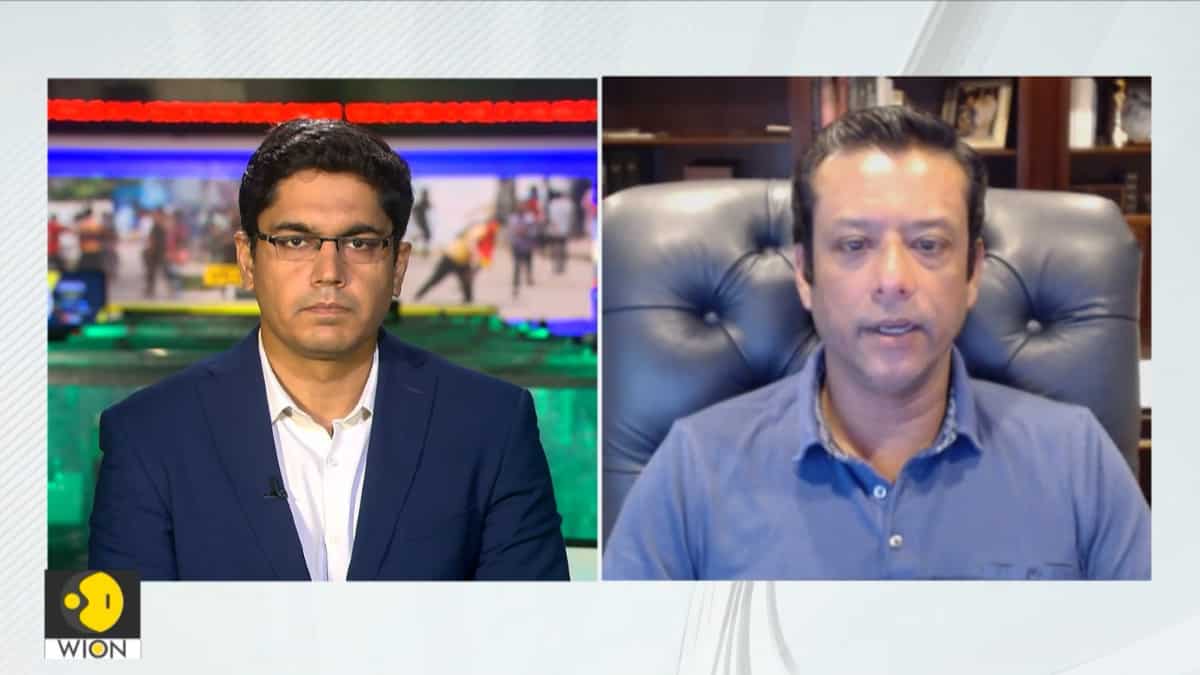
Speaking to our diplomatic correspondent Sidhant Sibal, he said, she has "not applied for asylum in any country" so far and "eventually wants to go back to Bangladesh. She does not want to spend her life outside". After Hasina's exit from Bangladesh, a new interim government under Muhammad Yunus has taken charge. Asked about his view on the new government in Dhaka, he termed it an "unconstitutional government". Full interview:
Sidhant Sibal, WION: How do you see the situation in Bangladesh? It's almost a few days now since Sheik Hasina left the country, and we have seen violence, especially targeting the minorities, the Hindu minorities.
Sajeeb Wazed:Thank you for having me. Yes, for the last few days, especially since my mother left, it has been a state of complete anarchy in Bangladesh, because the police were initially blamed for violence against protesters, and then the police were attacked. Policemen were being attacked throughout the country. So all the police have quit. They were afraid of the uniform, and they had completely abandoned their posts. So there are no police anywhere in Bangladesh. It is completely lawless. For the first two days, there were attacks, targeted attacks, mostly on our Awami League supporters and activists, as well as the minorities, who are mostly the Awami League supporters. We have reorganised the Awami League and reactivated them so that now they are safeguarding themselves. The situation, you know, it's not as bad as it was yesterday, but there's still a complete state of anarchy. There is looting, rioting and looting going on throughout the country, in all the cities.
Sidhant Sibal, WION: Talking about your mother, she's here in India. She reached India on the fifth of August itself. What is the current status and what's the next plan for your mother? Is she seeking asylum in a third country?
Sajeeb Wazed: So no, at this point, no decision has been made. I know there are a lot of rumours going around, but my mother has not applied for asylum in any country. She has not made any plans. She really did not want to leave Bangladesh. It's her home. She loves the country, and even after politics, she wanted to retire and live there. And so she does eventually want to go back to Bangladesh. She does not want to spend her life outside.So we're waiting to see how the situation plays out, whether she returns to politics or not, she would like to go back to Bangladesh.
Sidhant Sibal, WION: You said she would like to go back to Bangladesh. You also said earlier this week that it is unlikely that you will come back to politics. But essentially, if you can give us any timeline, when is the plan to go back to Bangladesh? Will this be seen as a U-turn? Because you were earlier saying that there is no plan to go to Bangladesh now...
Sajeeb Wazed: Yes, you're absolutely right. It is a complete U-turn. Because initially, when this happened, we as a family, decided that, no, we wanted to be done with Bangladesh politics. The rest of our family, we've been settled abroad. I have been settled in the US for almost 30 years. Whether I go to Bangladesh or not doesn't make a difference. My mother is the only one who is living in Bangladesh, and she really does not want to leave the country, but we all thought that she would be safer outside. Unfortunately, what we saw was once our family gave up, and made that declaration, then the attacks on our party members increased because I think then the militants, whoever was attacking, thought, okay, now the Awami league is weak. The Awami League has no chance of coming back without strong leadership. That is why we as a family made the decision that we cannot let the Awami League suffer. So the U-turn wasn't because of us, because of what we wanted, it was for the sake of Awami league, for the sake of our party. It is still the oldest and largest political party in Bangladesh. We have tens of millions of supporters. We have hundreds of thousands of party members throughout the country. We can't abandon them.
Sidhant Sibal, WION: Fifth of August, she came to India on a very short notice. Since then, how many times have you spoken? What is her condition? And essentially, if you can perhaps describe the events of the fifth of August, how disastrous it was, and also in terms ofsecurity and safety as well.
Sajeeb Wazed: So I've been speaking to her every day. First few days, she was in shock. She was very upset. She was very disappointed with the people of Bangladesh, but now she's in a better mood. Her spirits are up. She's much more determined to fight for her party. She has been in touch with many of our party leaders, so she's now back in leadership mode. In terms of what happened that day. My mother had decided to step down because she didn't want any more bloodshed among students because she was already being blamed, but she wanted to do it in an orderly fashion, she would make a speech, then declare a transition Parliament would then hold new elections, and there would be an orderly transition of power. Instead, before she could do that, the students started to march on the Prime Minister's residence. She had ordered the military not to shoot at the students. So when the protesters, Well, I don't know if they're students anymore, because you see what they're doing. These are not the acts of student protesters. These are mobs and vandals in Bangladesh. So when they approached the army barricade, the soldiers fired in the air, but because they were they did not want to shoot civilians. We did not want them to shoot civilians because it would have been a massacre. And so they passed through the army barricade and started marching towards the Prime Minister's residence. At that point, her security took her to a secure location and then to the military airbase. At the military airbase, the helicopter was ready for her. She asked my aunt to get on the helicopter, but that she would stay behind and at that point, my aunt called me, put me on the phone with her, and I convinced her that, no, you have to leave the country. They will kill you. And so, she left the country, and now you see the result.
Sidhant Sibal, WION: August hasn't been a lucky month for your family. Your grandfather was assassinated, and we saw what happened as well on the fifth of August. You also said that she could have been killed. So were there any, I mean, strong assessments that she could be targeted by the mobs?
Sajeeb Wazed: Yeah, the mob had announced that it would march on the Prime Minister's residence. That was their goal. That's where they were marching. Now, the Prime Minister's residence is very heavily defended. You have our SSF, which is our special security force. You have our PGR, which is the Prime Minister's Guards Regiment. They are military. They were heavily armed, and they were fully prepared to defend the Prime Minister's residence. Unfortunately, if that were to happen, hundreds, perhaps 1000s of demonstrators would have died, and my mother did not want that. It would have been a bloodbath, if we hadn't allowed them to march on the Prime Minister's residence and the official security had protected the Prime Minister like it is their mandate to do, hundreds, if not 1000s, of protesters would have been massacred, and we did not want that.
Sidhant Sibal, WION: We saw the new government under Professor Yunus taking charge yesterday. What's your reaction to taking charge, of the new interim government under Professor Yunus?
Sajeeb Wazed: Well, I mean, unfortunately, it is an unconstitutional government. I mean, this is a government that's been appointed. The demonstrators wanted him, but demonstrators are only a small fraction of the population of Bangladesh. They don't represent the people of Bangladesh. There was no election. He's completely unelected. Still, what has happened, has happened. We are in a completely unconstitutional situation, and now we will see how they perform their job, and whether they're even able to restore law and order. First, that is the first priority. And then if they're, you know, then the second priority should be the restoration of constitutional democracy. Let's see what they're able to do. Certainly, I don't think it'd take too long to find out.
Sidhant Sibal, WION: So you said the plan is for your mother to go back to Bangladesh. Do you sense that the government will press charges against her when it comes to the usage of force when the protesters were protesting, the protest by the students?
Sajeeb Wazed: My mother never ordered the use of force. The violence started, and the police, some police members, used force. Our government had already formed a three-member judicial committee to investigate the killings. They had already suspended the police officers. There was no order. So if you'll remember, when we had the last coup, the military government arrested my mother. They charged her with corruption. It went to trial, and at trial, the case completely fell apart because there was no evidence against my mother. My mother had never been involved in corruption. My family has never been involved in corruption. So yes, they can try, but if they want to do it democratically, they want to do it the proper way, and if they take her to trial, they will never be able to convict her. She did not order any violence against the protesters.
Sidhant Sibal, WION: And essentially, have you analysed why this protest happened, in terms of the scale of the protest, and the protest leading to the toppling of a very stable government? Have you analysed, and who do you think is responsible for the developments which have shocked the region and the world as well?
Sajeeb Wazed: Well, I strongly believe that there was some foreign intelligence element involved here, because the protests really started. It didn't start because of something our government did. It was a court ruling. You see, the quotas had already been reduced by our governments four years ago, four or five years ago, when the first quota protests happened, but in response to a lawsuit against it, the quotas were reinstated by the courts, and our government had filed an appeal to the Supreme Court. So our government was fighting that. There was no need for the protest to continue. We believe that there were outside elements, extremist elements, and perhaps a foreign intelligence element, I strongly suspect ISI was feeding this. So the reason I believe that is even after we appealed to the Supreme Court and we assured the protesters that we would reduce the quotas, they took one of the quotes from my mother out of context. The police tried to stop the violence, but in trying to stop the violence, some of the police used excessive force. Now, our government reacted to all of this. Our government stopped the violence immediately. Our government suspended all the police officers who used excessive force immediately, and we formed a three-member judicial commission to investigate all the deaths. So we did everything to correct whatever went wrong. These weren't orders from the top. These were individuals at the ground level acting on their own or reacting, and our government stopped it and corrected it. And then we invited my mother herself, invited the protesters for dialogue. We actually expedited the Supreme Court hearing, and we overturned the protest, and it was all done. Finished. After that, the protesters started demanding. They decided they had one point, which would be the toppling of the government, and then they started attacking the police with firearms. So all this sequence that no matter when however we resolve the situation. Somebody kept inciting the situation, further inflaming it, and then they armed the protesters. The only agency that would arm and provide weapons, is our militants, or foreign intelligence service.
Sidhant Sibal, WION: So you mentioned about foreign intelligence. You also mentioned ISI, which is Pakistan's intelligence arm, you can elaborate on what you suspect as their role in the protest and the eventual toppling up of a very stable Hasina government.
Sajeeb Wazed: I mean, I believe the role was on social media and online and spending money in the media to inflame the situation and then supplying weapons that I believe is what the actions were.
Sidhant Sibal, WION: Sir, do you suspect the involvement of any other country, perhaps China or the US?
Sajeeb Wazed: I'm positive China is not involved, because China has never interfered in our internal affairs, but the US, who knows, it's entirely possible.
Sidhant Sibal, WION: So do you suspect an American role as well?
Sajeed Wazed: I have no evidence. I cannot say definitively, but I wouldn't rule it out.
Sidhant Sibal, WION: What next for Bangladesh? What's your assessment? What will happen in Bangladesh?
Sajeeb Wazed: Well, look, we have seen these interim governments in Bangladesh before. These governments were picked by a handful of individuals, consisting of elites. The last time we had that was in 2007 - 2008. That Government failed to run the country. The economy completely stalled. They were they could not control it, it became completely corrupt. We shall see what happens with this government. Now that's why I feel that this government's priority should be to hold elections as soon as possible and return to democracy. Because they are an undemocratic government. They are unelected. Now, it doesn't matter if a small group of protesters wants them, and mind you, 20,000 or even 50,000 protesters in Bangladesh are a tiny fraction of the population. We have 170 million people. They do not represent the will of the majority at all. So it is a completely unconstitutional situation. It is a completely undemocratic government. But we shall see, if they don't hold elections soon and try to hold onto power, I think Bangladesh is going to end up like Pakistan or Afghanistan.
Sidhant Sibal, WION: You also, in the past, have mentioned in an interview that it can end up like Pakistan. So in terms of what element of Pakistan, Do you see continuous instability in Bangladesh now?
Sajeeb Wazed: Without the Awami League, without a strong government, you see the only strong government Bangladesh has had in its history, and this is a proven track record that has provided stability. And you have said this, no one can deny it. Everyone has said this, and everyone says this, the only government in the history of Bangladesh that has provided stability, security and economic growth has been Sheikh Hasina's government.No other government has been able to do it. So there is a right answer right there. Without Sheikh Hasina,Bangladesh's economy will stagnate. It will never be stable. It will never be secure.
Sidhant Sibal, WION: And so in terms of your involvement in Bangladeshi politics, or your sister's involvement in Bangladeshi politics, could be in future, not tomorrow or this year, perhaps the next five years or 10 years. You are also coming to Bangladesh, your sister is also coming to Bangladesh, and playing an important role in Bangladeshi politics. Can we see that?
Sajeeb Wazed: I can't really answer that my family, myself included, we've never been interested in politics. The only reason, and in fact, you heard me on Monday that my family was done with politics because that was our intent, the only reason I am staying involved, the only reason I change direction, is because our people were being killed, and I have to do whatever it is for them. So the reality is, that BNP and Awami are the two largest political parties in Bangladesh. Whenever there is a democracy, whenever you have elections, one of these two parties is going to win power. Power is going to switch between these two parties for the foreseeable future. No one can stop it, both of us. That's not going to go away anytime soon, no matter what anyone tries to do. So I don't know about myself personally, but Awami League will be back in power someday, whether it's sooner or later, it is inevitable.
Sidhant Sibal, WION: We saw visuals as well, visuals of your grandfather's statue being vandalized, your mother's pictures being torn, what do you have to say about that?
Sajeeb Wazed: I am really, really disappointed, and disgusted with these protesters.