
Rohingya exodus: Hide, run, pay and stay alive

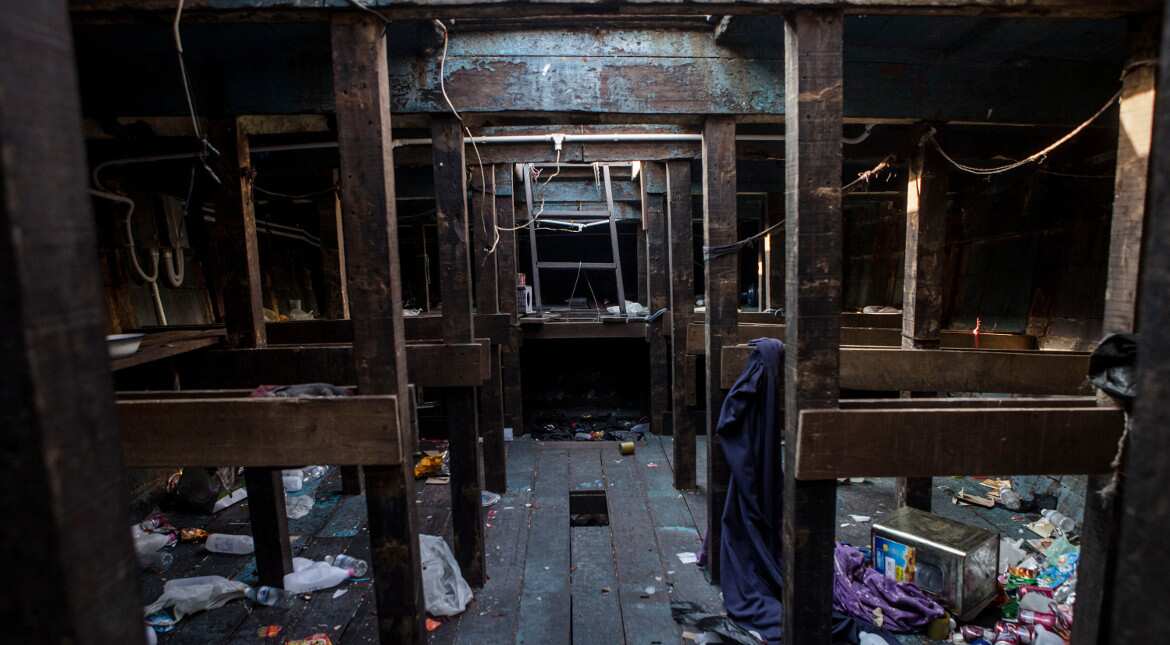
Interior of a boat which carried Rohingya refugees fleeing Myanmar
Persecuted in Myanmar, they must flee the country. But then that involves crossing borders. And that in turn costs a lot of money
It was probably the longest and mosttreacherouswalkNizamuddinhad evertaken in his life, but he was fleeingdeathand somehow thedistancebecame inconsequential.
Walking westwardsover mountains andthrough jungleswas his only chance at survival.
Like allRohingyasMuslims, he comes fromRakhine,Myanmar'swestern coastal state.The violence being meted out to his communityin theBuddhistmajoritycountryleft him with no option but to escape, leaving behind his wife andchildren, tofirstsave his life.
"I walkedforone night and one day through?mountains,?jungle and?paddy fields.Then Irode ina small paddle boatto reach Bangladesh.It was the first time Ihad set foot in anothercountry. I did notknow the language, I had no passport, no legal documents.I was scared,” recallsNizamuddin, chairman of the Delhi-basedRohingyaRefugees'Committee.
After reaching Bangladeshin 2012, he lived for five months in a small hut in the seaport city of Chittagong,surviving one day at a time.
Nizamuddindid not feel safe there, he wasan illegal immigrant,and he could be arrestedany time.
“I tried to return to Myanmar. I wasworriedbecausemy three small children and my wife were still thereand their lives were in danger. They wanted to join me in Bangladesh, but I myself was unsafe. How could I bring my children there? Ithoughtitwould be better if theydiedin Myanmar.At least theretheycould get a proper burial.Nobody wouldevenhelpbury themif theydiedin Bangladesh.”
Indiaemerged as an option while speaking to otherRohingyasstranded in Bangladesh.That seemed the only way out of the precarious lives they were leading.Once in India,hecouldapply for the refugee card issued by the United Nation High Commission for Refugees (UNHCR). A document that wouldendhis status ofbeing anillegal immigrant. That opened up thepossibilityof applying for along-term visa.
Nizamuddindecided to takehis chance--he lefthishut and reached the border.
"There?were?some agents there and we had to pay them.I paid 7,000?Takas?(roughly $90) to reach India. Later,Itoldmy wife how to join me.Ihired anagent andmy familyalso came to India."
Nizamuddinhas been officially recognised as a refugeenow andholdsan UNHCRcard.
Hisis not a one-off story.Amajority of the 36,000Rohingyascurrently living on Indian soil followed a similar route.

In 2012,they fled Myanmar to reach Bangladesh,and after livinghand-to-mouth for a while, they took their chance to cross the Indianborder. At every crossing pointtheypaid money thatadded to thefortunesof an underworld of agents profiting from theircrisis.
"Everybody?had to pay,"?saysAli Khan,29,a refugee also living in Delhi.
Hewas among the one millionRohingyaswhofled Myanmar after the outbreak of violentanti-Muslimriots in the country in 2012.
“I had to leave and there were only two ways for me. One was to Malaysia by boat and the other to Indiaover land. I chose Indiaas trying to crossby boat is very dangerous,” he recalls.
Cross-border smuggling, beitofhumansor goods, has always been a lucrative activity,and soithas been during theRohingyaexodus.
Sometimes the price quoted for a crossing into India went up to $500 like in the caseofNaseenAkhtar, a rice farmerfromMyanmar.
Akhtar had to sell-off some family goldto afford thecrossing.
As per personal testimonies recorded by this correspondent, the majority had to pay between $100 and $140for the trip to India.Arough calculationpoints toa black-money circuit worth more than $3.5 million, a part of whichhas definitelyended up in the pockets of the personnelguarding thecheckpointsat the international border between India and Bangladesh.
Ahundred dollars may not seemlikea prohibitive amountto some,but it is a matter of perspective.Forsomeone without a steady source ofincome for months,putting together this money can become a struggle – one marking the difference between life and death.
In South Asian countries,often,even a salary isnot enough and millions of working households survive with less than $2 a day.
In Bangladesh,a fillingmeal in a good restaurant with air conditioning costs about$3. A meal on the roadside,comprisingrice, vegetables anddaal(lentil soup)can behadfor roughly $1.Akilogramofaverage quality rice is pricedatnearly50cents.
Theexodus ofRohingyasfrom Myanmartook placein 2012, a point of no return for theMuslimcitizens of the Rakhine region.
Violence broke outfollowingrumoursthat someMuslim menhadallegedly rapedaBuddhist woman.
In the first four days, 21were killed and as many as 1,500 houses burnt.
ThenpresidentThein Sein declaredastate of emergency.
In the following months, more than 90,000fled their homes and2,000buildings, including mosques and temples, were destroyed. The wave of inter-religious clashesdevastated the social fabric of the region, bringing to an end the rather pacific?coexistence?between the Buddhist majority and the?Muslim?minority.?
Myanmar president declared thatRohingyaMuslims were not welcome any more in the country, stating that“the only solution is to hand them over to the UNHCR or resettle them in third countries that arewilling to take them”.

“I had no choice. If it was not fortheagents, I could nothave broughtmy childrentoIndia. They helpedsave my life,” says Nizamuddin.Clearly, at times ofcrisis,actions arejudged differently.
Agents at theinternationalborders make economic profit out of ahumanitarian crisis, something thatcanhardlybe defined ashelp. But when life is in peril, survivalbecomes the only priority,and judgement starts following different parameters.
When one flees a country to escape violence, crossing the border alive and free is what matters the most.In the eyes ofthe one fleeing violence, theagent becomes someone who “helps” and notsome who“exploits”.
“I know these people are not good, but we had nootheroption for savingour lives.Asfar as I am concerned,they havehelpedme,” saysNizamuddin.
The 2012 riots did nottake place all of a sudden or because of a chance flare-up of communal discord.There is a historical context to it and life has never been easy for theRohingyasin Myanmar.
Historically, they havebeen treated asforeigners in their own country,unwittingvictimsof ethnicoriginbeing used for politicalends. ?
Over the years, the ?militaryJuntahassupported the?nationalist narration that definesRohingyasas Bangladeshi immigrants rather than?asa?native Myanmar ethnic group,mainly to keep theBuddhist?majorityhappy.
They were issued?only temporary identity cardsand werenot allowed to move freely in the country. Even getting a child enrolled in agovernment schoolorapplying foragovernment jobwas atough task.
Historians have been - and are -trying to understand the originof the Muslim presence in the state of Rakhine, but whatevertheconclusion,theRohingyaidentityis a fact today.
The ?newlyelected?democratic?government?is not willing to admitthis and chooses topersist withthe nationalist?narration.
According tostatecounsellor and Nobel Peace Price laureateAung ?Saan ?Su ?Kyi, ?Myanmar has more urgent?problems ?to solve.
She ?recently requested ?several foreign?diplomatic ?missions?in the country ?to ?stop ?using the ?term?Rohingya ?forwhat she believesisa Bangladeshi minority.
With the Myanmar government not recognising them ascitizens, it is always hard for theRohingyasto provetheir identity.
Manygive in andendup acceptinga vulnerable lifeas illegal immigrantsonthe marginsof society. A life with little or no hopeforreturningtotheir country, their homes, theirlivelihoods, their fields.
After all this is what being a refugee means: livinga lifenot of oneschoosing, knowing what is left behind,but not whatliesahead.It's alifebased onconstantuncertainty where future is hardly a positive variable.
Future is a word that resonates more with anxiety rather than hope for a refugee likeNizamuddin. His children are growing up andthey sometimes ask some simple questions. But the answers are not that simpleto come by.
“My children ask me where is our home, where wewill beinfuture, where we will get educated... I have no answer.I canonly offersilence,” saysNizamuddin.