Pakistan Peoples Party: A brief history

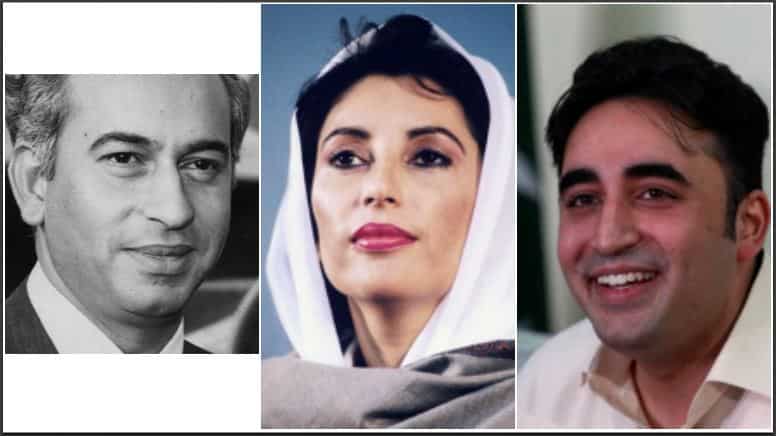
With Benazir Bhutto coming to the forefront in 1988, PPP reassumed its radical left stance
Pakistan, which is slated to go to general elections on July 25, has witnessed a rocky road to democracy. Although the first "indirect elections" were held in 1954 until 1988 Pakistan had seen only five elections until Benazir Bhutto returned from exile and assumed power in 1988. Here’s a brief history of one of the oldest political parties of Pakistan, the one marred by great political upheavals, tragedies, yet has the vision intact – to steer Pakistan on road to prosperity and peace.
Bhutto's PPP – Pakistan Peoples Party
The party was founded by Benazir Bhutto’s father, Zulfikar Ali Bhutto in 1967. PPP had at its core the concepts of socialism and egalitarianism. Zulfikar Bhutto received early support from students – National Students Federation – to form a revolutionary socialist party. PPP was an instant hit with the youth. Under Zulfikar Bhutto’s leadership, the party clammed down on General Ayub's regime, launched protests and forced him to resign in 1969.
1970 – Pakistan’s first elections on adult franchise
Bhutto campaigned big and managed to successfully form a government in 1971. From President, he became the Prime Minister in 1973. Bhutto brought in many reforms he embraced the idea of nationalising Pakistan’s economy. Under the social, educational reforms of 1972, the Bhutto government made education till 10th grade compulsory and free. In 1975, he introduced the Labour Law to satisfy Pakistan’s militant labour force.
Zulfikar Bhutto won the heart of Pakistan’s awaam. Many lovingly called him Quaid-i-awaam (people’s leader).
The unrest
PPP became unpopular for its ideology. Internal rifts grew and many members split into other secular parties. The PNA – Pakistan National Alliance -- (a coalition of 9 opposition parties) launched a violent protest against the Bhutto regime in 1977. Bhutto won but the election was rejected by the PNA and the opposition fresh polls were called for. The opposition demanded imposition of Sharia law. Bhutto tried to pacify the opposition by rolling back PPP’s socialist ideology.
Friday was declared as the day of a weekly holiday. Nightclubs were banned alcohol ban was imposed on Muslims. Bhutto tried his best to save the government but, all in vain.
The coup -- fall of Zulfikar Bhutto
ZA Bhutto was accused of rigging the 1977 elections. His own handpicked military general Gen Zia ul Haq toppled him in a military coup and took over the regime. Bhutto was also accused of orchestrating the murder of a political opponent. He was sentenced to death by the Zia regime hanged to death in 1979 at Rawalpindi.
Much of the Muslim world was shocked at Bhutto's execution and condemned it. Bhutto’s last words were, "Oh Lord, help me for... I am innocent".
Benazir's rise, PPP’s revival
Bhutto’s daughter, Benazir, was kept in jail and then under house arrest after Bhutto’s execution. She took over PPP in the year 1978 but was in and out of jail until she was exiled to Europe. Most of PPP’s top leadership was in jail around this time.
With Benazir coming to the forefront, PPP reassumed its radical left stance. She returned with full vigour and led the 1988 elections PPP won and formed the government.
Gen Zia died in a plane crash the same year.
Benazir’s final run
Benazir was sworn in as the Prime Minister in December 1988. President Ghulam Ishaq Khan dismissed her government in 1990 on corruption charges and over deteriorating law and order in the country. She lost the 1990 elections to Nawaz Sharif (PML-N) but came to power again in the year 1993.
PPP’s ideology became more centrist in nature. Bhutto embraced privatization but retained theparty’s original populist stance. Bhutto’s regime was dismissed for the second time. Nawaz Sharif took over but was toppled by Military chief General Pervez Musharraf in 1999. Sharif and Benazir both were exiled from Pakistan. Both returned to Pakistan in the year 2007 and decided to become allies and contest the 2008 elections.
Benazir had now moulded the party into a left-liberal outfit. Musharraf’s regime had become extremely unpopular due to growing incidents of extremism and terrorism.
Benazir’s homecoming rally was targeted but she survived the attack. She was assassinated during a rally in Rawalpindi on December 27, 2007. Pakistan broke into riots and violent protests unrest prevailed for weeks.
PPP won the 2008 elections. Benazir’s husband, Asif Ali Zardari, took over as party’s new chairman. Yousaf Raza Gilani was sworn in as the Prime Minister. Benazir’s son, Bilawal Bhutto was named PPP’s co-chairperson in 2007 he assumed office on December 30, 2007
Bilawal Bhutto’s ‘new PPP’
Pakistan’s economy nosedived as PPP grappled with growing extremism, terrorism, and internal issues. The party lost the 2013 elections to Sharif’s Pakistan Muslim League (Nawaz).
BilawalBhutto was elevated as PPP’s chairman in 2015. Under Bilawal’s absolute command, PPP witnessed widespread changes in its original fabric. Bilawal, often touted as the future of PPP, promised a‘new PPP’ which would stand for liberalism and new-age democratic values, retaining the party’s traditional populist ideology at its core.
PPP is set to lock horns with PML (N) headed by Shehbaz Sharf and Imran Khan’s Pakistan Tehreek-e-insaaf (PTI). Pakistan will go to polls on July 25, 2018.