Opinion: Why Sardar Patel mistrusted the UN Security Council

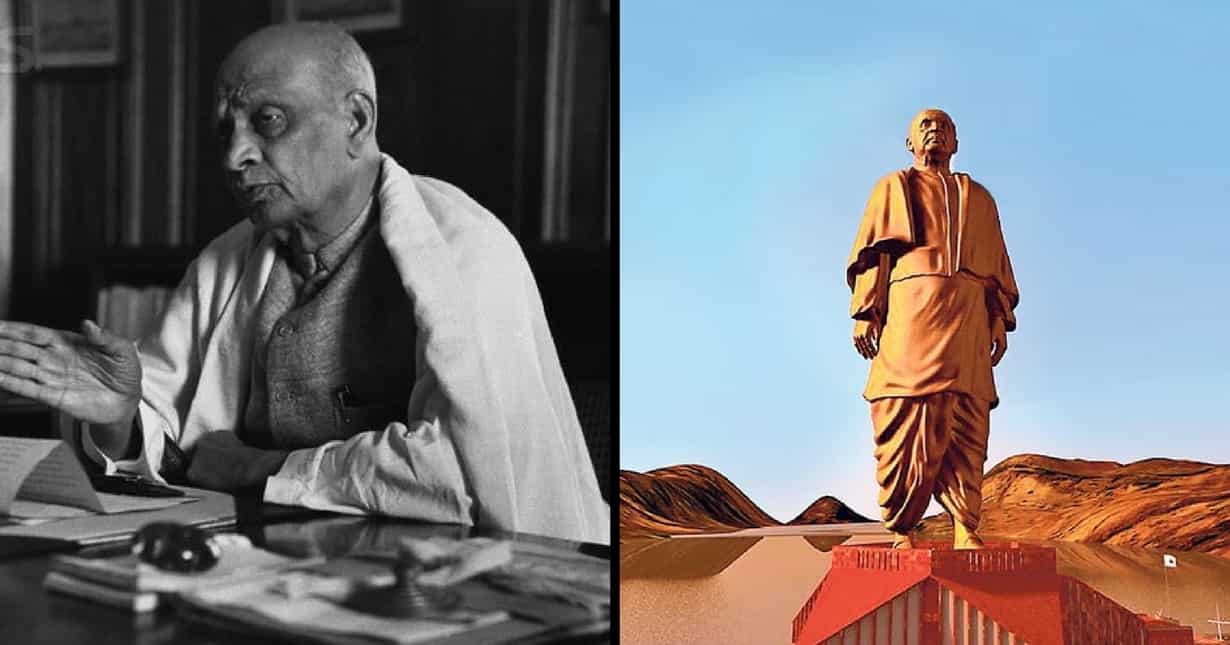
Sardar Patel
"...if United Nations Organisation is not able to do anything then instead of calling it a Security Council, it must be termed the ?Insecurity Council? which disturbs the security of law,? said Sardar Patel.
India’s foreign policy, in its earliest avatar, was built in conformity with Prime Minister Pandit Nehru’s vision. It remained so for the next 4 decades. The impression in post-colonial India has been that only Nehru was passionate about foreign affairs and rest in the Congress had different indulgences. If one goes through the correspondence between Patel and Nehru, the latter admits his own enthusiasm about foreign policy, and acknowledge the difference of opinion between him and his peers on many world issues.
Sardar Patel’s image, on the other hand, is that of a prisoner of his own success like BR Ambedkar. As Ambedkar’s career boils down to the making of the Constitution, Patel’s repertoire comes down to the unification of India.
Patel passed away soon after the independence, leaving little or no public imprint of the world-view he espoused in numerous meetings of the Congress before and after independence.
Nonetheless, some of his observations on the United Nations Security Council remain pertinent even today. His views were built on India’s early engagement with the UN-- the organisation that epitomised the new world order of the victors of World War II.
As observed by Sardar Patel so many decades ago, India and several other countries continue to face the same dilemma after 70 years. The member countries of the UN have to deal with an archaic and unfair Security Council which on multiple occasions has taken partisan positions on the issue of terrorism and civil conflict.
The matter was best illustrated during Justice Dalbir Singh’s election when Britain came down to using the most archaic tool available to them. Britain bowed down under world pressure but the archaic tool persists. Despite world pressure, the United Nation Security Council continues to resist reform.
Sardar Patel’s observation three years after its inception shows UN from a different light. We get to see the UN from the perspective of a newly independent nation which is trying to build a republic over a motley body of feudal states.
Sardar Patel in his Nagpur speech on 4th November 1948 said, "You have seen what is happening in Hyderabad. The Nizam says, 'I do not want my case in Security Council.' But Security Council says, 'We are seized of it.' It is so because they have no other thing to do. Therefore, anything which comes before them, they go on discussing it which disturbs the security here or likely to disturb the security here and thereby it disturbs the security of the world and thus it is proper and fitting thing to call this organization an “Insecurity Council”. How far it is advisable to be the member of this august Organisation is a question which has to be seriously considered.”
Sardar Patel in his speech elaborates further. “Take Palestine, take Indonesia, take any question that has been referred to Security Council. It has not been able to dispose them and bring peace; they are all problems which they are not able to settle. So, in one way, the League of Nations was more or less a harmless organization. This organization if it does not improve itself is going to land the world into a terrific slaughter and destruction,” he said.
Lastly, in a letter written on 28th March 1950, in response to Nehru’s letter dated 26th March, a difference between them on a key issue was recorded. It is an issue which remains alive even today.
Nehru was upset that Sardar had discussed foreign policy with Members of Parliament, making uncharitable comments on his initiatives. Patel’s reply was in response to it and the letter said, “Some Muslim countries have recognized Israel but we have not done out of deference of the views our Muslim brethren.”
Narsimaha Rao in his tenure established full diplomatic relations with Israel and it’s no co-incidence which school of thought he belonged to in the Congress.
Coming back to the moot point, Sardar Patel’s observation continues to be true for the UN, which behaves as a political body motivated only by national interest of big powers where interests come first and merit later. The romanticism related to the UN exists no more. It needs reforms and tough negotiation from various emerging economies.
I would end by quoting an excerpt from Sardar Patel's observation on Kashmir. “We have seen what price we have paid by going to that Organisation. We went to UN to bring the dispute to an early end and we were maligned all over the world by the representatives of Pakistan. And people who had never seen this country and who did not understand what the problem of India and Pakistan or Kashmir was, - they began to hear the case from people who had no bone in in their tongue. They, therefore, went on talking anything that came into their mouth and for six months, it went on like that. They visited Kashmir, they visited Pakistan, they visited India, and had long and prolonged conversations and discussions. The other party did not. Eventually, they make proposals for cease-fire. The other party did not. Yet we are where we were. If we were to fight this out by armed forces and if United Nations Organisation is not able to do anything then instead of calling it a Security Council, it must be termed the “Insecurity Council” which disturbs the security of law.”
(Disclaimer: The author writes here in a personal capacity).