More Rohingya refugees flee Myanmar citing violence, hunger

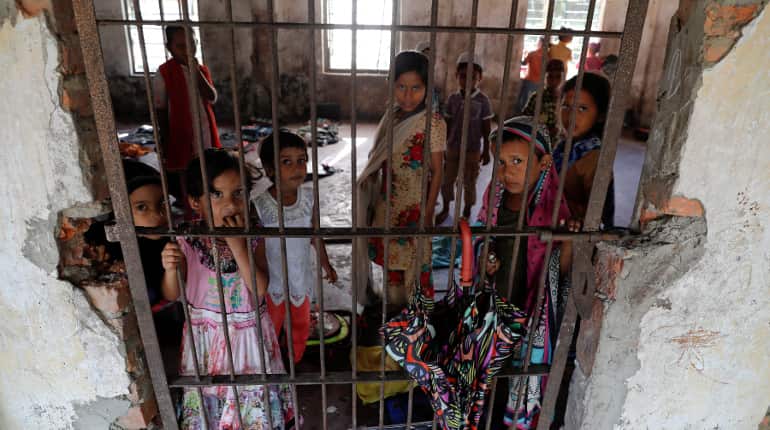
Rohingya
Several thousand people cross from?Myanmar's Rakhine State, filing along embankments between flooded fields and scrubby forest
Thousands ofRohingyaMuslims fromMyanmarsought refugee in Bangladesh on Monday, in anewsurgein an unrelenting flow of people driven by violencethe United Nations has denounced as ethnic cleansing and increasingly byhungertoo.
Reuters reporters on the Bangladeshi side of the border, in Palong Khali district, saw several thousand people crossing fromMyanmar's Rakhine State, filing along embankments between flooded fields and scrubby forest.
"Half of my village was burned down. I saw them do it," said Sayed Azin, 46, who said he had walked for eight days with his 80-year-old mother in a basket strung on a bamboo pole between him and his son.
Soldiers and Buddhist mobs had torched his village, he said.
"I left everything," he said, sobbing. "I can't find my relativesI can't take this anymore."
Somenewarrivals spoke of bloody attacks by Buddhist mobs on people trekking towards the border.
About 519,000Rohingyahave fledMyanmarsince Aug. 25, when attacks byRohingyamilitants on security posts in Rakhine State sparked a ferocious military response.
Refugees and rights groups say the army and Buddhist vigilantes have engaged in a campaign of killing and arson aimed at driving theRohingyaout ofMyanmar.
Myanmarrejects accusations of ethnic cleansing and has labelled the militants from the Arakan RohingyaSalvation Army who launched the initial attacks as terrorists who have killed civilians and burnt villages.
Among thosefleeing were up to 35 people on a boat that capsized off the Bangladesh coast on Sunday. At least 12 of them drowned while 13 were rescued, Bangladeshi police said.
"We faced so many difficulties, for food and survival," survivor Sayed Hossein, 30, told Reuters, adding that his wife, three children, mother and father in law had drowned.
"We came here to save our lives."
'GETTING WORSE'
TheMyanmargovernment has said its "clearance operations" against the militants ended in early September and people had no reason toflee. But in recent days the government has reported large numbers of Muslims preparing to leave, with more than 17,000 people in one area alone.
The government cited worries about food and security as their reasons.
Some villagers in Rakhine State said the food was running out because rice in the fields was not ready for harvest and the state government had closed village markets and restricted the transport of food, apparently to cut supplies to the militants.
"The situation's getting worse, we have no food and no guarantee of security," said aRohingya resident of Hsin Hnin Pyar village on the south of the state's Buthidaung district.
He said he knewof several people who had been picked up by police and beaten on suspicion of having militant links, adding that a lot of people were preparing toflee.
Senior state government official Kyaw Swar Tun declined to go into details when asked about the food situation, except to ask, "Have you heard of anyone dying ofhungerin Buthidaung?"
The reports of food shortages will add to the urgency of calls by aid agencies and the international community for unfettered humanitarian access to the conflict zone.
The insurgents declared a one-month ceasefire from Sept. 10 to enable the delivery of aid but the government rebuffed them, saying it did not negotiate with terrorists.
The ceasefire is due to end at midnight on Monday but the insurgents said in a statement they were ready to respond to any peace move by the government.
The ability of the group, which only surfaced in October last year, to mount any sort of challenge to the army is not known, but it does not appear to have been able to put up resistance to the latest military offensive.
COMING, GOING
Bangladesh was already home to 400,000Rohingyawho had fled earlier bouts ofviolence.
Mostly BuddhistMyanmardoes not recognise theRohingyaas citizens, even though many have lived there for generations.
But even as refugees arrive, Bangladesh insists they will all have to go home.Myanmarhas responded by saying it will take back those who can be verified as genuine refugees.
ManyRohingyafear they will not be able to prove their right to return.
Myanmarleader and Nobel peace laureate Aung San Suu Kyi have faced scathing international criticism for not doing more to stop theviolence, although she has no power over the security forces under a military-drafted constitution.
The United States and Britain have warnedMyanmarthe crisis is putting at risk the progress it has made since the military began to loosen its grip on power in 2011.
The European Union and the United States are considering targeted sanctions againstMyanmar military leaders over theviolence, officials familiar with the discussions say.