Mahinda Rajapaksa: Sri Lanka’s former strongman and hardline politician

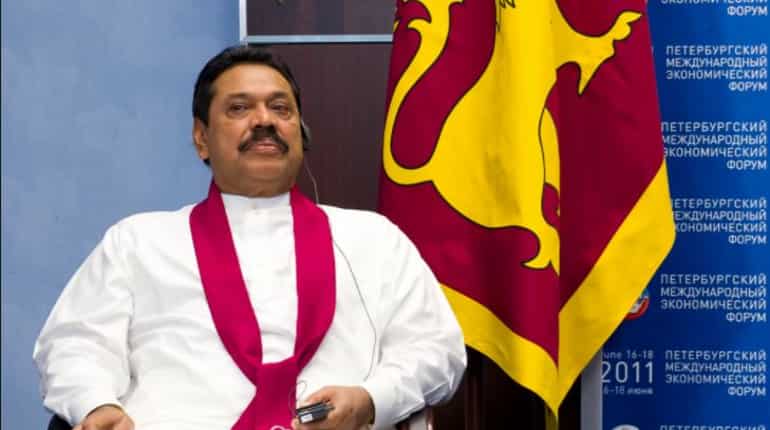
Mahinda Rajapaksa
Sri Lankan former strongman Mahinda Rajapaksa is currently at the centre of one of the most-watched political crises in South Asia. The abrupt removal of Ranil Wickremesinghe as the Prime Minister by President Maithripala Sirisena and Rajapaksa’s appointment stunned the world and caused international concern.
The chain of political events in the island nation has been billed to give shape to arguably the biggest political crisis in the country after the civil war that ended almost a decade ago.
On December 15, the embattled Lankan Prime Minister Mahinda Rajapaksa resigned, only a month and a half after taking office.
Amid fears of a government shutdown, Rajapaksa put in his papers and said in a statement that a change of government that "the people expected" has now been put off.
The development came after Sri Lanka’s Supreme Court, on December 13, pronounced a crucial verdict calling the sacking of the country's parliament by President Sirisena as illegal.
The seven-judge bench unanimously decided that Sirisena violated the country's Constitution when he dissolved parliament and called for snap polls nearly two years ahead of schedule.
Rajapaksa was previously unsuccessful in mustering a majority to instate his cabinet. President Sirisena prorogated and later dissolved the Parliament, calling for snap polls in January next year. The Sri Lankan Parliament moved two no-confidence motions against Rajapaksa which were rejected by President Sirisena. A court, earlier this month, suspended Rajapaksa's powers as Prime Minister, ruling that his cabinet would not be functional until its legitimacy is established.
Former strongman
Rajapaksa is not called Sri Lanka’s ex-strongman in vain. Born on November 18, 1945, in Sri Lanka’s Hambantota district, his first political stint came at the age of 24 as the youngest ever parliamentarian. With nearly four decades of political career under his belt and a double-term as Sri Lanka’s President (2005-2015), Rajapaksa has been a force to reckon with in Sri Lankan politics.
A former lawyer, Rajapaksa briefly served as Sri Lanka’s prime minister (2004-05) after which he was elected as the President in 2005 and won his second term in 2010. Under his rule, the state won over Tamil Tiger rebels in 2009, putting an end to the civil war and crushing LTTE’s two-decade-long dream to attain self-rule.
Rule marred by controversies
However, his rule has been marred by controversies, political scrutiny and criticism over allegations of corruption and human rights abuse.
One of the major concerns raised during Rajapaksa’s rule was that of human rights violations toward the end of the civil war wherein the former President was accused of overlooking the use of violence while clamping down on the Tamil rebels, as a result, many innocent civilians lost their lives.
International concern over human rights abuse led to the freezing of Western aid to Sri Lanka, Rajapaksa then turned to China.
Rajapaksa comes from a political family; his father represented Hambantota for nearly a couple of decades till 1965. The former leader of the Sri Lanka Freedom Party, Rajapaksa was also in controversy for favouring his family members for influential posts. One of the blows to the former President came when the alleged killing of a Sri Lankan newspaper editor, Lasantha Wickrematunge, was linked to his regime in 2009. Wickrematunge’s piece, published posthumously, directly accused Rajapaksa of corruption, human rights violation and misusing public money.
Hardline leader
Often described as a hardliner, Rajapaksa initiated the overhauling of Sri Lanka’s infrastructure which included the Hambantota water port to constructing an international airport and a world-class cricket stadium named after him.
Under his presidential term, Colombo signed a series of infrastructure deals with China under Beijing’s ambitious Belt and Road project. However, high commercial borrowings from China only added to the already ballooning debt-share that the country was grappling with. Sri Lanka, last year, gave up the Hambantota Port and acres of land around it to Beijing.
Rajapaksa’s political charisma nosedived after Maithripala Sirisena defeated him to become the President in 2015. Rajapaksa’s effort to clinch the seat of Prime Minister that year also went in vain until this year when he was appointed the PM by Sirisena.
Road ahead
Rajapaksa’s legitimisation as Sri Lanka’s prime minister would have been an event closely watched and monitored by global powers, especially when his was the regime marred by charges of corruption and human rights abuse.
In the event of his resignation, Sri Lanka's political tension seems to de-escalate, paving way for the ousted prime minister, Ranil Wickremesinghe, who clinched his lost throne.Wickremesinghe took theoath as Sri Lanka's prime minister on December 16 ending two months of political impasse.