Living in a glass house, suffering from an identity crisis

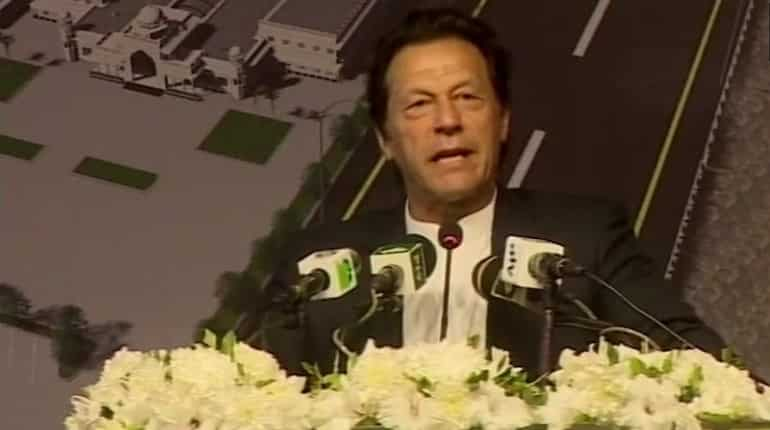
Pak PM Imran Khan
'Identity crisis is defined as the failure to achieve ego identity. This stage of psychological development is called identity cohesion versus role confusion. Successful resolution depends on one's progress through previous developmental stages, centering on issues like trust.'
When German psychologist Erik Erikson coined the term and defined the concept, he was referring to adolescents. At 71, the state of Pakistan seems to be behaving like one.
Two statements made over the last two days betray Pakistan's identity crisis. One was by their Army Chief General Qamar Jawed Bajwa. He said he supports peace initiatives vis a vis India and that they're not a sign of weakness. The second was Prime Minister Imran Khan's unsolicited advise to India on how to treat minorities and the fanciful assertion that he will show how to right such wrongs.
The little said about the first statement the better. Pakistan's record on fomenting terror and launching unprovoked border attacks is no secret. Neither is the fact that hurting India is their raison d'etre. General Bajwa has reiterated the fact that his army exists as a force relative to India, not an absolute entity. India defines their identity.
As for Mr Khan, his statement has riled up many in India, and rightly so. He's got a good dose of sentiment. Let's introduce him to some facts now.
In 1947, religious minorities constituted over 20 per cent of Pakistan's population. That number has now fallen to 3 per cent.
A report by the US State Department claims that religious minorities are harassed in Pakistan. The report condemns state-sanctioned discrimination against the Ahmadis and other minorities.
In 2017, at least 231 people belonging to minority communities were killed in several incidents of violence in Pakistan.
Now Prime Minister Imran Khan says he'll be their knight in shining armour. That's all very well, except that nobody believes him. He's been in office for a little more than a hundred days. The biggest headline to come out of Pakistan during this period, apart from the collapsing economy, was the story of a Christian woman and the persecution she faces.
Asia Bibi is a Pakistani Christian who was accused of blasphemy. Asia Bibi was on death row for eight years. She was cleared of all charges on 31st October 2018. Almost two months later, she's still in jail. That's where she'll celebrate Christmas.
Imran Khan's govt hasn't found the courage to release her yet because it is under pressure from hardliners. Her acquittal had led to violent demonstrations that paralysed a large part of Pakistan. Angry mobs of protesters took to the streets calling for her beheading. And what did the government do? Imran Khan who wants to show the world how to treat minorities has kept Asia Bibi in jail.
The second case in point is that of Atif Mian, an internationally-renowned economist. Atif Mian was Imran Khan's pick for Pakistan's Economic Advisory Council. But he was soon fired. Reason? He's an Ahmadi - a religious minority.
The Ahmadis are an Islamic group that Pakistan doesn't recognise as Muslims. The second amendment to the constitution of Pakistan prohibits Ahmadis from identifying themselves as Muslims. When you apply for a passport in Pakistan, you must declare that Mirza Ghulam Ahmad was an "impostor prophet" and that his followers are non-Muslims.
In 1985, the government of Pakistan divided the country's electorate into Muslim and non-Muslim. Voters were required to declare whether they accepted Muhammed as the final Prophet. Since then, most Ahmedis have not participated in the electoral process.
Then there are the Pashtuns who constitute about 15 per cent of Pakistan's population but remain marginalised and persecuted. Earlier this year, tens of thousands of them poured out on the streets of Peshawar to demand their rights. Led by a young activist Manzoor Pashteen, they rallied against forced disappearances and atrocities on tribal groups.
Pakistan's cupboard is stuffed with such skeletons, which is why political pundits wonder why Imran Khan brought this upon himself. Why wade into a controversy unbidden? Why draw the world's attention to Pakistan's poor record on minorities with a boast that failed to impress anyone?
Perhaps just one of the many political hit wickets of Mr Khan. Or the reflection of the identity crisis of his country's rulers.
(Disclaimer: The opinions expressed above are the personal views of the author and do not reflect the views of ZMCL)