
International standards demand for transparency in listing & de-listing process: Peter Piatesky to WION

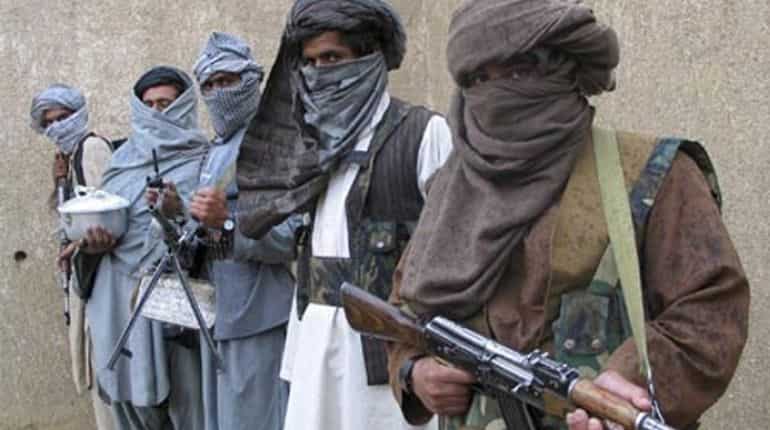
A file photo of unidentified gunmen.
By: Anshu Dubey
A New York-based regulatory technology company Castellum.AI released a detailed study report earlier this week that mentioned how Pakistan has removed names of thousands of terrorists from its watch list.
According to the report, the list that had 7600 names in 2018, has been reduced to fewer than 3800 names in the past 18 months. The removed names include that of 2008 Mumbai attack mastermind and LeT operations commander Zaki-ur-Rehman Lakhvi. About 1,800 of the names have been removed since the beginning of March, according to the data collected by Castellum.
Due to Pakistan’s long association with terrorist groups and terrorfinancing besides fomenting terrorism in India and other parts of the world, it has been placed on the “grey list" of the FATF. Pakistan is working to implement an action plan that has been mutually agreed to with The Financial Action Task Force (FATF), towards which the next evaluation of Pakistan’s progress is scheduled to take place in June 2020.
In an exclusive chat with former senior policy adviser for the U.S. Treasury and CEO of Castellum.AI, Peter Piatetsky; WION posed some straight questions to the body and research report where he mentioned “International standards call for transparency in the listing and de-listing process regarding both United Nations and domestic sanctions,” when asked if Pakistan holds the rights to independently remove names from the list.
Here are the excerpts from the interview:
WION: Does Pakistan have the rights to independently or rather covertly remove names of terrorists many of who are wanted internationally as well?
Peter: International standards call for transparency in the listing and delisting process regarding both the United Nations and domestic sanctions. Adding a name to a terrorist watchlist typically means that a person's finances, travel and ability to be part of society are severely restricted. This is to ensure that no one is placed on the list without sufficient reason and that if someone is delisted, there is proof that the listee is no longer engaged in malign activities.
WION: Pak sources in NACTA say that Zaki Ur Rehman Lakhvi involved in Mumbai attacks is already in the UN list and hence it does not matter taking him off the proscribed list.
Peter: Counter terrorist financing has to be enforced at the domestic level to achieve results. Often, domestic lists or domestic implementation of United Nations sanctions is more important than a name simply being on the United Nations list. Banks enforcing sanctions typically looking at a domestic list first, and at United Nations sanctions later, if at all.
WION: Do you see a design by Pakistan in taking such a large number off the list, what is your sense when you went through these and so many names?
Peter: Pakistan is likely modifying its lists to improve them and comply with international standards from the Financial Action Task Force. Any improvements to the listing process are welcome, but as noted in our report, we recommend providing public explanations and adding dates of birth, place of birth and additional identifiers that will help the public and private sector identify the exact identities of those listed and better understand what it means to be Denotified.
WION: Is this an internationally illegitimate act and can/ will world bodies take this up? Your understanding of this?
Peter: This will likely raise significant questions at the FATF about how names are listed and delisted, which is related to FATF Recommendation 6, Targeted Financial Sanctions Related to Terrorism and Terrorist Financing. Pakistan has largely addressed 14 of 27 FATF action items, and if it adds more transparency around its listing and delisting process, this will likely improve Pakistan's prospects. We note in our report that the Proscribed person list is better than many worldwide. It is machine-readable, it is available in multiple formats, it separates first names and last names, IDs and addresses, specifies the ID type, and clarifies that all names on this list are individuals, not a mix of individuals and entities. These are all important factors in providing a terrorist watchlist that is useful to the public and private sectors.