Indus water talks: India tells Pak its projects compliant; continues to provide flood data

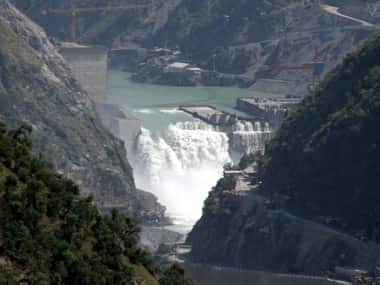
Indus Water Talks: India-Pakistan meet on key projects concludes in New Delhi
The two-day Indus water talks between India and Pakistan ended on Tuesday with New Delhi telling Islamabad that its hydropower projects on western rivers are compliant under the 1960 pact and that it will continue to provide Islamabad with advance flood information as envisaged under the treaty.
During the talks, led by India's Indus water commissioner AK Pal and Pakistani counterpart Mehr Ali Shah, the former reminded that India respects the value of human lives, and it has been providing data on extraordinary discharges of water during the flood season and from reservoirs.
The key focus of the 118th meeting of the Permanent Indus Commission (PIC) was to finalise the annual report for the year ending March 31st, 2022. As mandated under Article VIII (8) of the Indus water treaty, the report by both the commissioners is submitted to the respective governments before June 1st every year. A senior officer in the Ministry of Jal Shakti told WION that no technical discussion took place in the meeting, and while Pakistan's objection to the design of Indian hydroelectric power projects on the western rivers was not part of the agenda, New Delhi pointed out that the projects are in line with the treaty.
Pakistan has been raising objections to the proposed Pakal Dul Hydroelectric Project over the river Marusudar. Marududar is a tributary of the Chenab River, located in the Kishtwar district of the Union Territory of Jammu & Kashmir. The project, being built at a cost of Rs 8112.12 crore, is envisaged as a storage scheme and is anticipated to be completed by July 2025.
India's ministry of external affairs, in a release, said that the "meeting was held in a cordial manner" and that the "Commission appreciated the commitment of the two sides to interact frequently and resolve issues through bilateral discussions under the Indus Water Treaty." It has been decided that commissioners from both sides will visit the Indus Basin after the end of the flood season at a mutually convenient date.
Under the Indus water treaty of 1960, the waters of 3 eastern rivers—Sutlej, Beas, and Ravi—are allocated to India for unrestricted use, while the waters of 3 western rivers—Indus, Jhelum, and Chenab—go to Pakistan. Additionally, New Delhi has the right to generate hydroelectricity through the run of the river projects on the 3 western rivers, subject to specific criteria for design. Under the treaty, Pakistan can raise objections to the design of Indian hydroelectric projects on Western rivers. In the past, several issues have been resolved, but either side can go to neutral experts or courts.
The next meeting of the Indus Water Commission will take place in Pakistan. The official from India's Jal Shakti ministry explained that all suggestions given by Pakistan in the March meeting will be discussed in the coming meeting. An Indian delegation led by then Indian commissioner PK Saxena had visited Islamabad in March for the 117th meeting of the Indus water commissioners. During that meeting, technical discussions were held regarding on-going projects, including Pakal Dul, Kiru, and Lower Kalnai. India during that time also pointed out that its projects are fully compliant with the provisions of the Treaty. The issue of the Fazilka drain was also discussed at the meeting, and Pakistan assured that all necessary actions would be taken to ensure the free flow of the Fazilka drain into the river Sutlej.
WATCH WION LIVE HERE
You can now write for wionews.com and be a part of the community. Share your stories and opinions with us here.