Imran Khan: Key events in Pakistani cricket hero-turned-politician's life

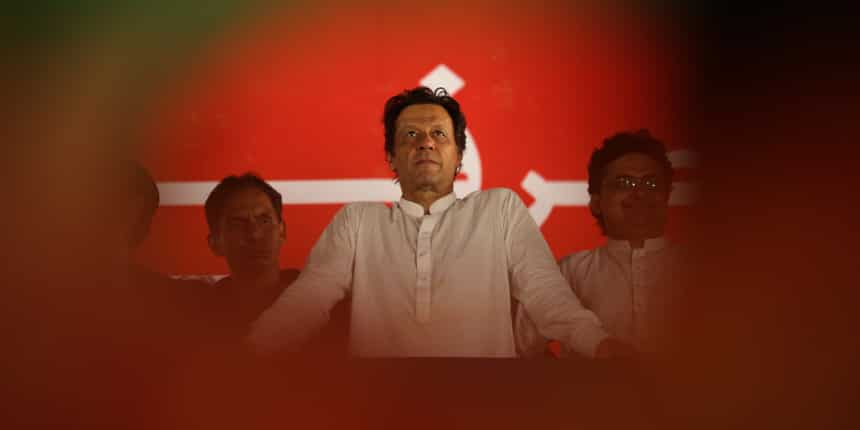
Imran Khan
The unofficial, preliminary results from about 42 per cent of the polling stations suggest that Imran Khan's PTI is leading in the polls this year.
Pakistani cricket-hero-turned-politician Imran Khan led in projected partial results of a general election on Thursday. Khan has often been touted as a man who may well reshape the political scene in Pakistan but interestingly, he was hardly taken seriously when he began his political innings.
Imran Khan was born in Lahore on November 25, 1952, and was educated at Lahore’s elite Aitchison College where he excelled at cricket and now, politics.
Here are 10 facts about Imran Khan's journey so far:
1. Khan's professional cricketing career started at the age of 16 when he made his first-class debut for Lahore against Sarghodha in 1968. He became the captain of the Pakistan cricket team in 1982.
2. He was declared international cricketer of the year in 1989-90, he led Pakistan to victory in 1992 World Cup.
3. Khan retired from cricket in 1992 as one of Pakistan's most successful players.
4. In 1995 he married Jemima Goldsmith, daughter of the late Anglo-French billionaire Sir James Goldsmith. She converted to Islam but the coupledivorced in 2004. They have two sons – Sulaiman Isa (1996) and Kasim (1999). In 2015, he married journalist Reham Khan and divorced after nine months. He married his spiritual advisor Bushra Manika on February 18, 2018.
5. In 1996, Imran started a political party in Pakistan known as Tehrik-e-Insaaf (Movement for Justice). His party also leads a coalition government in the north-western province of Khyber Pakhtunkhwa.
6. He lost a first parliamentary election in 1997, before finally winning a seat in 2002. in October 2007, he resigned along with other members, in protest at Pervez Musharraf’s re-election as president while still army chief. Imran went into hiding soon after Musharraf declared a state of emergency on November 3. Police detained him on November 14 after he had emerged from hiding to lead a student protest.
8. Khan boycotted the 2008 polls as a stance against corruption but soon stunned the political classes in Islamabad by unexpectedly attracting hundreds of thousands of supporters to public rallies in Lahore and Karachi in late 2011.
9. In August 2017, Pak politician Ayesha Gulalai came forward with allegations of harassment against Khan and claimed that she had been receiving offensive messages from him since October 2013. In an interview, Khan said that he suspected that the Pakistan Muslim League (Nawaz) had used Gulalai for these allegations of harassment against him.
10. Until 2003, his party had only one seat in the Parliament. In the present elections, Khan is contesting five seats in the provinces of Punjab, Sindh, and Khyber Pakhtunkhwa, and Islamabad Capital Territory.
Follow ourlivecoverage of the Pakistan elections