Economy on the road to recovery, says Sri Lanka president

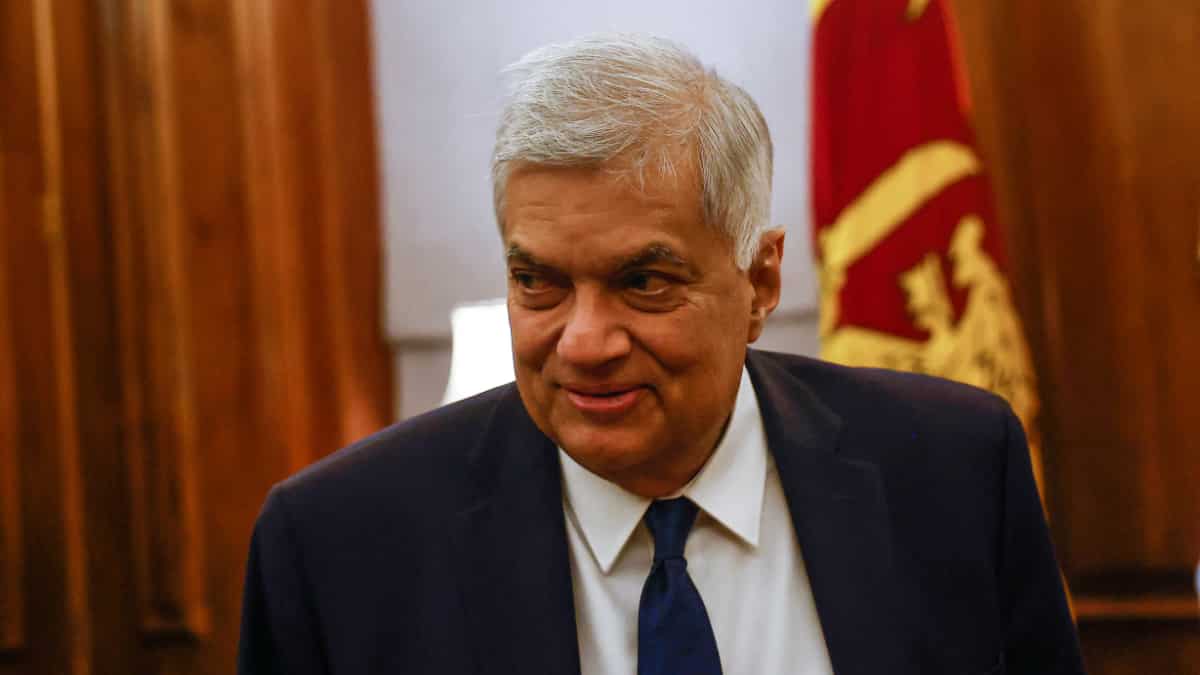
Ranil Wickremesinghe
Sri Lankan President Ranil Wickremesinghe said on Thursday (June 1) that the South Asian island nation's economy is on the road to recovery. He underlined that inflation, which had risen as high as 70 per cent, was now down to 25. 2 per cent.
"Today we are all benefiting from the results of the patient, committed and focused policies. Inflation that rose to 70% has reduced to 25.2%. Because of this cost of living is gradually coming down. The entire society is feeling the benefits of this," said Wickremesinghe.
Sri Lanka's central bank, earlier in the day, took a surprise decision of cutting interest rates for the first time in three years. This was seen to be a sign that the worst of Sri Lanka's financial crisis was over.
Last year, Sri Lankan economy faced an unprecedented crisis after its foreign exchange reserves ran out. Prices of food and fuel skyrocketted and protesting mobs of thousands caused the then president to resign and even flee the country.
Wickremesinghe took the reins in July and negotiated a $2.9 billion bailout from the International Monetary Fund (IMF) in March.
Inflation, which hit a record high of around 70% in September, is coming down, government revenues are looking up and pressure on the country's balance of payments is easing.
The government is aiming to complete talks to restructure its bilateral debt with other countries by September.
"Sri Lanka's trade policies have been formulated with strong protective system. It is the right time to lift those restrictions,'' Wickremesinghe said.
''Most systems have been formulated to discourage investors. We will change that. With that we will create a country that will be attractive for investors.''
Reuters mentioned analysts who said that with the Central Bank of Sri Lanka (CBSL) having successfully dealt with the runaway inflation, it was turning its attention to growth.
Last year, the central bank raised rates by a record 950 basis points in order to try and control inflation. On March 3 this year, the rares were increased by 100 bps.
The IMF expects GDP to contract 3% this year after a 7.8% contraction last year. The CBSL has forecast a 2% contraction in 2023.
(With inputs from agencies)