China and Pakistan agree to extend Belt and Road Initiative to Afghanistan

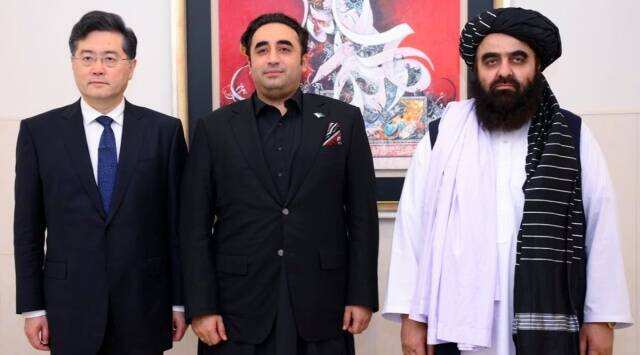
BRI extended to Afghanistan
China and Pakistan have agreed to include Afghanistan to be part of the multi-billion-dollar Belt and Road Initiative (BRI) as the sanction-hit country struggles to raise funds for infrastructure.
The decision was taken during a meeting in Islamabad on Saturday between Chinese Foreign Minister Qin Gang and his Pakistani counterpart Bilawal Bhutto Zardari, a day after they returned from the Shanghai Cooperation Organisation (SCO) meeting in India’s southern Goa state.
Both the leaders pledged to work together on Afghanistan's reconstruction process, including taking the $60 billion China-Pakistan Economic Corridor to the Taliban-ruled nation.
"The two sides agreed to continue their humanitarian and economic assistance for the Afghan people and enhance development cooperation in Afghanistan, including through extension of CPEC to Afghanistan," a joint statement issued by Pakistan's foreign ministry following the meeting stated.
Both foreign ministers also stressed the need to unfreeze Afghanistan's overseas financial assets. The Taliban has been blocked from accessing about $9 billion of Afghanistan's central bank reserves held overseas on concerns that the funds will be used for terror activities.
Though the US later agreed to release half of the funds to bolster the economy, it put them on hold after the Taliban imposed certain school and work restrictions on Afghan women last year.
The Taliban's top diplomat, Amir Khan Muttaqi, travelled to Islamabad a day earlier to meet his Chinese and Pakistani counterparts and reached an agreement, his deputy spokesman Hafiz Zia Ahmad told Bloomberg.
The decision followsa series of meetings between the “all-weather” allies who had expressed their intentions to extend the BRI project to Afghanistan.
The cash-strapped Taliban government hadexpressed readiness to participate in the project and the prospect of getting much-needed infrastructure investment.
For years, the Taliban have been courting China to invest in the country’s rich resources, estimated to be $1 trillion.
In January this year, the Taliban inked its first contract with a subsidiary of China National Petroleum Corporation to extract oil from the northern Amu Darya basin.
Last week, a UN agency said that the Taliban require$4.6 billion this year to help more than two-thirds of the country's 40 million population who're living in extreme poverty.
(With inputs from agencies)
WATCH WION LIVE HERE