Winged microchip: US scientists create smallest-ever human-made flying structure

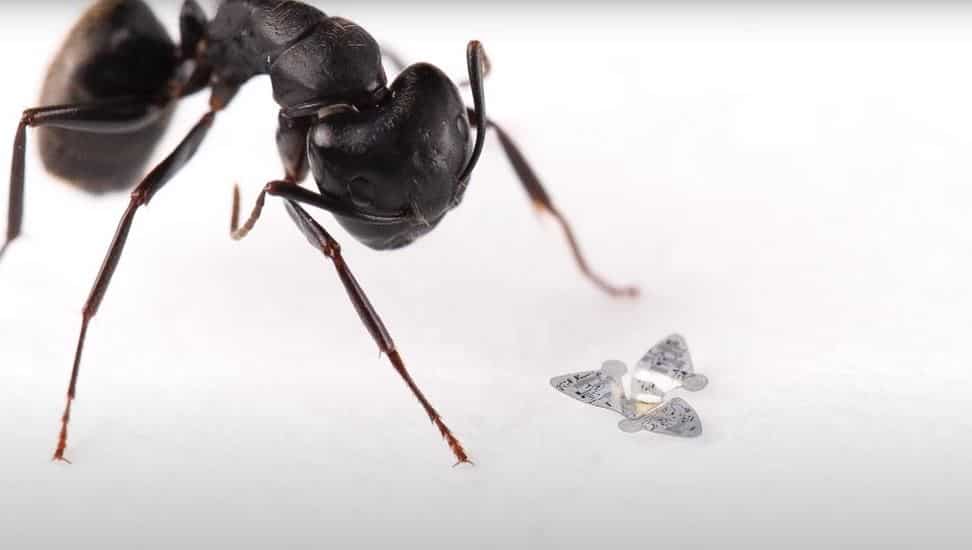
microfliers
Northwestern University engineers have created the smallest-ever human-made flying structure in the form of a winged microchip, drawing inspiration from the film "Ant-Man."
Northwestern University announced the "microflier", which is approximately the size of a grain of sand and far smaller than an ordinary ant.
It doesn't have a motor or an engine, instead catching flight with the wind and a propeller, much like a helicopter.
Watch:
The microflier structures are designed to accommodate miniature technology such as sensors, power supplies, wireless communication antennae, and memory data.
A flying microchip the size of a grain of sand that monitors pollution levels and the spread of airborne diseases while being transported by the wind.
The biological world provided inspiration for the design.
The movement of the microflier is comparable to that of a propelled maple leaf falling from a height.
Engineers looked at the aerodynamics of various plant seeds.
The tristellateia plant served as the most direct source of inspiration for them.
It's a flowering vine with bladed seeds in the shape of stars.
The blade-like construction aids in catching the wind and allowing the seeds to fall in a slow, rotating spin.
Engineers created 2D prototypes of the structures and then converted them to 3D models.
Because all present semiconductor devices are manufactured in planar layouts, the method is beneficial.
This 2D to 3D shift will allow them to design flat chips and then transform them into 3D shapes using industry-standard materials and production procedures.
(With inputs from agencies)