Why tackling particle pollution leads to upward push in photochemical smog

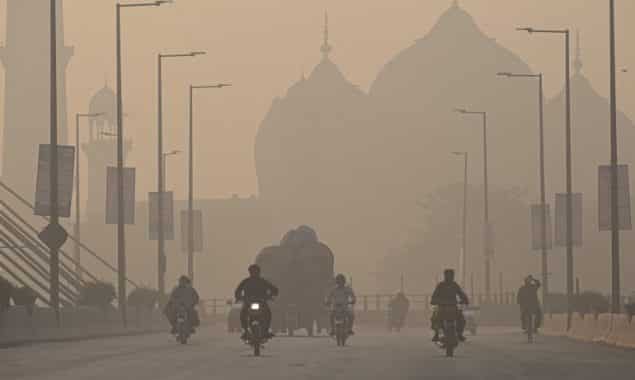
Photochemical smog
Researchers from the University of York have observed why lowering particle pollution is in reality increasing surface ozone pollution in a few rising economies, negatively impacting fitness, ecosystems, and agriculture.The findings, published in Nature Geoscience, show how the mission hooked up methods for tackling air pollution, the researchers say.
Surface ozone is the principal issue of "smog" and is created with the aid of chemical reactions among oxides of nitrogen (NOx) and unstable organic compounds (VOC). This happens when pollution from vehicles, energy flowers, industrial boilers, refineries, chemical plants, and other sources react in the presence of sunlight.
In the last decade, whilst international locations inclusive of China improved air quality by means of decreasing particle pollution—which is emitted from coal, metallic making, motors, and fires—the clinical community became amazed to see ozone pollutants' growth. Now, a look has shed new light on the relationship between these two pollutants.
Historically, policymakers treated ozone and particles as separate issues, but researchers have shown that in some cases, they are inextricably linked.Some short-lived additives vital to making ozone (peroxy radicals) stick to particle pollution, preventing them from taking place to form ozone. As the number of particles decreases, the peroxy radicals come to be available for reactions, and ozone increases.
The study modelled the effects of reducing particle pollution and discovered that it could cause an ozone increase of 20-30% in some densely populated areas of India and China.If left unmanaged, this will have a full-size poor impact on ecosystems and crop yields.
The researchers are calling for new strategies that take this interaction between pollution into account. The problem can be solved by concentrating on reductions in a much broader range of pollutants, particularly (VOCs) from chemical substances and fuels and NOx from combustion.
Lead writer of the study, Professor Mathew Evans, from the Department of Chemistry at the University of York, said: "Particle pollutants and ozone pollutants have been considered by means of coverage makers around the world as separate issues, but our study emphasises the want to study them collectively." For 40 years, we have thought that ozone depended handiest on risky natural compounds and nitrogen oxides, and it's most effective now that we are putting the pieces of the puzzle together collectively and seeing this courting with particle pollution. policy now wishes to be adapted to this new information.
"Tackling particulate matter inside the ecosystem is rightly a concern due to the extreme risk it poses to human health." However, this observation highlights the complex alternatives facing governments in how they make investments to manipulate air pollution. Solutions are not trustworthy and there can be hidden connections between exclusive pollution. "
The WHO estimates that four million die prematurely each year as a result of exposure to outdoor air pollutants. Developing countries, along with India, China, and Africa, are most affected.
The modelling study predicted that significant discounts in particle pollution in these regions might lead to the desire to make dramatic discounts in the emissions of NOx and VOCs—up to 50% in order to hold ozone pollutants in take a look at.
Professor Alastair Lewis of the National Center for Atmospheric Science, the study's lead author, stated, "This study suggests that there may be risks in focusing too narrowly on just one pollutant." There has been dramatic improvement in particle pollution in China over recent years, but emphasis only on debris can lead to unintentional results. Action to boost the discount in emissions of NOx and VOCs is now crucial."
(Disclaimer: The views of the writer do not represent the views of WION or ZMCL. Nor does WION or ZMCL endorse the views of the writer.)
WATCH WION LIVE HERE
You can now write for wionews.com and be a part of the community. Share your stories and opinions with us here.