An asteroid yes, but that's not what exactly killed the dinosaurs

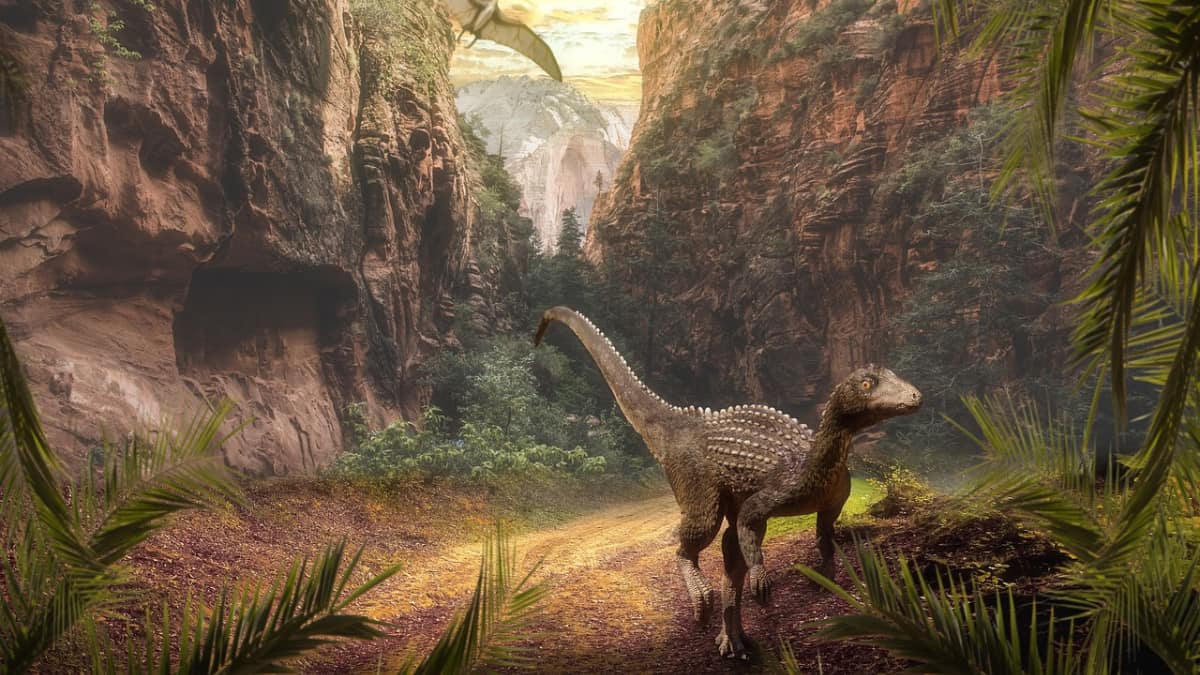
Dinosaurs
Dinosaurs roamed the Earth millions of years ago, but how they went extinct remains a matter of active research with experts also studying the exact origin and timing of the evolution of dinosaurs.
Dinosaurs first appeared during the Triassic period, between 243 and 233.23 million years ago and evidence suggests that an asteroid impact was the main reason for their extinction.
The asteroid, which was the size of a city, reshaped life on Earth 66 million years ago as it ended the age of the dinosaurs when it struck a shallow sea off the coast of what is now Mexico.
Previous studies have suggested that besides the impact of asteroids, volcanic eruptions that caused large-scale climate change, may also have been involved, in addition to other gradual changes to Earth's climate which took place over millions of years.
However, scientists have done computer simulations of the aftermath of the asteroid impact to find out that dust was a major factor in wiping out dinosaurs from the face of Earth.
In the latest study, published in Nature Geoscience, the researchers in Belgium have said that the "exact killing mechanisms" remain underresearched.
The study titled, "Chicxulub impact winter sustained by fine silicate dust", said that
more attention is needed to understand the role of potentially trillions of tonnes of dust triggered by the asteroid impact.
Previously, the experts have noted that soot, sulphur and dust remained in the atmosphere for years, blocking the Sun, which could have led to a global winter. In such a scenario, flora and fauna suffer massively.
To understand it better, the scientists ran simulations of the ancient climate. They studied fine particles which were recovered from a site in North Dakota — it's the same place where a layer of dust generated by the Chicxulub impact settled.
The various simulations found that the dust, which was found in Dakota, has the potential to remain in the atmosphere for up to 15 years.
In this case, the sun-blocking dust could have shut down photosynthesis for nearly two years, cooling down the planet by up to 15C.
As quoted by The Guardian, Cem Berk Senel, who is a researcher on the study at the Royal Observatory of Belgium in Brussels, said that the dust "most likely drove the last mass extinction event through the disruption of photosynthetic activity."
As quoted by the newspaper, Philippe Claeys, a geologist and planetary scientist at the Free University of Brussels and co-author of the study, added that the silicate dust emerged from the simulations as the "most efficient blocker of photosynthesis".
Claeys further added: "It renders the atmosphere opaque to sunlight, hampering the plants' photosynthetic process."
WATCH WION LIVE HERE
You can now write for wionews.com and be a part of the community. Share your stories and opinions with us here.