Warmer temperatures shrink Arctic sea ice to second lowest-level ever

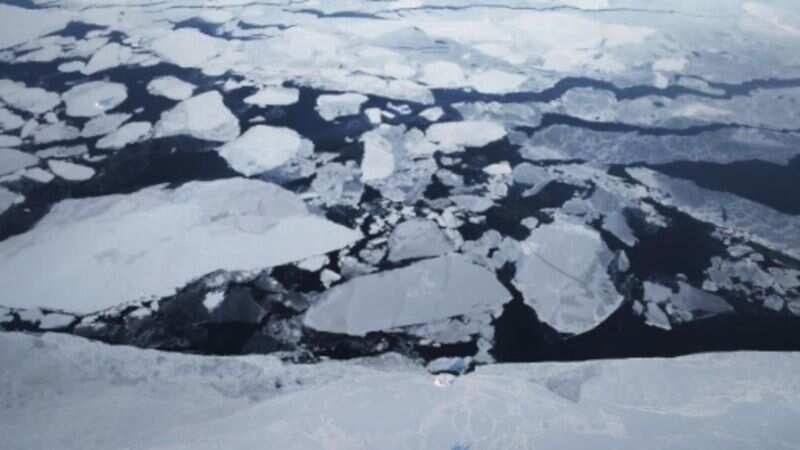
Arctic sea ice
US scientists have offered yet another stark evidence of the impact of global warming on the planet. They on Monday announced and explained how the Arctic summer sea ice melted in 2020 to the second smallest size since records began 42 years ago.
Arctic sea ice melts in summer and reforms in winter, but precise satellite imagery taken regularly since 1979 documented how the cycle has been shrinking significantly.
According to preliminary data from scientists at the National Snow and Ice Data Center (NSIDC) at the University of Colorado Boulder, the year's minimum was reached on September 15, at 3.74 million square kilometers (1.44 million square miles).
Only once before, in 2012, did the sea ice melt further.
Unlike melting glaciers on land, melting sea ice does not directly contribute to rising sea levels as the ice is already on the water, but less ice means less solar radiation is reflected and more is absorbed by the oceans.
The evidence of shrinking ice coverage -- in both thickness and area -- in the Arctic and Antarctic is stacking up, though pace varies from one region to another.
Antarctic ice melted quickly for three years in a row until 2017, but more recently it has bounced back without a clear explanation. In the Arctic, the reduction has been on a more pronounced downward trend since 1996 in comparison to the previous period.