Want to shoot the solar eclipse? Here are four tips by NASA

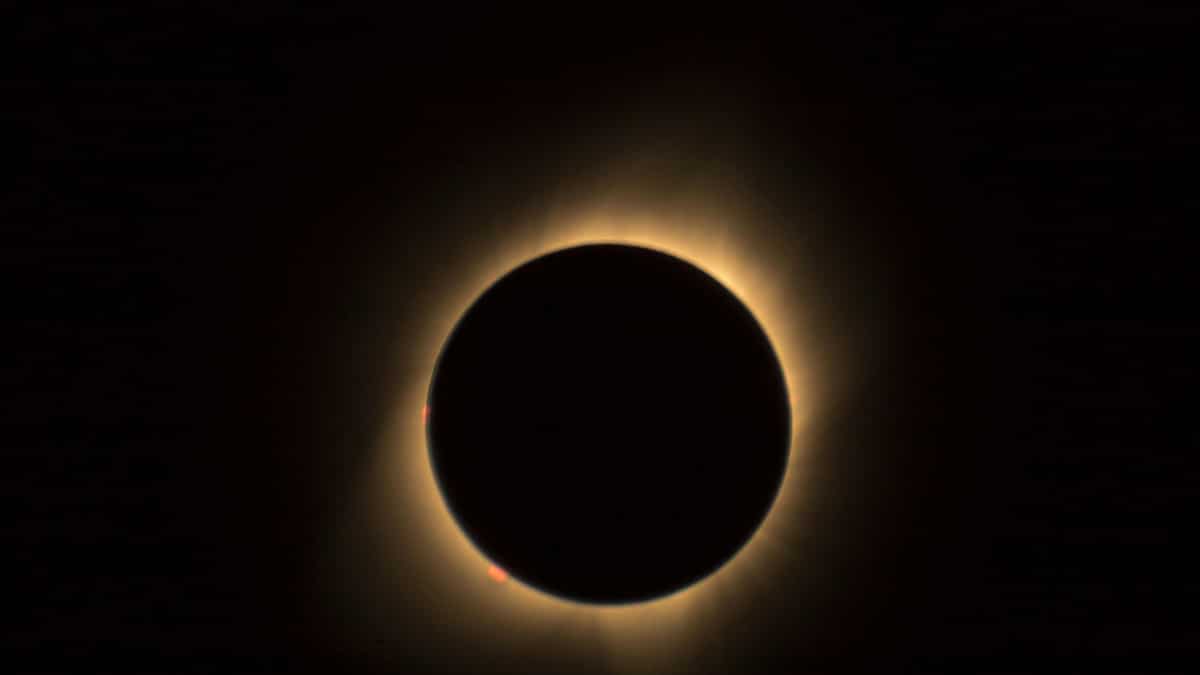
Solar Eclipse 2024
NASA has shared some tips on how to shoot the totalsolar eclipse ahead of the cosmic event on April 8, which will be visible in parts of some countries like the United States and Canada.
For people within the path of the Moon's shadow, a total solar eclipse is a stunning celestial view, NASA said. While it's a precious chance for scientists to study the sun and the impact of a total solar eclipse on Earth, it's also great for people to capture memorable pictures.
NASA has shared some photography tips for everyone, from amateurs to selfie masters. Here they are:
Safety First
It's dangerous to look directly at the sun. One should use a special solar filter to protect the camera and a pair of solar viewing glasses to protect your eyes. Only then can a person click images when the sun is partially eclipsed.
However, when the Moon blocks the sun entirely, one can remove the cover and see the Sun's outer atmosphere called corona.
Which Camera To Use?
According to NASA, any camera is a good camera, whether you have a high-end DSLR or a camera phone. To take great photos during the eclipse, one needs a good eye and a vision for the image they wish to create.
NASA has urged people to focus on taking landscape shots if they don't have a telephoto zoom lens, capturing the changing environment during the eclipse.
However, having some equipment handy can prove beneficial during the eclipse. If you need stability for your camera and want to avoid taking blurry images when there is low lighting, a tripod can come in handy. Furthermore, using a delayed shutter release time will allow you to click pictures without shaking your camera.
Look Around!
As the most dominating element of a solar eclipse, the Sun tends to draw our attention, but it is important to remember to look around you. During a solar eclipse, the surroundings have eerie lighting and shadows. As the sunlight filters through the overlapping leaves of trees, it creates natural pinholes that project miniature eclipse replicas on the ground. Therefore, wherever you point your camera, it can yield exceptional imagery. Be sure to capture some wide-angle photos to document your eclipse experience.
Practice
It is important to familiarise yourself with the capabilities of your camera before the day of the eclipse. Many cameras, including some camera phones, have adjustable exposures that can help you adjust the brightness of your image under the difficult lighting conditions of an eclipse. Additionally, it is essential to know how to manually focus your camera to capture clear and precise shots.
NASA has also asked to share the images on social media and tag their official handle.
(With inputs from agencies)