
&imwidth=800&imheight=600&format=webp&quality=medium "8 lakh cosmic alerts in one night: Too much? Vera will scale this number up to millions")
The Vera C. Rubin Observatory sent out its first set of notifications on Tuesday night using the new alert system, sending 800,000 of them. It peered into a region of the universe and picked up a lot of activity. While this number might seem like a lot, it is nothing compared to what could be coming. The observatory uses the Alert Production Pipeline, a software developed at the University of Washington, to send alerts to astronomers across the world. It is capable of generating a whopping 7 million of them in one night. The Rubin Observatory detects and notifies of all kinds of things it locates in the cosmos. It could be a supernova or new asteroids. Hsin-Fang Chiang, lead of operations for data processing at the US Data Facility, said in a statement, "The scale and speed of the alerts are unprecedented."
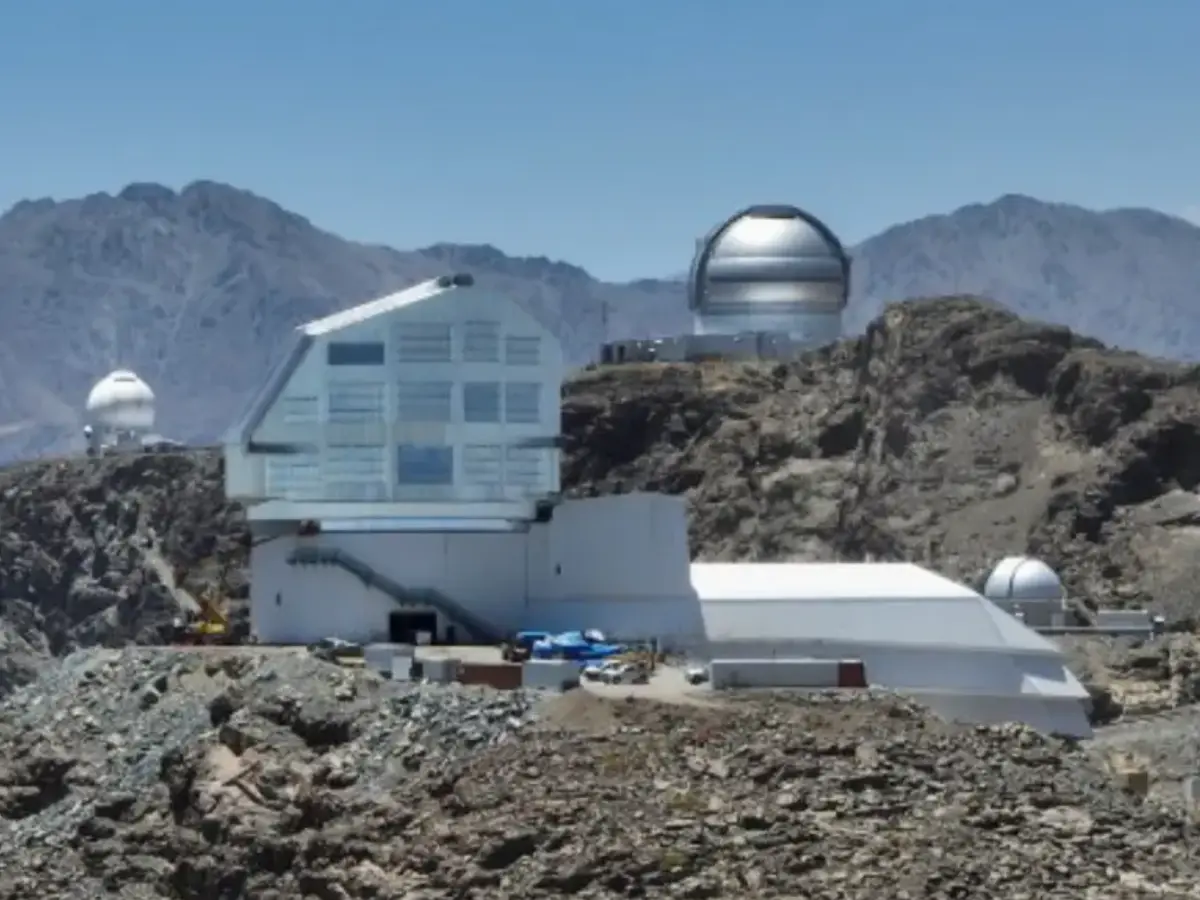
The Vera observatory generated "hundreds of thousands of test alerts in the last few months". The alerts are sent within two minutes of the discovery. Vera has the largest digital camera ever built and an ultra-sensitive 28-foot primary mirror. Rubin is like a high-speed, wide-angle security camera that can scan the entire Southern Hemisphere sky instead of just one point. Located in Chile, it has been designed to create the first-ever "motion picture" of our universe. It will map billions of galaxies in the coming days and is expected to detect never-before-seen asteroids. On Tuesday night, it spotted supernovae, variable stars, active galactic nuclei, and new asteroids. Every time something changes in a portion of the sky, Rubin shoots an alert. It could be something as simple as a body that moved or a star that has dimmed since its last observation.

Vera can gather and process 10 terabytes of images every night
While the Vera observatory itself took two decades to build, researchers worked on the alert system for 10 years, since they needed to figure out how to process 10 terabytes of images, since that is how much data it would gather each night. “Enabling real-time discovery on such a massive data stream has required years of technical innovation in image processing algorithms, databases and data orchestration,” Eric Bellm, an astronomy professor at the University of Washington, and lead of the Alert Production Pipeline Group for the Rubin Observatory, said in a statement. The observatory launched last year and released the first images on June 23, 2025. After the alert system, the telescope’s Legacy Survey of Space and Time (LSST) will launch later this year. It will scan the sky every few nights for the next 10 years to generate a massive, high-resolution "digital movie" of the universe.

