
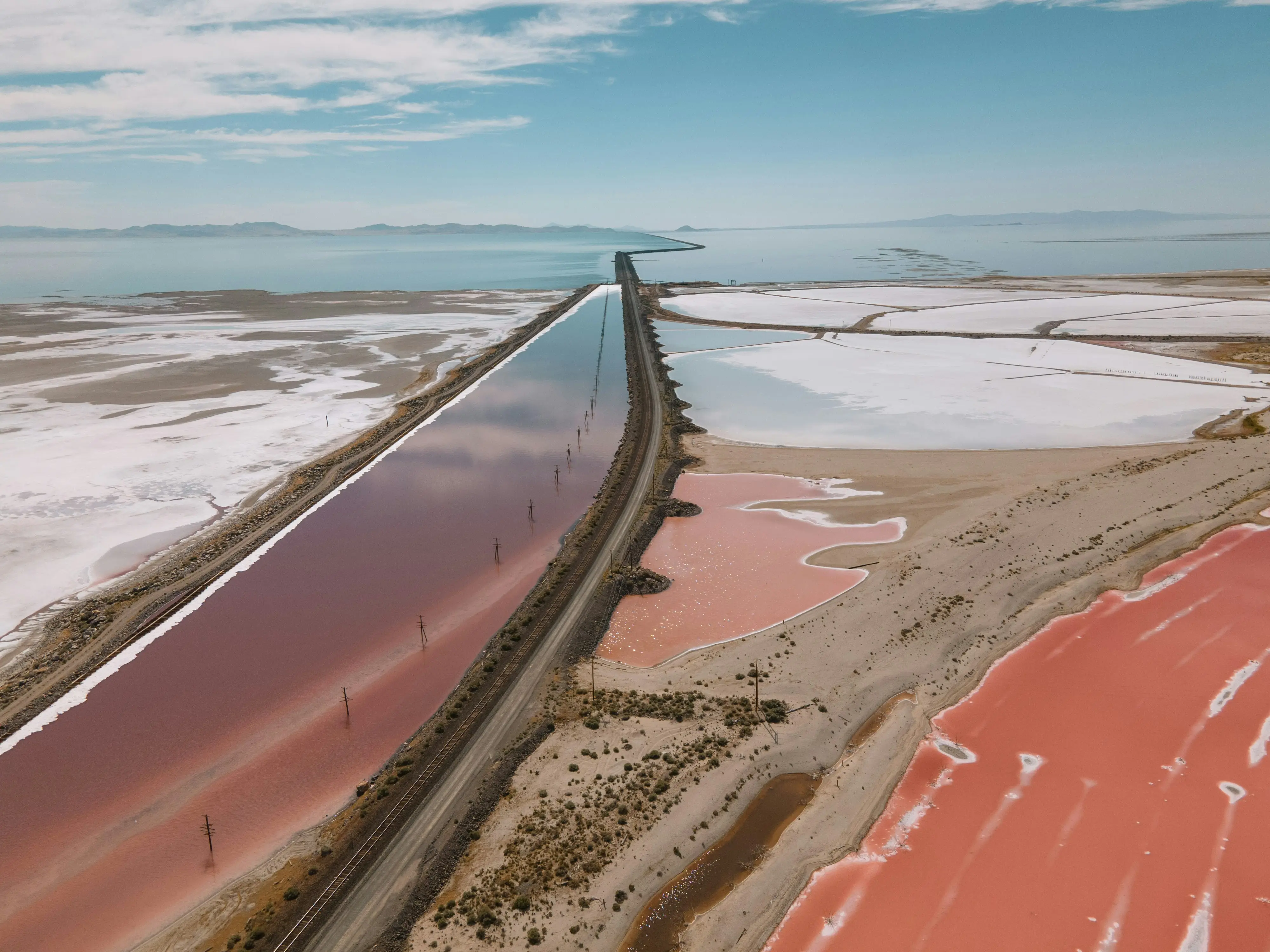
&imwidth=800&imheight=600&format=webp&quality=medium "Utah lake houses a creature that should not be here. It is not found anywhere else on Earth")
Scientists have found a new species of worm in the Great Salt Lake in Utah, and they believe this creature only resides in this body of water and is not anywhere else in the world. This is the largest saltwater lake in the Western Hemisphere, and the species is endemic to it, according to a study. Researchers from the University of Utah say that it is a nematode, or roundworm, and has been named Diplolaimelloides woaabi. The worm was given this name by Shoshone elders, as the lake is a part of their ancestral lands. The new species is believed to play an important role in the ecology of the lake, just like other nematodes in different ecosystems, according to the researchers. The presence of this worm in the Utah lake could also be a bioindicator of environmental change in the region.
Nematodes are found in abundance in the world and reside in all kinds of ecological systems. From oceans to gardens, these worms are found in many places. There are more than 250,000 known species of nematodes, and 90 per cent of all animals found on the ocean floor are nematodes. The existence of this new species in the lake remained a secret until 2022. Lead author of the study, Julie Jung, set out on an expedition and collected the worms from microbialites, stony mounds formed by algae and microbes on the lakebed.
The Utah lake is extremely saline

Jung, a researcher at Weber State University, said they were almost sure that it was a new species of nematode from the beginning. However, it took "three years of additional work to taxonomically confirm that suspicion." The Utah lake has a hostile hypersaline environment and was home to only two multicellular animals till the discovery of these nematodes. Brine shrimp and brine flies are the other two creatures found in the Great Salt Lake.
Scientists also tried to figure out how these worms reached the lake. One possibility is that their ancestors were stranded here millions of years ago. Co-author of the study, Michael Werner, says that northern Utah had a vast freshwater lake 20,000 and 30,000 years ago. “If the nematode has been endemic since 100 million years ago, it has survived through these dramatic shifts in salinity at least once, probably a few times.” Another possibility is that these worms were carried by migratory birds from saline lakes in South America.

