Unusually soft, powdery rock responsible for sampling fiasco on Mars, says NASA

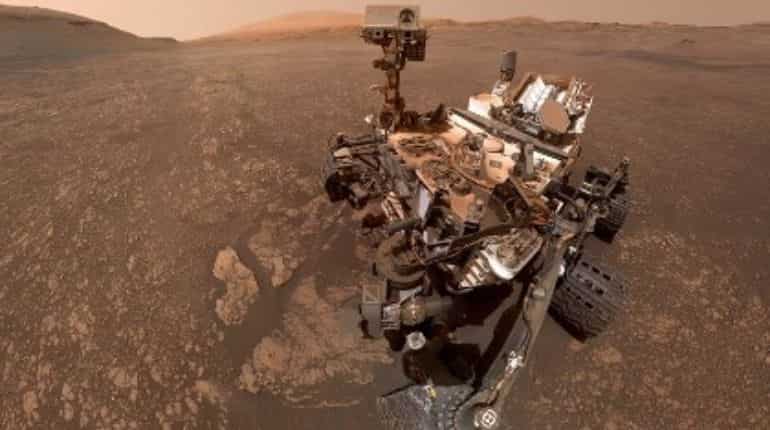
The National Aeronautics and Space Administration (NASA) has said thatunusually soft andpowderyrock is responsible for last week’s sampling fiasco on Mars.
The space agency's Mars rover Perseverance, the most advanced astrobiology lab ever sent to another world,drilled to the proper depth of nearly 3 inches (8 centimetres), and pictures of the borehole looked good.
However, it came up empty after attempting to collect its first core sample on the red planet for eventual return to Earth.
NASA'sengineers have concluded that the rock was not strong enough to produce a core sample, and the small, powdery fragments remained in the hole or ended up in the cuttings pile,or both.
Therefore, the rover is moving on to the next sampling site in its quest for signs of ancient Martian life; it should arrive there by early next month.
Scientists hope to find biosignatures embedded in samples of ancient sediments that Perseverance is designed to extract from Martian rock for future analysis back on Earth,the first such specimens ever collected by humankind from another planet.
Two subsequent Mars missions are planned to retrieve the samples and return them to NASA in the next decade, in collaboration with the European Space Agency.
Search for ancient life
NASA scientists have described Perseverance as the most ambitious of nearly 20 USmissions to Mars dating back to the Mariner spacecraft’s 1965 fly-by.
Larger and packed with more instruments than the four Mars rovers preceding it, Perseverance is set to build on previous findings that liquid water once flowed on the Martian surface and that carbon and other minerals altered by water and considered precursors to the evolution of life were present.
Perseverance’s payload also includes demonstration projects that could help pave the way for eventual human exploration of Mars, including a device to convert the carbon dioxide in the Martian atmosphere into pure oxygen.
The box-shaped tool, the first built to extract a natural resource of direct use to humans from an extraterrestrial environment, could prove invaluable for future human life support on Mars and for producing rocket propellant to fly astronauts home.
Perseverance’s immediate predecessor, the rover Curiosity, landed in 2012 and remains in operation, as does the stationary lander InSight, which arrived in 2018 to study the deep interior of Mars.