Time on the Moon moves faster than on Earth. This is by how much

Moon time
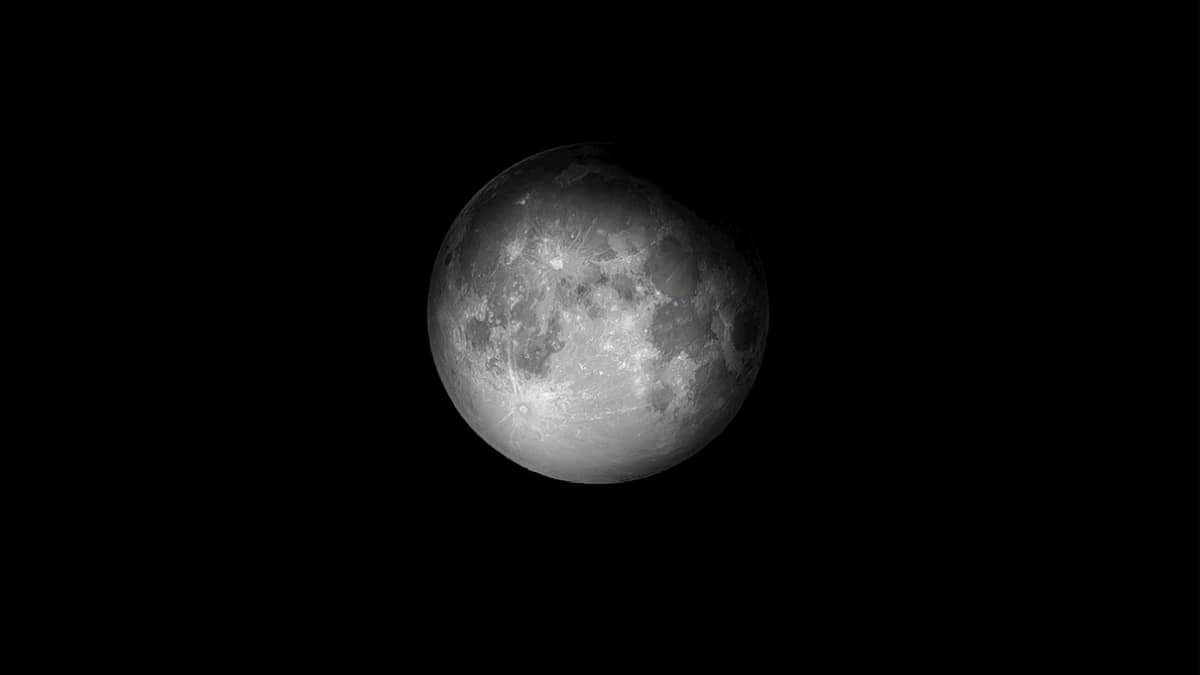
Scientists have been talking about setting a time zone on the Moon, or in technical terms, a lunar standard time. While work goes on on that, we for now know how much ahead or behind time is on the Moon. The time the Moon is ahead of us by the end of a day on Earth is 57 millionths (0.0000575) of a second. That means it has moved only 1.1 seconds ahead of us ever since the last time human beings were on the Moon.
Slava Turyshev, a physicist at NASA's Jet Propulsion Laboratory who led the study, says that the team reached this figure by calculating the sliding scale of time for Earth and the Moon relative to the barycentre of the Solar System. "This is the Solar System's common centre of mass, around which the Sun, planets and satellites orbit in a delicate balance," he told New Scientist's Jonathan O'Callaghan.
The finding of the study is important considering NASA is planning to send humans back to the moon as part of the Artemis mission which makes syncing up of navigation systems extremely important.
Time differences between cosmic bodies with different gravitational pulls are bound to happen. The same goes for Earth and the Moon, and so the time differs between the two celestial bodies. But studies haven't been conducted on it till now as humans haven't returned to the moon ever since the last manned Apollo mission.
But now the Artemis missions make it compulsory for scientists to understand the time difference between the Moon and our planet. When man landed on the lunar surface, it was only for a little time. So the Moon, with one-sixth of Earth's gravity, didn't have a lot of effect on the astronauts.
The Artemis missions
As part of the Artemis Mission, scientists want to study places on the moon where bases can be set up which can then be used to move further in the universe, especially Mars. Scientists are also planning to set up rail tracks on the moon along witha transit system to transfer humans and cargo to the lunar body.
"Infrastructure on Earth such as GPS provides time down to the nanosecond level," NASA's Cheryl Gramling, a navigation systems engineer at the Goddard Space Flight Center in Maryland, told New Scientist's Jonathan O'Callaghan.
"If you're trying to navigate or land on the Moon, and avoid dangerous areas, then that precision matters."
Work on a unified time reference system for the Moon has started and the latest finding is a step in that direction.
The results of the study are yet to be peer-reviewed.

