This ancient 'penis-like' blob is oldest Phallic depiction, archaeologists believe

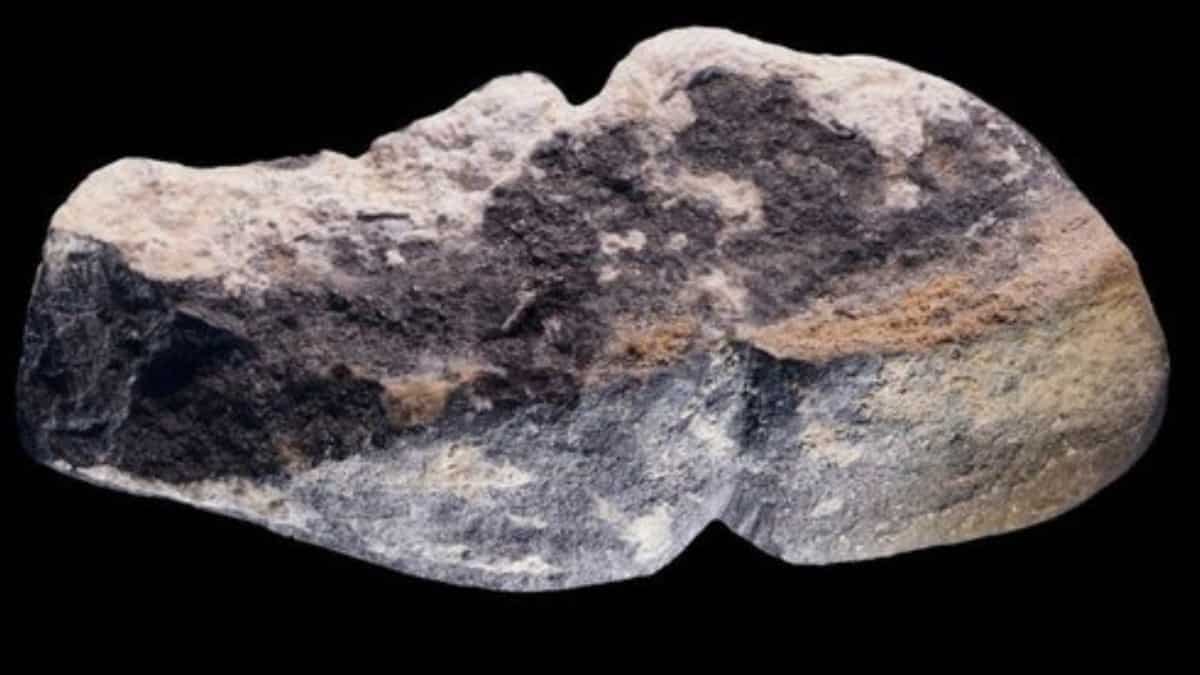
'Penis-like' blob which dates back to 42,000 years.
According to the archaeologists an ancient oblong artefact, which dates back to 42,000 years, has a carving over it which suspiciously looks penis-like. Some of them also believe that the artefact can be one of the earliest phallic figurines discovered in the world.
However, all researchers are not convinced by the observation, as all penis-like objects are not created with genitals in mind.
Rather shapeless, says archaeologist
Boston University archaeologist Curtis Runnels, speaking to Science Alert, said that the ornament looks "rather shapeless", however, it is hard to disagree with the observation at first glance.
University of Bordeaux's archaeologist Solange Rigaud and her colleagues stated that blob-like or not, the truth of the artefact lies in the details.
The grooved ornament, which has been given the tag T21, was originally discovered at an archaeological site in Mongolia in 2016. Recently, experts gave a closer look at the object which is estimated to be roughly between 39,500 and 42,200 years old, which suggests that it was created in the Upper Paleolithic period.
Two grooves have been made on the ornament's four-centimetre (1.6-inch) long body using a pointy stone tool. The deepest groove has been wrapped around the ornament's midsection, while the other groove has been carved short and deep from the top to the bottom of the ornament.
According to the researchers, the former incision was designed to show the glans of a penis, while they carved the latter incision with the intention to create a urethral opening.
Used as a tool?
The same features were observed in a 20-centimetre-long stone pebble which was discovered in Germany that is 28,000 years old and is believed to be one of the earliest representations of male sexuality ever discovered. The experts suspected that it may have been used as a tool, possibly to knap flints.
Even though the artefact from Mongolia remains unclear, if the archaeologists are correct about the fact that the design issimilar to a penis, it can turn out to be human genitalia's earliest symbolic use found anywhere.
WATCH |Gravitas: Egypt bans Dutch archaeologists over Beyonce's Egyptian outfit
The ornament's 'backside is flattened out and appears shiny and smooth, which makes researchers believe that it was worn probably on someone's chest and was held using a cord wrapped around the middle groove.
"Overall, the use-wear pattern is consistent with the suspension of the pendant in contact with soft material for an extended period," the researchers stated.
You cannow write forwionews.comand be a part of the community. Share your stories and opinions with ushere.
WATCH WION LIVE HERE