A star exploded 1.9 billion light-years away and our Ozone layer took the hit

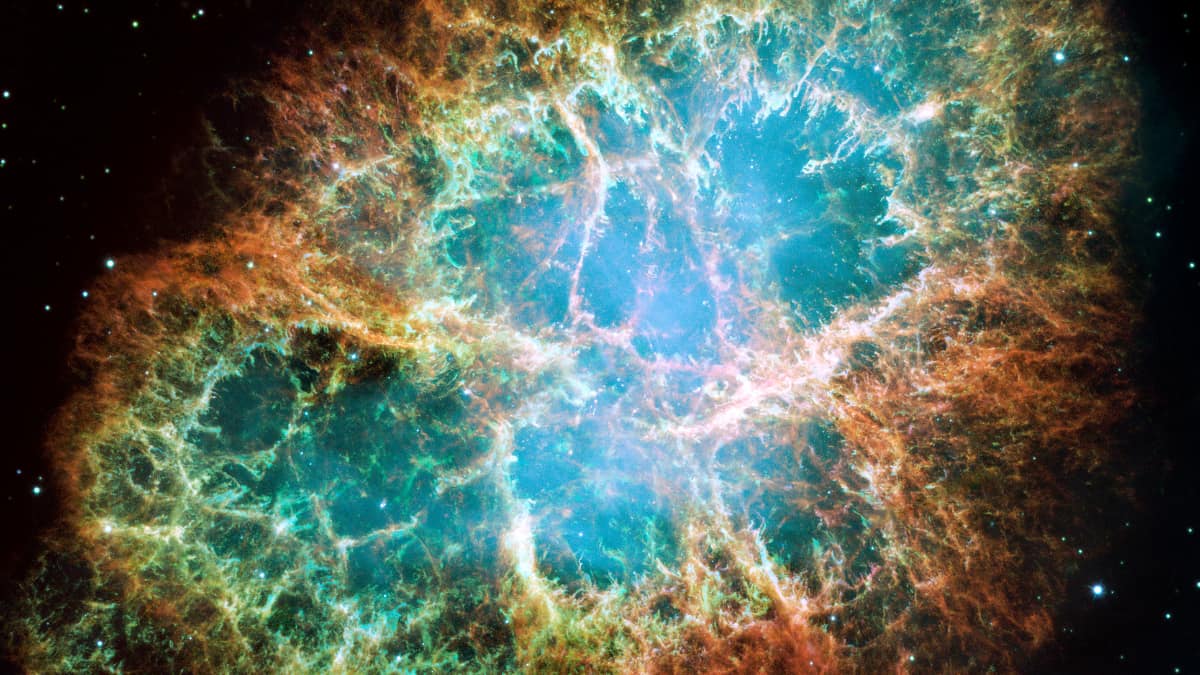
Representational image of supernova in the space.
In a mind-baffling discovery, scientists have found that a supernova explosion billions of light-years away was so powerful that it 'temporarily destroyed' some of the Earth’s Ozone layer in 2022.
On October 9, 2022, the telescopes captured a jet of high energy photons which were moving towards Earth. This was evidence of the explosion of a supernova which was 1.9 billion light-years away.
Such astronomical events are called gamma-ray bursts and the astronomers who have studied them thoroughly called them the “brightest of all time”.
In the latest discovery, it was found that this burst led to a measurable change in the number of ionized particles which were found in the upper atmosphere of the Earth, which included ozone molecules that readily absorb harmful solar radiation.
“The ozone was partially depleted — was destroyed temporarily,” stated Pietro Ubertini, who is an astronomer at the National Institute of Astrophysics in Rome, which worked towards the discovery of the atmospheric event.
The effect could be seen for some minutes before the ozone layer quickly repaired itself, so it was “nothing serious,” stated Dr Ubertini. However, he added that if a supernova occurred closer to us, then “it would be a catastrophe”.
The discovery, which was reported on Tuesday (Nov 14) and was published in the journal Nature Communications, showed how explosions which occurred far from our solar system have the capability to influence the atmosphere which can be used as a giant detector to find an extreme cosmic phenomena.
Gamma rays can damage the Ozone layer for days or months
It is known that gamma-ray bursts ionize molecules at the bottom of the ionosphere. However, this is the first time scientists proved that the entire ionosphere can be affected by such cosmic explosions, as per Laura Hayes, a solar physicist at the European Space Agency, as reported by The New York Times.
WATCH |European Space Agency released first images taken by Euclid's telescope
Dr Hayes stated that it is uncommon for faraway cosmic phenomena to create such massive atmospheric disturbances. “Fortunately for us, this gamma-ray burst was extremely distant, making its effects more of a scientific curiosity than a threat,” she added.
As per Dr Ubertini, if the gamma-ray burst is a million times larger, it can ionise enough ozone, weakening the protective barrier for days or months.
(With inputs from agencies)