Sea cow was killed by ancient crocodile and devoured by tiger shark

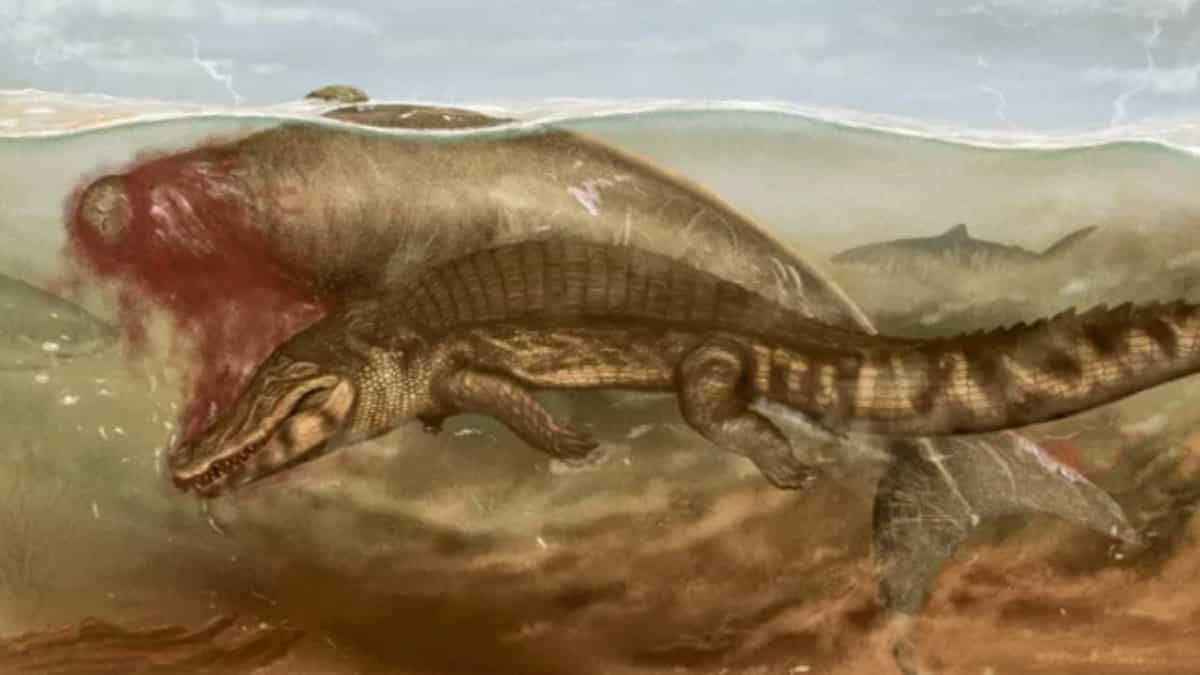
Ancient sea cow
Scientists have found that a prehistoric sea cow was preyed upon by two predators - an ancient crocodile and a tiger shark. The fossilised remains of the sea cow show that it was first killed by the crocodile and then eaten by a tiger shark.
The discovery was made in a village in Venezuela after a local farmer alerted officials about the presence of some weird rocks in the field. The fossils were found excellently preserved because of being buried in fine sediment.
The sea cow's skeleton has distinctive teeth marks on it and is a rare example of one animal being attacked by two predators during the Early to Middle Miocene epoch (23 million to 11.6 million years ago).
"Our findings constitute one of the few records documenting multiple predators over a single prey, and as such provide a glimpse of food chain networks in this region during the Miocene," Aldo Benites-Palomino, lead author and a researcher from the Department of Paleontology at the University of Zurich said in a statement.
The study was published Thursday (Aug 29) in the Journal of Vertebrate Paleontology.
Croc and shark attack
Deep tooth impacts on the sea cow's snout show that the crocodile first grabbed it by the face and tried to suffocate it. It then followed a move crocodiles today also use to kill their prey.
Also Read:Poisonous fireworms with prickly bristles are invading Texas beaches. 'Your worst nightmare'
More incisions on the cow show the crocodile dragged its prey and killed it with a death roll.
A tiger shark tooth has also been found in the cow along with several bite marks on the skeleton. These sharks are known to scavenge food and are termed "dustbins of the sea". The evidence on the sea cow shows that they were lazy hunters millions of years ago as well.
After the farmer told some officials about finding some "rocks", the scientists decided to dig up.
"We first learned about the site through word of mouth from a local farmer who had noticed some unusual 'rocks.' Intrigued, we decided to investigate," Marcelo Sanchez-Villagra, director at the Palaeontological Institute and Museum in Zurich, said in the statement.
The team of researchers says that the discovery proves that the food chain has continued to remain the same over millions of years. Carcasses of prey often feed multiple animals even today and the same happened in ancient times.

