Scientists make 'virgin births' without males possible for fruit flies

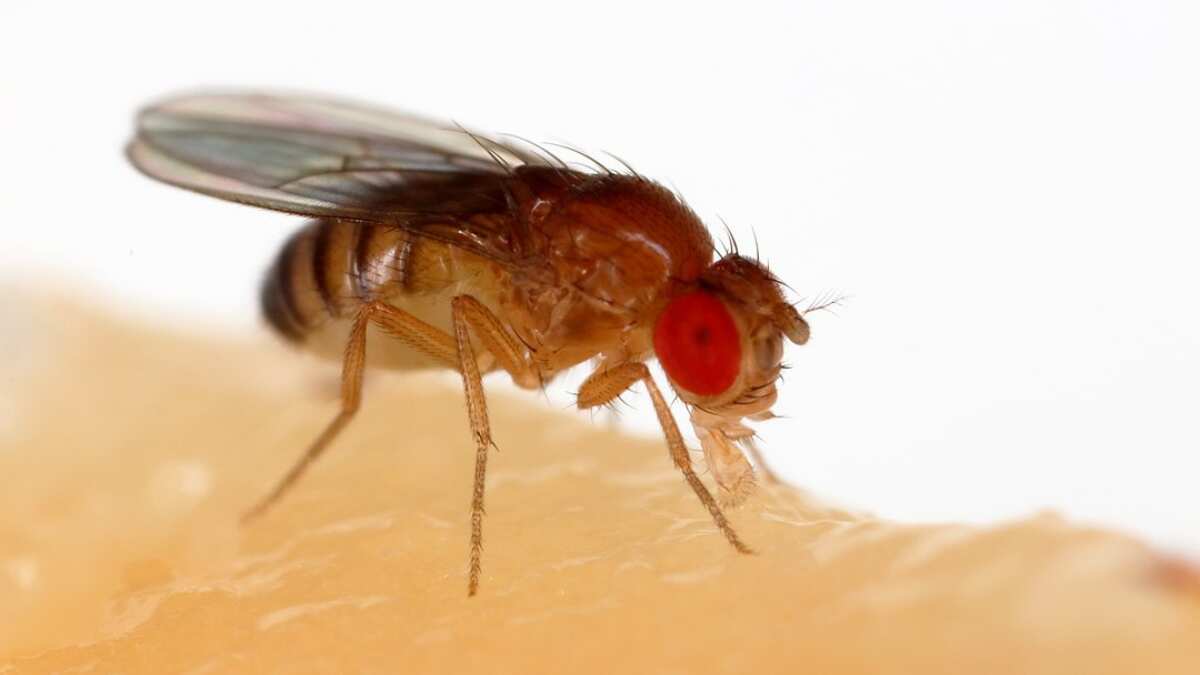
Image of a fruit fly.
Virgin births may appear unrealistic and biblical, however, researchers have claimed to have discovered a way to induce female fruit flies to produce offspring even if there are no males around.
Scientists said that the genes which enable one species of fruit fly to reproduce without sperms fertilising their eggs have been identified by them. The researchers then genetically tweaked another species which normally reproduces sexually to do the same thing.
“We’re the first to show that you can engineer virgin births to happen in an animal – it was very exciting to see a virgin fly produce an embryo able to develop to adulthood, and then repeat the process,” stated Dr Alexis Sperling, first author of the paper outlining the study and a researcher at the University of Cambridge, while speaking to The Guardian.
The study which has been published in the journal Current Biology was conducted in six years and made use of 220,000 flies. The researchers first observed one species of fruit fly called Drosophila mercatorum, and understood its ability to reproduce through virgin births, which can also be called parthenogenesis.
Through sequencing the genome of the fly and identifying the gene which is involved in virgin birth, the researchers could identify the corresponding gene in fruit fly's another species called Drosophila melanogaster and alter that gene to turn it on.
Virgin births to work asreproductive backup
The offspring of produced from such genetically modified flies could reproduce either by mating with males or through virgin births. Sperling said taking the path of virgin birth can be hugely beneficial for the species and may work as a reproductive backup for isolated females.
“If there’s continued selection pressure for virgin births in insect pests, which there seems to be, it will eventually lead to them reproducing only in this way. It could become a real problem for agriculture because females produce only females, so their ability to spread doubles,” she added.
Watch:
Process not likely to work for mammals
Sperling stated that although recent research has discovered a way to “switch on” virgin births in fruit flies, it is unlikely that this approach will work in mammals, even though parthenogenesis has been observed in animals such as lizards and honey bees.
“Mammals are very separate and it is not a natural occurring phenomenon,” said Sperling. However, she said that the research helped to “understand the beauty of life itself” and “this different type of reproduction”.
Dr Hannah Maude at Imperial College London, speaking to The Guardian, said, “Our diversity protects us: having two copies of the DNA not only provides a backup for harmful DNA variants – found in every person – but is necessary for so-called imprinted regions that are specifically active from the maternal or paternal DNA copy,”
“Nevertheless, this exciting research furthers our understanding of reproduction in the animal kingdom,” she added.
You cannow write forwionews.comand be a part of the community. Share your stories and opinions with ushere.
WATCH WION LIVE HERE