Scientists have found a dinosaur with green bones. Here's what it actually is

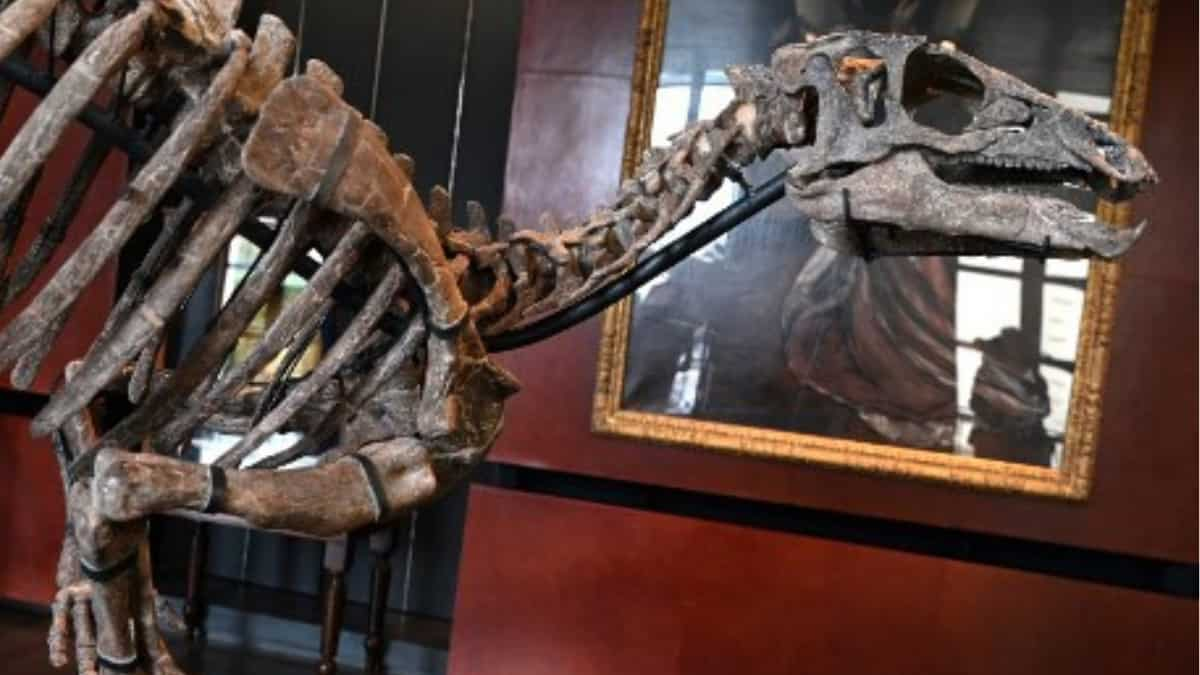
Dinosaur representative image
Dinosaur discoveries keep happening, but the latest one is extremely different. A dinosaur fossil with green bones has been found. It belongs to a new species and will go on display at the Natural History Museum in Los Angeles, United States. The fossils of the long-necked, long-tailed herbivorous dinosaur are dark-mottled olive green in colour. It turned green because of the presence of the mineral celadonite during the fossilisation process, museum officials say.
The green bones were first discovered in 2007 in the Badlands of Utah. Gnats swarmed the excavation site, so palaeontologists named it "Gnatalie" (pronounced Natalie). The dinosaur walked the Earth way before even the Tyrannosaurus rex did. Gnatalie lived 150 million years ago in the late Jurassic Era, while the T-Rex lived 66 million to 68 million years ago.
Fossils are mostly brown or black in colour, depending on where they are found. Silica in the region turns fossils brown, while black fossils are the result of iron minerals. Celadonite is typically found in volcanic or hydrothermal conditions. Surprisingly, these conditions are not conducive to buried bones which should ideally get destroyed. But when volcanoes erupted in the region 50 to 80 million years ago, celadonite replaced another mineral inside the bones due to the high temperatures.
"Dinosaurs are a great vehicle for teaching our visitors about the nature of science, and what better than a green, almost 80-foot-long dinosaur to engage them in the process of scientific discovery and make them reflect on the wonders of the world we live in!" Luis MChiappe of the museum’s Dinosaur Institute said in a statement.
Matt Wedel, anatomist and palaeontologist at Western University of Health Sciences, told Fox News that until now he thought that green dinosaurs were only a rumour. But upon seeing them he realised they were "not like anything else" he had ever seen.
A dinosaur that dug and lived underground
A few weeks ago, North Carolina scientists found what they believe is a dinosaur that lived in a burrow like an armadillo. The seven-foot-long, plant-eating dinosaur spent a lot of time in underground burrows. Fona herzogae lived 99 million years ago in a warm, wet, muddy region which is now in Utah. This was the first time that a burrowing dinosaur was discovered.

