Scientists explain why humans have two nostrils and not just one

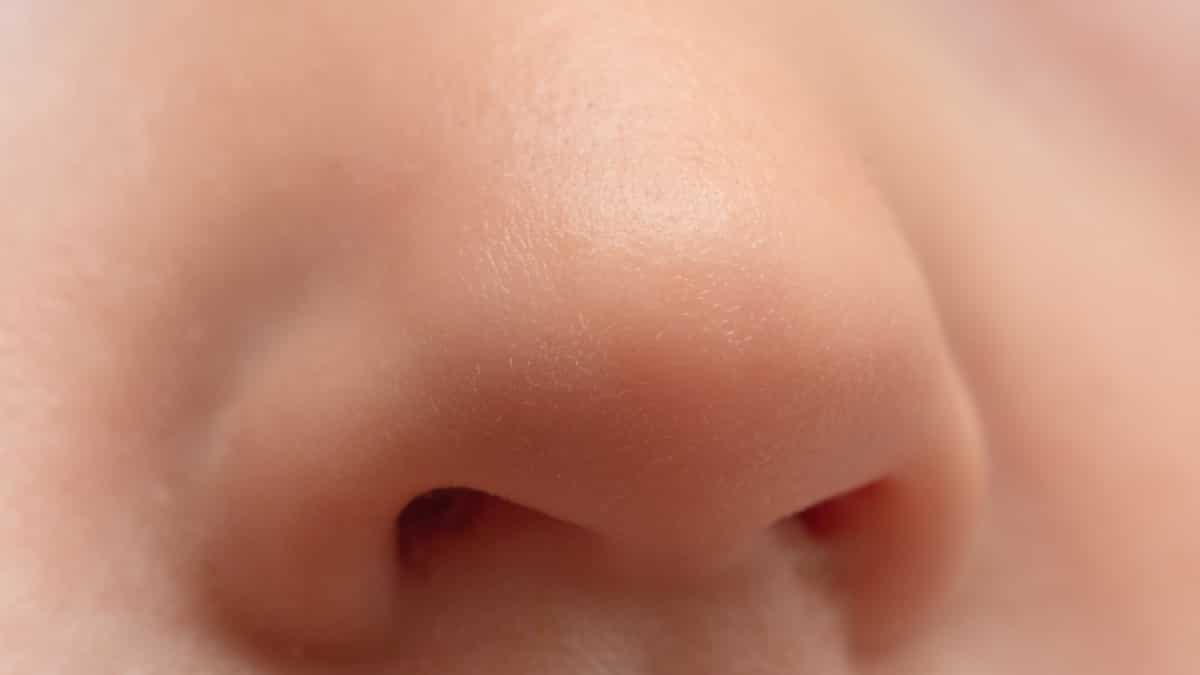
Representative image of a pair of human nostrils | Wikimedia Commons
Our two nostrils operate somewhat independently and possess their own distinct sense of smell, a recent study has claimed. The discovery reflects on the intricacies of the brain and how the sensory information, such as that of smell, is processed by our neural network.
The research has been published in Current Biology.
What does the study say?
The research builds upon previous research involving animals and humans, and suggests that our brains might possess the capability to process the input from each nostril separately while also managing to form a cohesive perception of a specific smell.
How the study was conducted?
To delve deeper into this phenomenon, scientists from the University of Pennsylvania, the Barrow Neurological Institute, and Ohio State University collaborated with 10 epilepsy patients who had undergone brain electrode implantation.
During the experiments, participants were exposed to three different scents, as well as a control of pure air, either through one nostril, the other, or both simultaneously.
Subsequently, the subjects identified the smell and specified which nostril they used for detection—left, right, or both—while the researchers recorded brain responses through electrodes.
A number of startling observations emerged from the study.
When the same scent was presented to each nostril individually, the resulting brain activity showed similar but not identical patterns, indicating a degree of independence.
Also watch |New research reveals that rats have the ability to imagine
Moreover, simultaneous exposure to scents through both nostrils produced two distinct bursts of brain activity, suggesting that nostrils may not always operate in sync with each other
The study also revealed that utilising both nostrils enhanced the identification of odours, and the process occurred more rapidly, implying the advantageous nature of two nostrils, akin to the benefits of having two eyes or ears.
The piriform cortex (PC) brain region is responsible for processing the sense of smell.
What is the bottom line?
As various senses are interconnected in terms of processing by our body's neural network, the meaning of these findings extend beyond the sense of smell, marking a new beginning towards curious horizons of thesensory processing in the brain.
(With inputs from agencies)