Rock varnish from India’s Ladakh may help find habitable environments in space

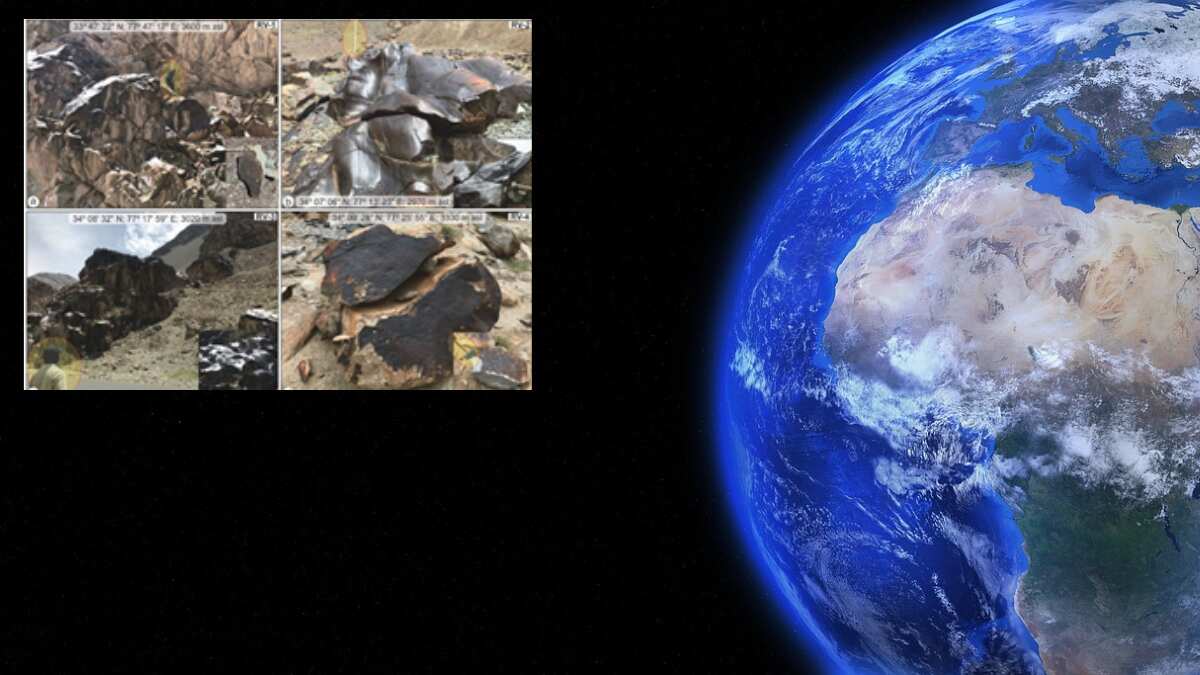
Ladakh's rock varnish
Researchers have spotted Magnetofossils, fossil remains of magnetic particles produced by magnetotactic bacteria, in rock varnish layers in India's Ladakh, which is known as the "cold desert of India".
The study published in Planetary and Space Science mentioned that the findings suggesting biotic processes in the formation of rock varnish indicate how life can exist in extreme environments.
Researchers have said that the findings provide valuable insights for astrobiology as well as for planning future space missions which are aimed at identifying habitable environments in space.
The report mentioned that Ladakh experiences extreme climatic conditions such as high UV radiation, significant temperature variations and limited water availability. All of these components make it a suitable terrestrial analogue for Martian studies.
The study was conducted by researchers from Birbal Sahni Institute of Palaeosciences, Lucknow (BSIP), an autonomous institute of the Department of Science and Technology (DST).
The researchers were inspired by the similaritybetween the rock varnish found in Ladakh and that seen on Mars, particularly during the Perseverance rover operations.
The researchers have collected samples of rock varnish from the Ladakh region, chosen and employed XPS to analyse the surface chemistry of the rock varnish.
Lead author Dr Amritpal Singh Chaddha along with Dr Anupam Sharma conducted the analysis at BSIP with its Sophisticated Analytical Instrumentation Facility (SAIF) established by DST.
The analysis helped identify the nanochains of magnetofossils. In addition to that, higher concentrations of oxidized manganese and carboxylic acid functionality on the varnish surface were identified, which indicated organic signatures.
Watch:Gravitas: Mysterious dark oxygen found on ocean floor
The study showed that rock varnish contains enriched concentrations of magnetic minerals which are likely derived from biotic sources.
The researchers said the findings highlighted the potential of rock varnish as an archive of ancient environmental records and as a geomaterial for astrobiological studies.
Scientists can help in the search for extraterrestrial life by better locating putative biosignatures on Mars and other planetary bodies by finding biotic markers in rock varnish.
The planning of upcoming space missions by the Indian Space Research Organisation (ISRO) and other space organisations, such as Mars exploration, where detecting livable habitats is a main goal, depends on this information.
(With inputs from agencies)