Researchers present new theory about construction of first Egyptian pyramid

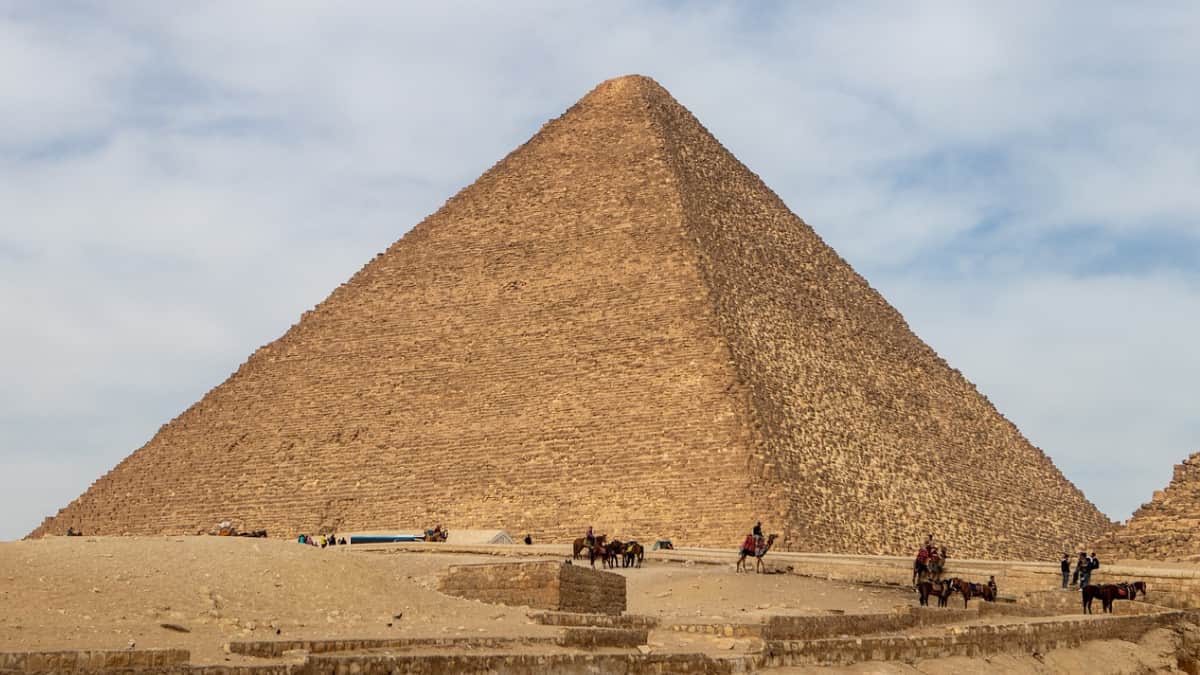
Pyramid
The Egyptian pyramids without a doubt are among the most amazing man-made constructions in history. Several conspiracies exist regarding how those pyramids were built, with some theories even including a link to otherworldly beings, such as aliens. But there's, of course, no solid evidence to back such outrageous theories.
Scientists wondered how an ancient civilisation managed to build it in the absence of heavy machinery. With advancements in science, we might finally know how the pyramids were built, as physicists think they've finally figured out the secrets of construction.
In their latest attempt, researchers have proposed a stunning theory, which states that a form of hydraulic lift was used in the construction of the 4,600-year-old Egyptian pyramid.
In a study, which was published as a pre-print on ResearchGate, researchers said that the landscape, waterways and interior architecture of the Step Pyramid of Djoser point to the hydraulic system.
According to a report by Heritage Daily, the previous widely held theory included that ramps and rollers were used to lift and position the incredibly huge stones.
Researchers have now discovered evidence of possible hydraulic system use after studying the Djoser in Saqqara, which stands approximately 60 to 62 metres tall.
The study was led by Dr Xavier Landreau from the CEA Paleotechnic Institute and his team of French engineers, hydrologists and material scientists. They uncovered new insights into the pyramid's construction using satellite radar imagery and historical archaeology.
Instead of the Great Pyramid of Giza, researchers chose to study the Step Pyramid of Djoser because it is the earliest colossal stone building in Egypt. It was said to have been constructed during the Third Dynasty under the reign of Pharaoh Djoser (circa 2670–2650 BCE).
The first find was the mysterious Gisr el-Mudir, a nearly two-kilometre-long rectangular stone enclosure located directly west of Djoser's complex. It was believed that the enclosure has been variably interpreted as a cattle pen, fortress or sacred space.
In an interview with Haaretz, Dr Landreau explained, "Satellite imagery clearly shows that a rectangular stone enclosure known as Gisr el-Mudir, located west of the Saqqara necropolis, has all the technical characteristics of a check dam. This feature would have been used to control the flow of flash floods and capture heavy objects coming from upriver."
This is a considerably more advanced theory that has led to new research directions. The findings of the study suggest that having a sophisticated water management system in place made construction easier.
According to the study authors, "The Egyptians were famous for their pioneering and mastery of hydraulics through canals for irrigation purposes and barges to transport huge stones already."
(With inputs from agencies)