Research predicts solar eclipse path might slightly shift. How can you watch totality now?

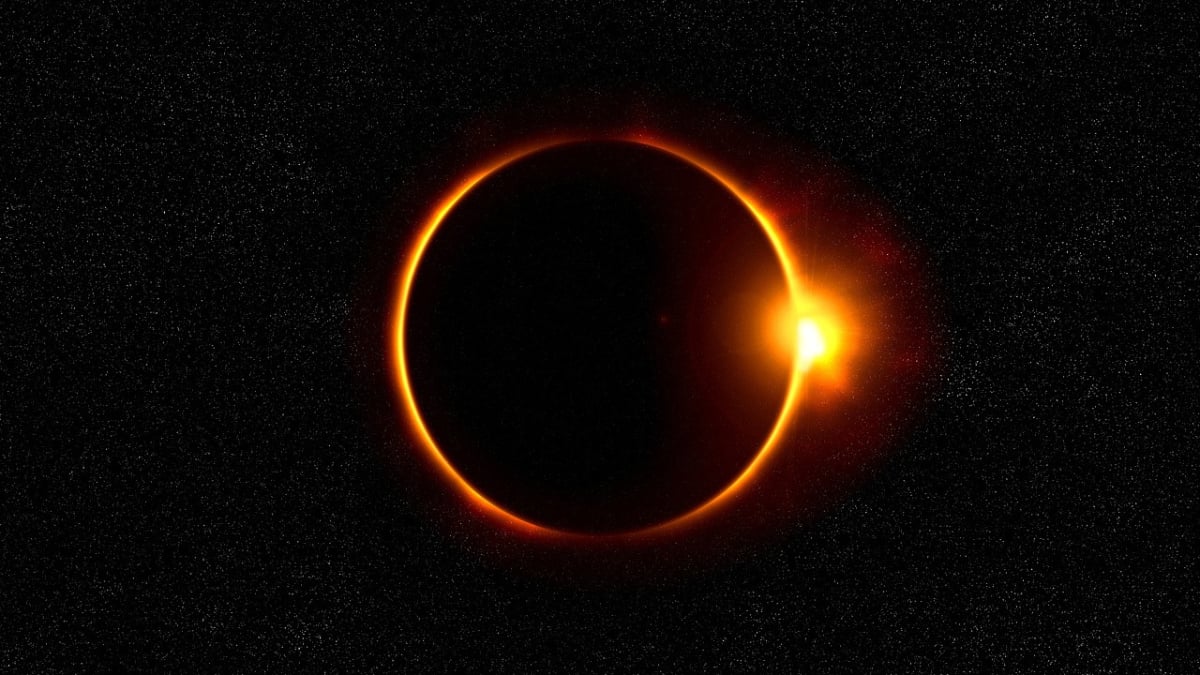
Representational image of solar eclipse.
Recent estimates indicate that the path of totality, in which the moon completely covers the sun, may shift from earlier predictions. So, if you want to observe the complete solar eclipse that is about to occur across North America, you need to carefully choose your viewing spot.
How will the path of totality change?
New map calculations suggest that the path of totality might be narrower than initially thought. Consequently, some cities on the edge of the route may miss out on the complete eclipse.
What does NASA say?
NASA is sticking to its original predictions, but it does acknowledge the uncertainty involved in mapping the eclipse's path due to uncertainties about the size of the Sun and variations in the Earth's rotation
How to make sure that you watch the solar eclipse if the path changes?
According to experts, watching the eclipse from the middle is advised rather than the edge.
A NASA scientist said that people right on the edge are advised to travel a mile or so towards the middle to ensure that they see the moon completely obscure the sun.
Who predicted the changes in the solar eclipse path?
The map that showed the potentially shifting path from the earlier predicted route was calculated by a software developer. Though the research is backed by some individuals, it has not undergone a thorough scientific review. Even if there are discrepancies with the NASA map, the differences seem minimal but minimal differences can cause people to miss out on totality.
What is a solar eclipse?
Solar eclipses occur when the moon passes between the sun and the Earth, blocking sunlight and producing a shadow on the Earth's surface.
A total solar eclipse occurs when the moon totally covers the sun, revealing the sun's outer atmosphere in the form of a brilliant ring. Meanwhile, partial solar eclipses happen when the moon only partially obscures the sun.
(With inputs from agencies)
