Wolves and brown bears among wildlife returning to Europe after conservation efforts: Report

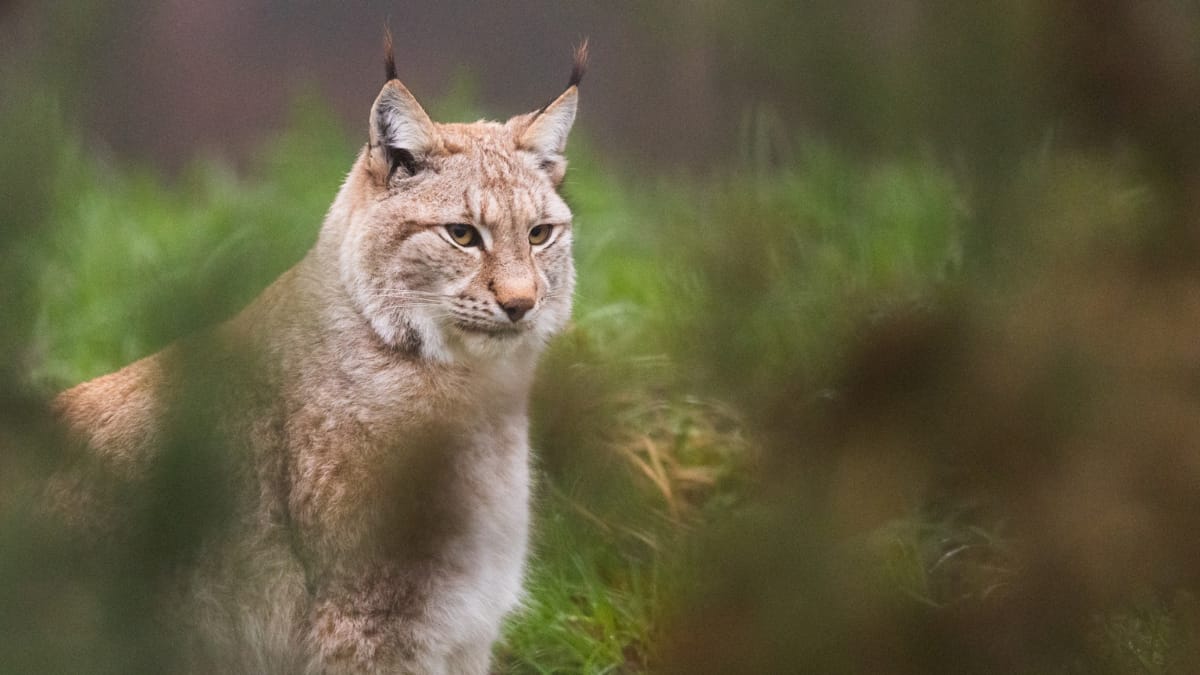
Eurasian lynx
European wildlife is making a comeback across the continent, following effective interventions including legal protection, habitat restoration and reintroductions of several species which has driven recovery in the region, saysa report in the Guardian.
This comes after a report for which researchers analysed the data of at least 50 wildlife species. The study indicated that the population size and geographical distribution of the once-declining populations of wildlife are making a comeback.
The report named Wildlife Comeback Report 2022was compiled by the Zoological Society of London (ZSL), BirdLife International and the European Bird Census Council.
The researchers looked at the data for 24 mammals, 25 birds and one reptile, while the main sources of data were the Living Planet Index Database, the EU Birds Directive and the IUCN red list, which measure different species and their risk of extinction, reported the Guardian.
The team also indicated that insects or plants have not been included in the report given the lack of documentation on long-term trends.
“The vast majority have recovered thanks to human efforts,” said Louise McRae from ZSL and one of the contributors of the report, during an interview. Commissioned by Rewilding Europe, it indicates that wolves, brown bears and white-tailed eagles are some of the top predators that have come back across Europe. Additionally, grey wolf has been the fastest to return among other carnivores.
The grey wolf had been hunted by humans till the population reached so low in the 1970s that there were reportedly only a few left in Europe. However, now their population has grown by 1,800% following the introduction of legislation to protect them, the growth has also been attributed to an increase in public tolerance of living alongside them.
ALSO READ:World Animal Day 2021: Conservation efforts bring animals back from extinction in wild
“Coexistence with species like carnivores is still a challenge, but attitudes are changing – we’re still learning about ways to live alongside these species,” said McRae.
Furthermore, there has been an increase in the population of white-tailed eagles, particularly around the west coast of Scotland and the Isle of Wight. While the rest of Europe also saw a 445% growth in numbers between 1970 and 2018, said the report. There was also a 44% increase in the population of bears since 1960 which has been attributed to better legal protection.
“We chose those species because they are doing so well – both with monitoring and conservation there can sometimes be a bias towards larger, or more charismatic species,” said McRae during the interview. The report also describes the comeback of selected birds and mammals which have done so in the past 40-50 years, indicated the Rewilding Europe.
On the other hand, some of the most successful bird comebacks include Barnacle goose, griffon vulture and great white egret. While there has been a 120% increase in the bearded vulture population since 1991 which is thriving in European nations like France, Spain and Germany. This has been attributed to reintroduction programmes and bans placed on killing them.
“This new report not only sheds light on which European wildlife species are recovering well, but why they are recovering well too,” said executive director of Rewilding Europe, Frans Schepers. He also said how these “success stories” can be learned from and be used to maximise comeback across the board.
ALSO READ:In 44 years, humans have wiped out 60% of the world's animal population: WWF
Meanwhile, among the herbivores, the Eurasian beaver has made the most significant comeback with an increase in range by 835% since 1955. The report also showed that the species has witnessed a 16,000% increase since 1960, this is from just 1,200 of them left by the end of the 20th century.
Under the European Union’s directive for habitat, the brown bears, wolves, bitterns and Eurasian lynxes received the same amount of funding as all invertebrates got collectively, showed the analysis. Notably, the first Wildlife Comeback Report was published in 2013 with the aim to not only learn more about wildlife comeback in Europe but also better support it in the future.
But despite positive findings, wildlife across the world is being lost at a record pace, with at least 1 million species being at the risk of extinction. Meanwhile, the condition of protected landscapes in Europe is worsening, said the Guardian.
(With inputs from agencies)