Palaeontologists discover rare pre-dinosaur era crocodile-like species

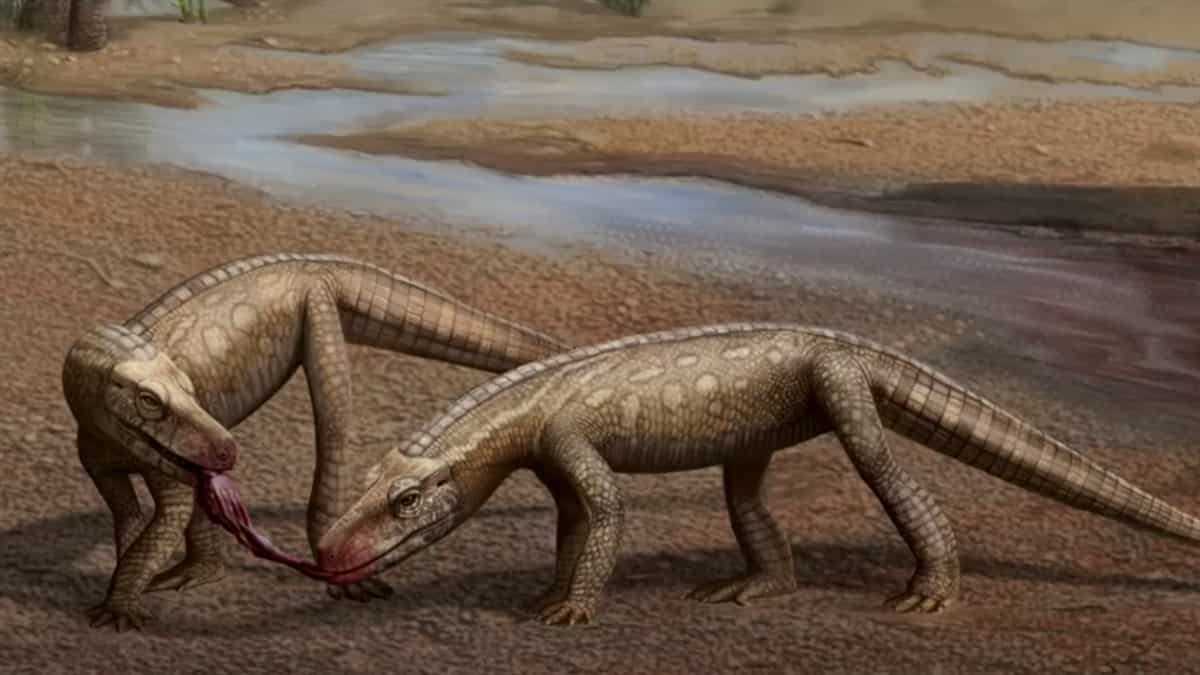
Reptile fossil
Palaeontologists have discovered a new species of ancient crocodile-like reptile, which lived around 237 million years ago during the Triassic Period. The fossils were found in a fossiliferous locality named "Linha Várzea 2" in southern Brazil.
According to a paper published in Scientific Reports on Thursday (Jun 20), the fossils have now been dubbed Parvosuchus aurelioi, which is a new ancient species of small predatory reptiles. The new species is part of a group of reptiles that resemble crocodiles called pseudosuchians.
As quoted by the news agency Reuters, the lead author of the paper, Rodrigo Muller, who is a palaeontologist at the Universidade Federal de Santa Maria, said that the new species is the first "unequivocal" gracilisuchid, an extinct genus of small pseudosuchians.
Muller added, "The Gracilisuchidae are rare organisms in the fossil registry. Up to now, we had only seen three species: two in China and one in Argentina. So the discovery of the Parvosuchus aurelioi brings the number of known species in the world to four. It is the first uncontested Gracilisuchidae in Brazil."
He added that when dinosaurs appeared, at a later moment in the evolution history of Earth, the Gracilisuchidae were completely extinct, with some of the fossils showing how they became smaller than 30 centimetres (11.8 inches) in length. There are also other descendants that later became alligators and crocodiles.
He said that the fossil remains covered by a thick layer of rock and only a few vertebrae were initially apparent. He further mentioned that portions of the cranium emerged from the rock, showing a whole skull, following the use of acid solutions and pneumatic hammers during the preparation procedure.
Muller said that as per estimate, the animal was about 6.5 feet long and had a long tail. The animal probably had four legs that were designed for walking on land. It had fangs that resembled blades that could rip through flesh.
(With inputs from agencies)