Overcoming grief after parents' demise, Dr. Kalam led launch of India's first rocket SLV-3

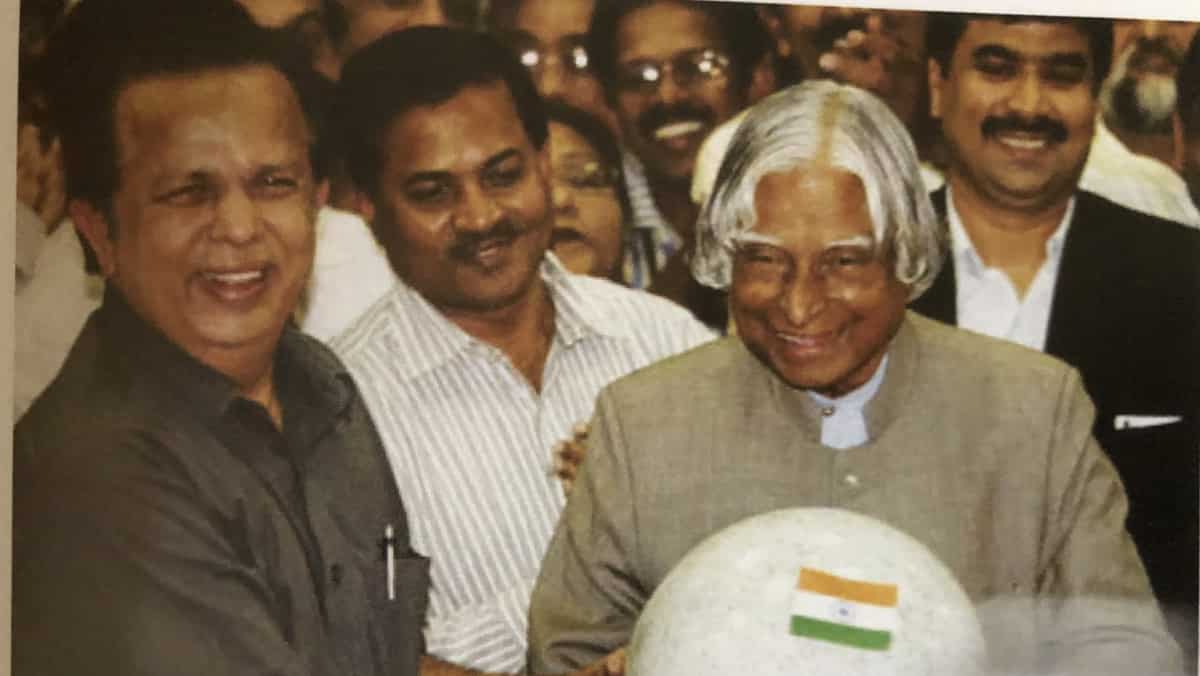
Dr. Kalam
In the 1970s, the Indian Space Research Organisation was in its nascent years. With minimal resources and funding, an assortment of experienced and enthusiastic young engineers were working on developing and launching India's first spacefaring rocket - SLV-3.
Amid the rush to make history for India, the SLV-3 team leader (Project Director) APJ Abdul Kalam lost three members of his family, in quick succession.
Despite the devastating loss on the personal front, he absorbed his sorrow and toiled for the national mission, a new book reveals. October 15th marks the birth anniversary of Dr. APJ Abdul Kalam, the veteran rocket and missile scientist, who later went on to serve as the President of India.
"The years nearing the completion of the SLV-3 programme were very painful for Dr. Kalam. The deaths of three very dear family members shook him. First was his sister's husband Ahmed Jamaludeen, who had played a crucial role in his education. A close friend, he was the only person who was literate in English on the entire island of their native Rameswaram in his childhood. How could Dr. Kalam ever come to terms with that untimely death?,"reads a para from 'Rocketing Through the Skies', the autobiography of Former ISRO Chairman, Dr. Madhavan Nair.
After returning from the funeral of his brother-in-law and immersing himself in work, Dr. Kalam lost his father Jainulabdeen Marakayar. It was from his father that Dr. Kalam had inherited his deep-rooted spirituality, the book reveals. Soon after, he also lost his mother. On hearing about her death, he rushed home in a passenger bus for her last rites. He contained all these sorrows within himself and headed the SLV-3 project, Dr. Nair reminisces.
Finally, it was it on August 10, 1979 that the maiden flight of SLV-3 took place from Sriharikota. The four-stage rocket which stood 23 metres tall and weighed 17 tonnes, was meant to carry a 40kg satellite into orbit. While the vehicle lifted off and flew as planned, it faced a setback after the first stage burned out and then it tumbled and fell deep into the Bay of Bengal, 560kms off India's east coast.
After a detailed failure analysis, team ISRO rectified the errors and launched again in July 1980 and the Rohini satellite was injected into orbit.
This was the first time that an Indian satellite was being placed into orbit by an Indian rocket. Tenyears after this successful launch, the Government of India bestowed the honour of the Padma Shri award on Dr. Kalam, the book reveals.
In the English autobiography, 'Rocketing Through the Skies' Dr. Madhavan Nair narrates the transition from ISRO's modest Thumba-era to the Chandrayaan-era, as he lived through it all and devoted his life for the cause of Indian Space programme. Throughout the book, he shares the cherished experiences and learnings that he could gain by working under Dr. Kalam, whom he refers to as his Guru (teacher).
Watch |Israel-Palestine war: Hamas leader orders Palestinians not to leave Gaza
Dr. Madhavan Nair was the Chairman of ISRO from 2003-09 and his tenure witnessed the success of Indias maiden moon mission Chandrayaan-1. He is also a recipient of top Indian Government honours such as the Padma Bhushan and Padma Vibhushan. Former ISRO scientist Jaya G Nair has collaborated with Dr. Madhavan Nair in translating, re-narrating and editing the original autobiography 'Agniparikshakal', that was in Malayalam.
WATCH WION LIVE HERE
You can now write for wionews.com and be a part of the community. Share your stories and opinions with us here.
