Nuclear-powered spacecrafts are on the way: Blue Origin, General Electric roped in by NASA

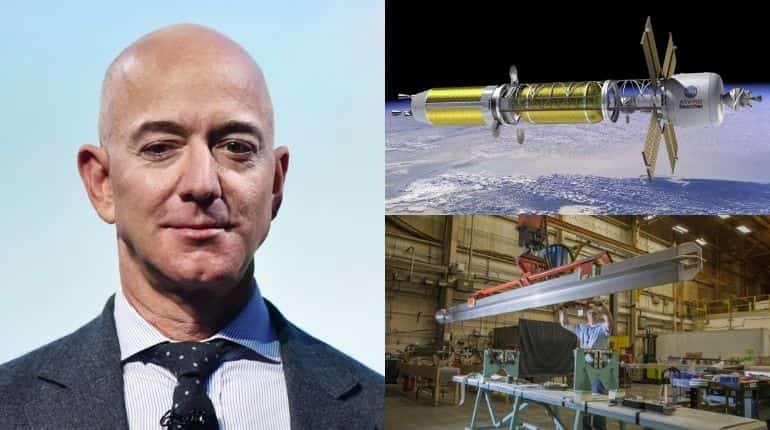
Bezos and a visionary view of a Nuclear Thermal-Propulsion enabled spacecraft mission
Blue Origin andGeneral Electric Hitachi Nuclear Energy have been roped in by NASAto developnuclear-powered spacecraft that can travel faster andfarther,to Mars and beyond.
The Department of Energy'sIdaho National Laboratory (INL)is collaborating withNASAto advance space nuclear technologies.
NASA’s prototype power system uses a uranium-235 reactor core roughly the size of a paper towel roll.
The US government team has selected three reactor design concept proposals for a nuclear thermal propulsion system.
The reactor is a critical component of a nuclear thermal engine, which would utilise high-assay low-enriched uranium fuel.
The contracts, worth $5 million willfund the development of various design strategies for the specified performance requirements that could aid in deep space exploration.
Nuclear propulsion provides greater propellant efficiency as compared with chemical rockets. It’s a potential technology for crew and cargo missions to Mars and science missions to the outer solar system, enabling faster and more robust missions in many cases.
According toJim Reuter, associate administrator for NASA’s Space Technology Mission Directorate, ''By working together, across government and with industry, the United States is advancing space nuclear propulsion.''
''These design contracts are an important step towards tangible reactor hardware that could one day propel new missions and exciting discoveries,'' he added.
In 2018, Nasa and the Department of Energy’s (DOE) National Nuclear Security Administration (NNSA) demonstrated a new nuclear reactor power system that could enable long-duration crewed missions to the Moon and Mars called the Kilopower Reactor Using Stirling Technology (KRUSTY) experiment.
Kilopower is a small, lightweight fission power system capable of providing up to 10 KW.
The technology could power habitats and life-support systems, enable astronauts to mine resources, recharge rovers and run processing equipment to transform resources such as ice on the planet into oxygen, water and fuel.
It could also potentially augment electrically powered spacecraft propulsion systems on missions to the outer planets.
(With inputs from agencies)