Next stop for Curiosity rover? 'Spiderwebs' on Martian mountain

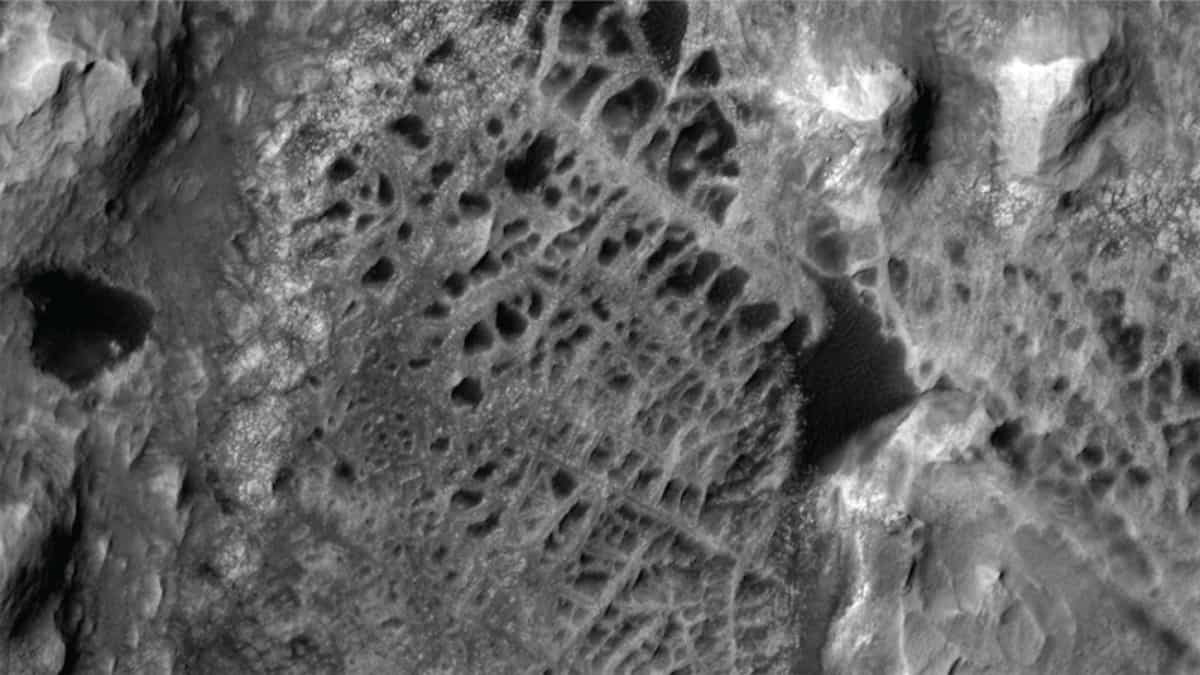
Spiderwebs on Mars
Curiosity rover is moving on to its next mission - exploring the giant spiderwebs on Mount Sharp. These honeycomb-like formations extend for miles on this Martian mountain. NASA said that the rover will soon begin travelling to this region.
The geological patterns that look like spiderwebs are believed to have formed when the last remaining surface water in this area on Mars dried up. The web-like formations are called boxwork and are intersecting ridges that stretch for miles. It spans across 10 to 20 km.
For the past year, Curiosity has been studying the Gediz Vallis channel on Mount Sharp in Gale Crater. An ancient river or debris flow supposedly created the channel years ago, as per scientists. This is the region where the rover cut open stones and found pure sulfur crystals inside them. It also took a 360-degree panoramic image of the Gediz Vallis as it moved on to its next journey.
Right now the rover is traveling along the western edge of Gediz Vallis. It is making its way towards the web formations and scientists are intrigued by the discoveries waiting to be made.
How were spiderwebs on Mars formed?
The red planet today is dusty with no sign of water. However, billions of years ago, rivers are believed to have flown on Mars' surface. Scientists have even found evidence that there was a time when water covered Mars.
As the water dried up, it left behind ridges and channels. These spiderwebs are also a result of the same, scientists say. The surface rock on the planet fractured and the remaining water seeped inside. It took in with it minerals which later hardened and cemented themselves in the fractures. But the rocks around them were softer and gradually eroded away. As they vanished, the fractures were all that were left behind which hardened over time to appear like intersecting ridges.
On Earth, you can see such patterns only in caves and on cliff faces. However, they are spread across the surface of Mars.

