New intriguing study claims humans might have first evolved in Europe, not Africa

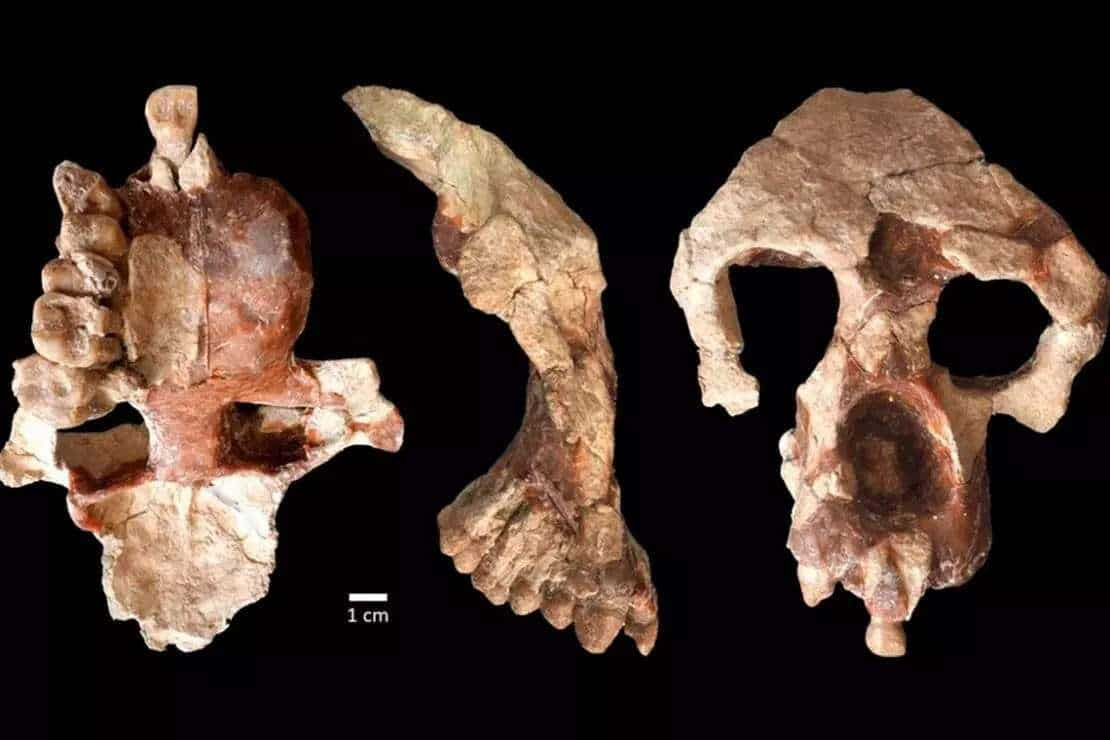
The skull discovered from Turkey
A new intriguing study has claimed that the long-held belief that all apes and humans originated from Africa might not be true.
It all started with the discovery of an ancient ape skull, called an Anadoluvius turkae. The skull was found in Turkey’s Cankiri and appears to be at least 8.7 million years old.
If these claims are found to be true, then this would mean that apes in Europe existed way before they came to occupy Africa as no trace of early hominins, including humans and African apes, is found in Africa until seven million years ago.
Hence, this study challenges the theory which suggests that the ancestors of African apes and humans originated exclusively in Africa.
So, humans first evolved in Europe?
Instead, this discovery suggests that humans and apes might have first evolved in Europe and then migrated to Europe.
"Our findings further suggest that hominins not only evolved in western and central Europe but spent over five million years evolving there and spreading to the eastern Mediterranean before eventually dispersing into Africa, probably as a consequence of changing environments and diminishing forests," said Professor David Begun, a paleoanthropologist from the University of Toronto and co-senior author of the study.
Watch:Massive explosion from Sun felt on Earth and Mars
"This new evidence supports the hypothesis that hominins originated in Europe and dispersed into Africa along with many other mammals between nine and seven million years ago, though it does not definitively prove it," he added.
More research needed
To establish this, additional fossils dating back seven to eight million years in both Europe and Africa would be necessary to establish a potential connection between these two groups, he emphasised.
This discovery implies that the ape's estimated weight ranged between 110 to 130 pounds, it might have inhabited a dry forest environment and probably had a significant terrestrial lifestyle.
What do critics say?
Unearthed in 2015, the skull's significance has only recently been discussed in a publication in the journal Communications Biology. However, some other researchers argue that these findings do not challenge our current understanding of human origins.
"This has been a long-running debate regarding great ape and our origins," said Professor Chris Stringer, research leader in human evolution at the Natural History Museum in London.
"I don't think this find changes much from the discussions (in a recent paper in the journal Science) which concluded: 'Current evidence suggests that hominins originated in Africa from Miocene ape ancestors, unlike any living species'."
WATCH WION LIVE HERE