NASA’s Voyager 1 re-establishes contact using 1981 radio transmitter

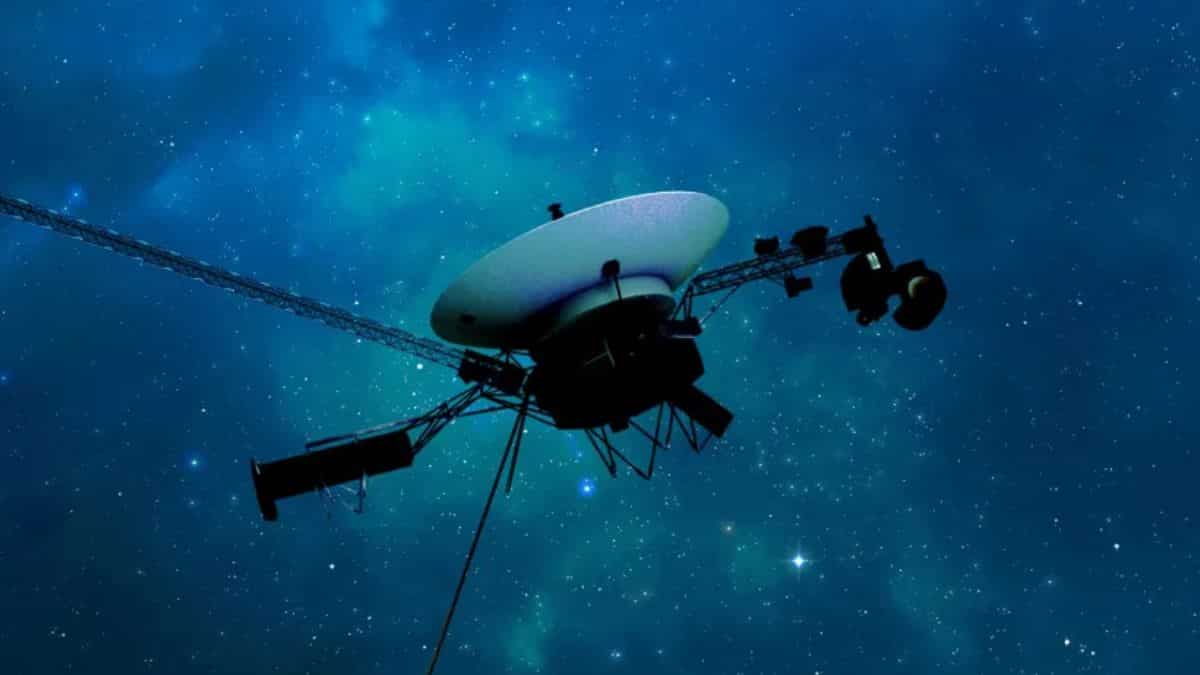
NASA's Voyager 1
NASA’s 47-year-old Voyager 1 spacecraft established communication with Earth on October 24 using a 1981 radio transmitter after a technical issue resulted in a days-long disruption in contact, as the team continues to resolve the issue.
Launched in September 1977, components of Voyager 1 were turned off to conserve power, enabling it to send back data from 15 billion miles away from Earth.
It is the farthest spacecraft from Earth that continues to observe interstellar space. In recent months, it has faced many technical issues due to its age, however, the team keeps resolving the issues creatively so it continues its journey through the space.
Voyager 1 faces technical issues
On October 16, the team sent a command to turn on its heater, which helps reverse radiation damage to the spacecraft. This triggered the autonomous fault protection system, which shut down some non-essential systems to conserve power. The team discovered the issue when the Deep Space Network could not detect the spacecraft’s response signal on October 18, reported CNN.
The communication with Voyager 1 is overlooked at NASA’s Jet Propulsion Laboratory in Southern California through the Deep Space Network. The spacecraft takes about 23 hours to communicate a message one way.
Voyager 1 has been using an X-band radio transmitter to communicate, while the S-band, which uses a different frequency hasn’t been used since 1981 as its signal is much weaker.
While the Voyager 1’s team were not sure whether the S-band signal could be detected, Deep Space Network engineers detected the signal and were able to locate the spacecraft.
“The S-band signal is too weak to use long-term,” said Bruce Waggoner, the Voyager mission assurance manager. “So far, the team has not been able to use it to get telemetry (information about the health and status of the spacecraft), let alone science data. But it allows us to at least send commands and make sure the spacecraft is still pointed at Earth.”
The team will not turn on the X-band transmitter until it figures out what triggered the fault protection system, which may take weeks.
(With inputs from agencies)

