NASA to send 'snake-robot' to find alien life on Saturn's icy moon

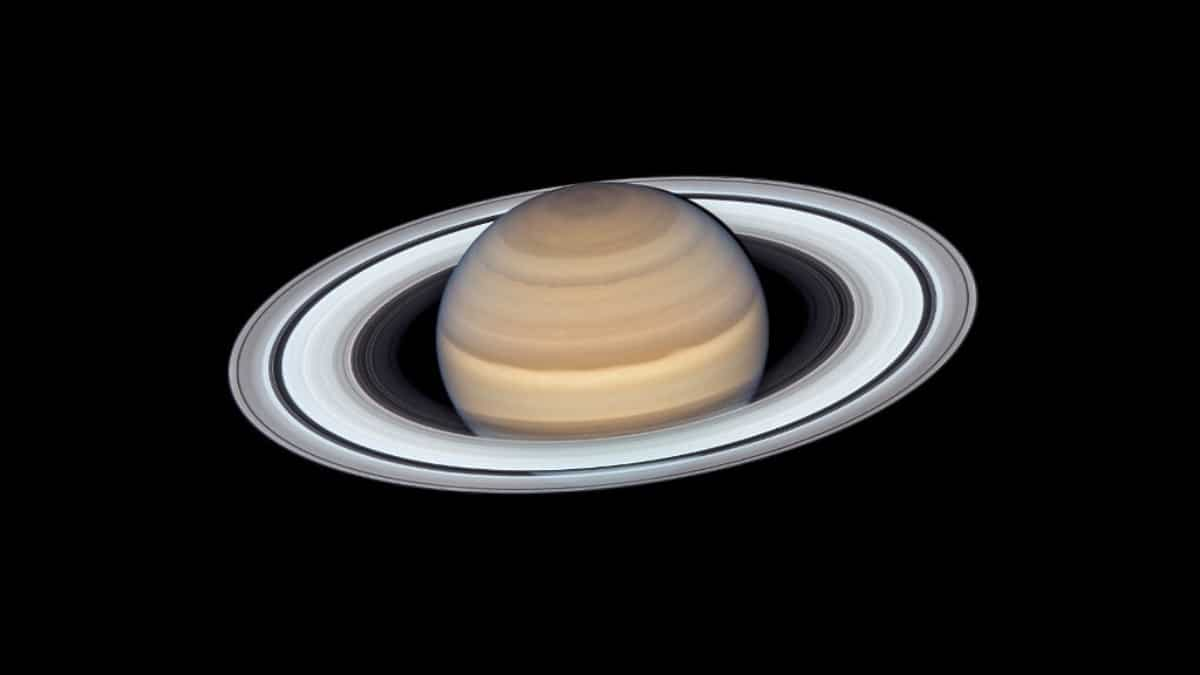
Saturn's rings are mad beautiful. And the fact that they can be observed with basic stargazing equipment has meant that astronomers even in the medieval times were able to observe them with not-so-advanced technology of the times. But there's more to Saturn than just rings. The most unique planet in our solar system has a large number of satellites one of which, has long piqued scientific interest for search for extraterrestrial life.
Enceladus, one of Saturn's satellites is unique in a way that it has an icy surface. The laws of physics say that where there is ice, there are very high chances of water underneath. And where there is water, there is life, at least as per our most conventional scientific understanding.
Drilling ice on earth is challenging enough, how to do that on a surface that's literally millions of kilometres away? NASA has a unique solution.
The space agency is planning to send a snake-like robot to check out surface of Enceladus.
The snake-robot has a long winding name. Exobiology Extant Life Surveyor (EELS). It is being developed by NASA's Jet Propulsion Laboratory (JPL).
According to JPL , EELS is a "snake-like, self-propelled robot". It is made of segments with "first-of-a-kind rotating propulsion units". These will help it to grip surfaces and even move underwater.
This robotic snake is 16-foot long and weighs 220 pounds. At its head, EELS has machinery that'll help it map Enceladus in 3D. It'll send real time images. The body of EELS will have a payload that'll enable scientists to measure the sub-surface pressure.
JPL is currently testing the robot. As per media reports, the robot underwent testing at Athabasca Glacier in Canada's Jasper National Park.
"We are early in the project, but it is achievable in our lifetime," EELS Deputy Project Manager Rachel Etheredge said last year, as quoted by CBS News. "...It's an ambitious collaboration, and we're motived by the shared excitement we have for this concept, and the potential science we could gather with EELS."
"The EELS system is a mobile instrument platform conceived to explore internal terrain structures, assess habitability and ultimately search for evidence of life," NASA says of its development. "It is designed to be adaptable to traverse ocean-world-inspired terrain, fluidised media, enclosed labyrinthian environments and liquids."
You can now write for wionews.com and be a part of the community. Share your stories and opinions with us here.
WATCH WION LIVE HERE