NASA simulates massive asteroid impact to explore emergency response

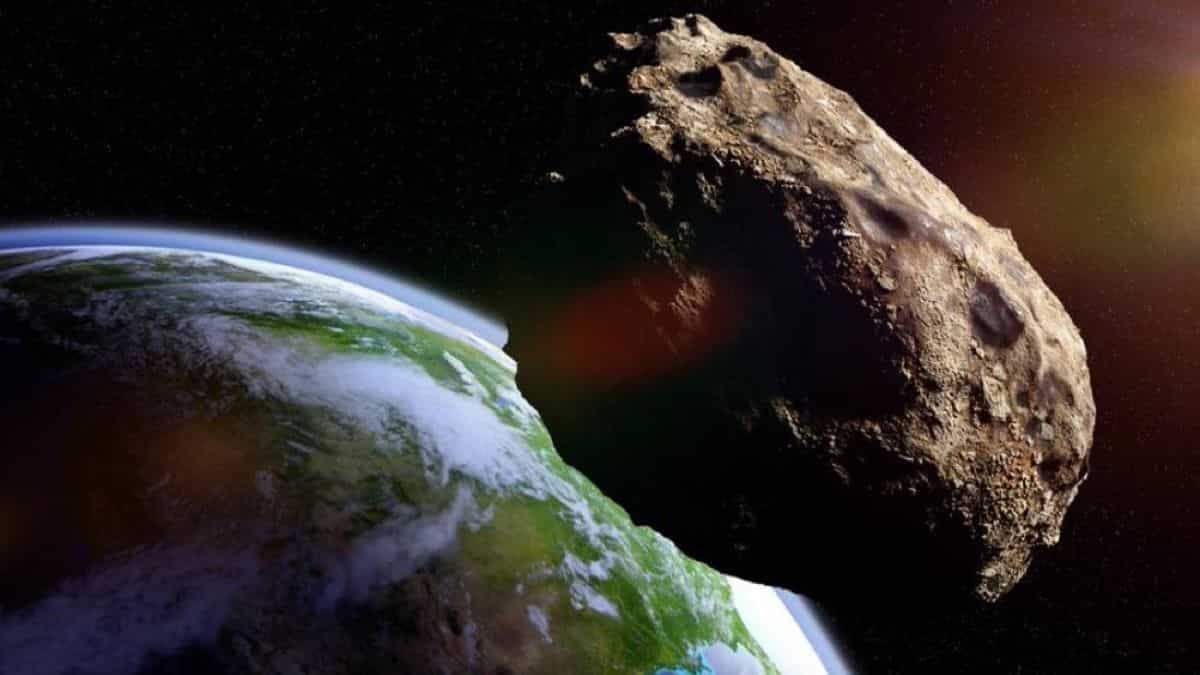
Representative image of an asteroid
NASA and international partners, in a recent table-top simulation, explored the hypothetical scenario of a massive asteroid with a 72 per centchance of hitting Earth in about 14 years.
This space rock, large enough to devastate a region, served as a reminder of the importance of preparedness and response strategies for asteroid threats.
The exercise, held in April, involved asteroid experts, NASA personnel, federal emergency management officials, and their international counterparts.
Terik Daly, the planetary defense section supervisor at the Johns Hopkins Applied Physics Laboratory said, "We don't know of any asteroids of a substantial size that are going to hit the Earth for the next hundred years."
"But we also know... that we don't know where most of the asteroids are that are large enough to cause regional devastation," he added.
The asteroid in question was estimated to be between 60 metres and almost 800 metres across. Even a smaller asteroid could cause massive damage depending on its impact location.
Lindley Johnson, NASA’s Planetary Defense Officer Emeritus, noted that an asteroid of this size impacting land near a metropolitan area would be a "serious" situation.
The simulation highlighted the uncertainties in predicting the asteroid's properties and the consequences of its impact. Scientists figured that they would be unable to gather more information about this threat for over six months until another asteroid is spotted and they could assess it.
"We're going to have very large uncertainties in the asteroid's properties, and that leads to very large uncertainties in what the consequences would be if it were to hit the ground," said Daly.
He said there is also uncertainty over "what it would take to stop that asteroid from hitting the ground.”
Watch | Study finds AI can detect Parkinson's seven years before onset
Participants discussed three options for addressing the threat. First is waiting and doing nothing until more information could be gathered, second is starting a US-led space mission to gather more data or third is building a more expensive spacecraft capable of altering the asteroid's path.
NASA is set to launch a new asteroid-finding telescope in the fall of 2027 to improve the detection and tracking of near-Earth objects. “We’ve got to discover what’s out there, determine their orbits, and then determine whether they represent an impact hazard to the Earth over time,”Johnson said.
(With inputs from agencies)